My Menu
Digital Potentiometer Board Module

Digital Potentiometer Board Module

(0)
Digital Potentiometer Board Module This is a X9C103S DC 3-5V Digital Potentiometer Board Module for Arduino. The X9C103 is a digitally controlled (XDCP) potentiometer. It consists of a resistor array, wiper switch, control section and non-volatile memory. Wiper position is controlled via a 3-wire interface. The potentiometer is implemented by a resistor array consisting of 99 resistive elements and a wiper switching network. Between each element and at each end there are tap points that can be accessed for wiper connections. The wiper element position is controlled by the CS, U/D, and INC inputs. The wiper position can be saved …
Condition: NEW
As low as ₹304.89   ₹452.20 Incl. GST (No Hidden Charges)
Backorder Available Delivery: Next Day Delivery
IN STOCK SKU#: IOT-2478
Delivery & Pickup Options
Get it Next Day on Order

Order now and we'll have it ready for delivery by the next business day.

For bulk orders or wholesale inquiries, please contact us at Email: support@iotcart.in or call/message us at Phone: 8050206487.

Digital Potentiometer Board Module This is a X9C103S DC 3-5V Digital Potentiometer Board Module for Arduino. The X9C103 is a digitally controlled (XDCP) potentiometer. It consists of a resistor array, wiper switch, control section and non-volatile memory. Wiper position is controlled via a 3-wire interface. The potentiometer is implemented by a resistor array consisting of 99 resistive elements and a wiper switching network. Between each element and at each end there are tap points that can be accessed for wiper connections. The wiper element position is controlled by the CS, U/D, and INC inputs. The wiper position can be saved in non-volatile memory and recalled on subsequent power ups. DC3V-5V X9c103S digital potentiometer has his three sections: Input control, counter and decoding section. non-volatile memory; and resistor arrays. The input control section works exactly like an up/down counter. The output of this counter is decoded to turn on a single electronic switch that connects a point on the register array to the wiper output. Under proper conditions, the contents of the counter can be saved in non-volatile memory and saved for future use. The resistor array consists of 99 individual resistors connected in series. Between the ends of the array and each resistor there is an electronic switch that transfers the potential at that point to the wiper. The wiper behaves like a mechanical equivalent at one of the fixed terminals and does not move beyond its final position. This means that the counter will not jump when clocked to either extreme. The device's electronic switches operate in a make-before-break mode as the wiper changes tap positions. When the wiper moves to multiple positions, multiple taps are connected to the wiper during tIW (INC to VW/RW switching). Moving the wiper to multiple positions can temporarily significantly reduce the overall value of the device. When the unit is turned off, the last saved wiper position is retained in non-volatile memory. When power returns, the memory contents are recalled and the wipers are reset to their last saved values. An internal charge pump allows a wide voltage range (-5V to 5V) to be applied to his XDCP pin while maintaining the convenience of a single supply. A typical charge pump noise of 20 mV at 850 kHz should be considered when designing the application circuit. The digital potentiometer module is accompanied by a test program. The program code is C language code and is written in sub-modules. The code includes: main function, display sub-function, button sub-function and header file of each module. You can use KEIL4 to open the source code for testing and learning. The digital potentiometer VL and ports correspond to the low and high end of the sliding rheostat, respectively, allowing the input voltage range from -5V to +5V. Features: Digitally Controlled Resistance: Allows precise adjustment of resistance via a microcontroller. Three-Wire Interface: Uses a simple three-wire interface for control. Non-Volatile Memory: Retains the last resistance setting even after power is removed. 99 Resistance Steps: Provides 99 discrete resistance levels for fine-tuning. Compact Size: Small form factor suitable for various embedded applications. Wide Operating Voltage: Typically operates between 3V to 5V. Applications: LED Dimming: Adjusts the brightness of LEDs in lighting applications. Audio Volume Control: Used in audio equipment for digital volume adjustment. Sensor Calibration: Helps in calibrating sensors by adjusting resistance values. Closed-Loop Gain Control: Used in feedback systems to control gain. Wheatstone Bridge Trims: Adjust resistance in Wheatstone bridge circuits for precise measurements. Current Source Control: Regulates current in various electronic circuits. Programmable Analog Filters: Tunes filters in analog signal processing. Automotive Electronics: Used in automotive systems for level adjustments.

  • Digitally controlled 10kΩ potentiometer with 99 resistance steps
  • Non-volatile memory retains wiper position after power loss
  • 3-wire interface (CS, U/D, INC) for easy microcontroller integration
  • Wide operating voltage: 3V to 5V logic, ±5V signal range
  • Compatible with Arduino, Raspberry Pi, ESP32, and more
  • Includes test code in C for KEIL4 development environment
  • Precise digital resistance control via microcontroller
  • No mechanical wear — ideal for automated systems
  • Retains last setting on power cycle
  • Supports bipolar voltage signals
  • Compact PCB module with breadboard-friendly pins
  • Includes sample code for rapid prototyping
IC Chip X9C103S
Input Supply Voltage (VDC) 3 ~ 5
Dimensions 3 x 2 x 1cms
Weight 5 grams
What is the resistance value of the X9C103S digital potentiometer?

The X9C103S provides a total resistance of 10kΩ with 99 discrete steps, allowing precise digital control.

Is the X9C103S compatible with Arduino and Raspberry Pi?

Yes, it uses a simple 3-wire interface and operates at 3–5V, making it fully compatible with Arduino, Raspberry Pi, and other microcontrollers.

Does the module retain settings after power off?

Yes, it has non-volatile memory that saves the wiper position and restores it on power-up.

What is the input voltage range for the potentiometer terminals?

The VH and VL terminals support a wide input range from -5V to +5V, suitable for bipolar signal applications.

To rate this product please login!

About Digital Potentiometer Board Module by Iotcart

Buy X9C103S digital potentiometer module with 99 steps, non-volatile memory. Compatible with Arduino, Raspberry Pi. Best price in India.

Categorised under: Motors & MechanicalPotentiometer

Related products

Related products

Iotcart 28BYJ-48 5V DC Steppe…
(0)
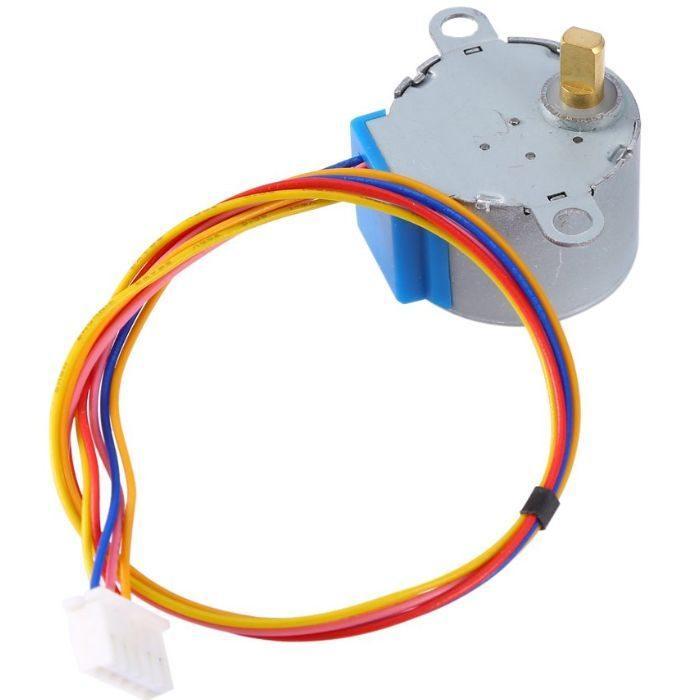
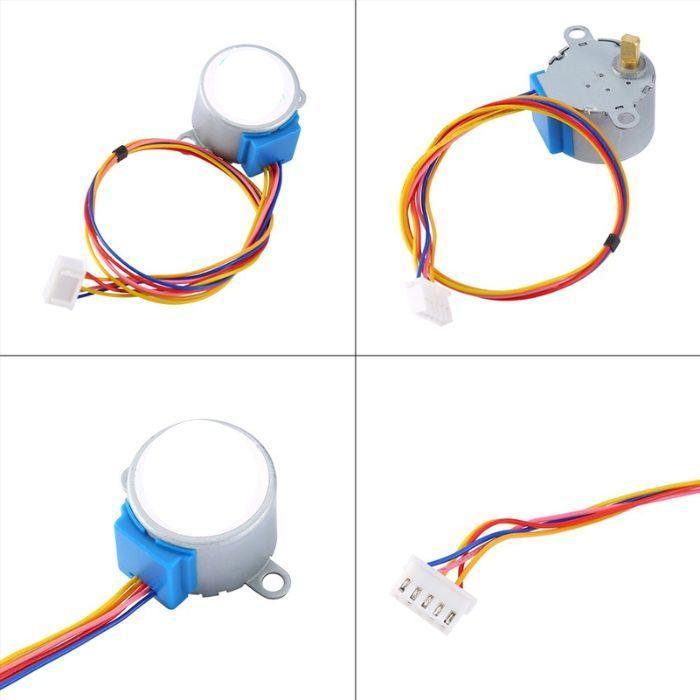
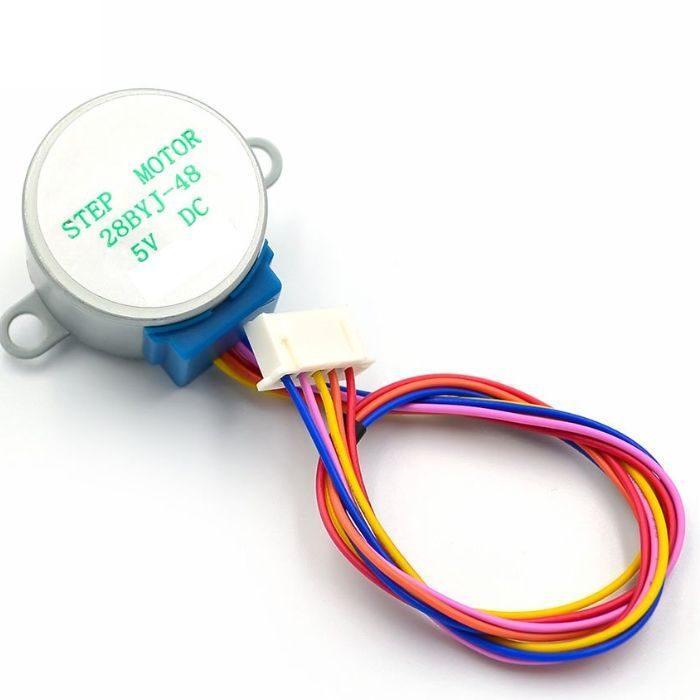
28BYJ-48 5V DC Stepper Motor This 5V DC 28BYJ-48 Stepper Motor is small, inexpensive and high-quality geared step motor. The 28BYJ-48 Stepper Motor and ULN2003 Stepper Motor Driver is a widely popular combination of the stepper motor and stepper driver, because of the stability and reliability of the system. The motor has a reduction ratio of 64:1, so it offers a decent torque for its size at speeds of about 15 RPM. It is a unipolar stepper motor which has 5-wires. As stated before the pack contains ULN2003 Stepper motor driver which is a Mini Stepper Motor Driver.The main purpose of ULN2003 is to amplify the control signals from the Arduino, so as to drive the 28BYJ-48 Stepper Motor. If you will give the ULN2003 Stepper motor driver a certain pulse signal, it will drive step motor to a certain angle.The control of Stepper motor movement angle is done by controlling the number of stepper motor driver pulses. The speed of the stepper motor rotation is also controllable by controlling the frequency of the pulses. Connect the 28BYJ-48 motor with the ULN2003 motor driver then interface this combination of motor and driver with Arduino , do some coding and your 28BYJ-48 Stepper Motor is ready to listen to your commands Features: Stepper motor with a standard interface, when used directly pluggable. A, B, C, D four-phase LED indicator which indicates the status of the stepper motor work. Compact-size stepper motor perfect for small robotics applications. Applications: Cameras for providing precise control and positioning. Tilting of car side mirrors can be controlled using these motors. CNC Machines Robotic Arms Home Automation
₹111.27  
Backorder Available In Store Pickup Same Day Shipping
₹196.00
Incl. GST (No Hidden Charges)
Iotcart SES-P-202 12V 10A PWM…
(0)
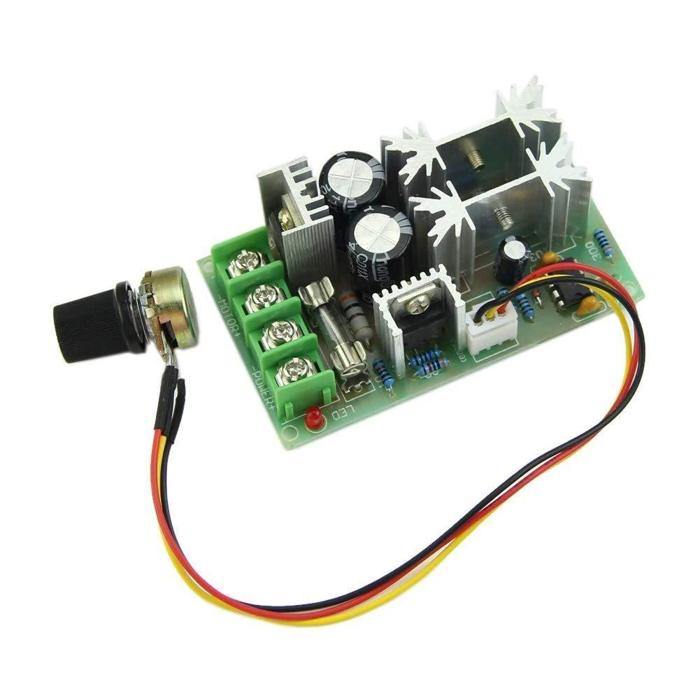
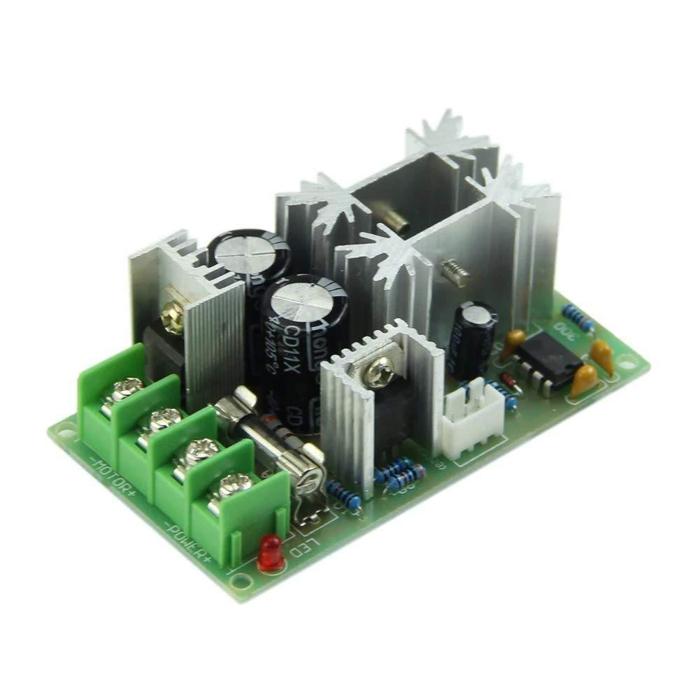
12V 10A PWM DC Motor Speed Controller The DC Motor Speed Controller allows controlling the direction of a DC motor using a Pulse-Width-Modulated (PWM) DC voltage with a Duty Cycle fully adjustable from 10%-100%. The 12 Volt DC Motor Speed Controller can provide a continuous current of 10A to your DC motor or other DC load. The circuit also includes a 10A fuse, with the reverse connection of the power supply and control voltage over-voltage protection function. This speed regulator uses a barrier terminal block as its wiring type. The output voltage is linear under load and features a control frequency of 13kHz. Note: This cannot be used for the brushless motor. The controller is not reverse-polarity protected and will be damaged if it connects the supply voltage with the wrong polarity. Features: Control the speed of a DC motor with this controller. High efficiency, high torque, low heat generating. With reverse polarity protection, high current protection. Control voltage over-voltage protection function The overload and short circuit protecting current is 10A Applications: Automotive: Controlling the speed of cooling fans, windshield wipers, and air conditioning systems. Industrial Automation: Managing the speed of conveyor belts, exhaust fans, and other motor-driven machinery. Home Appliances: Adjusting the speed of fans, pumps, and other household devices. Treadmills: Regulating the speed of the treadmill belt for different workout intensities. Robotics: Providing precise speed control for DC motors in robotic projects. DIY Projects: Ideal for custom electronics projects requiring variable motor speed control
₹165.80  
Backorder Available In Store Pickup Same Day Shipping
₹278.60
Incl. GST (No Hidden Charges)
Iotcart SES-P-215 1200W PWM M…
(0)
1200W PWM Motor Speed Controller with Potentiometer This is a simple and easy-to-use DC motor speed controller of small size, elegant appearance, and stable performance. It is made with a high-quality circuit board which ensures a longer service life. The DC Motor Speed Controller allows controlling the direction of a DC motor using a Pulse-Width-Modulated (PWM) DC voltage with a Duty Cycle fully adjustable from 10%-100%. The motor speed controller can provide a continuous current of 8A to your DC motor or other DC load. Speed Regulator is an important electronic DIY equipment. Do not touch the heat sink with the wiring. If it touches, it may burn the circuit board. Note that this is not a power module. It must be connected to the motor to speed it up. There is no change in the output of the multimeter without the motor. Features: Maximum Power: 1200W The speed of the DC motor can be controlled by adjusting the pulse width modulation (PWM). The knob realizes 0-100% adjustment, supports step-less speed regulation, and facilitates positioning speed.
₹221.44  
Backorder Available In Store Pickup Same Day Shipping
₹348.60
Incl. GST (No Hidden Charges)
A3967 30V 750mA Stepper Motor…
(0)
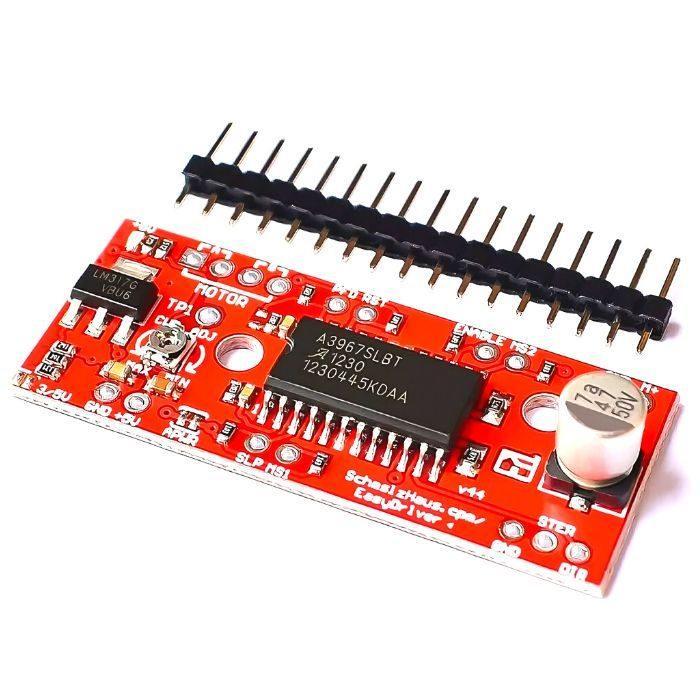
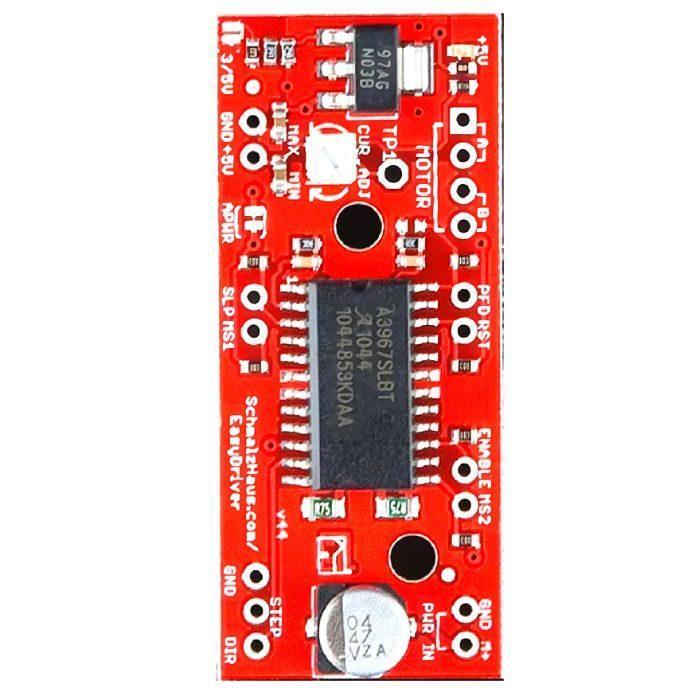
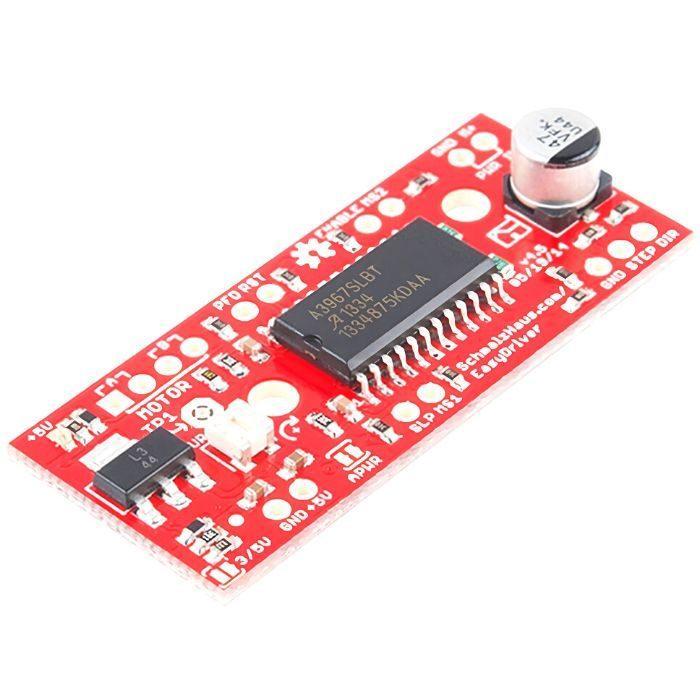
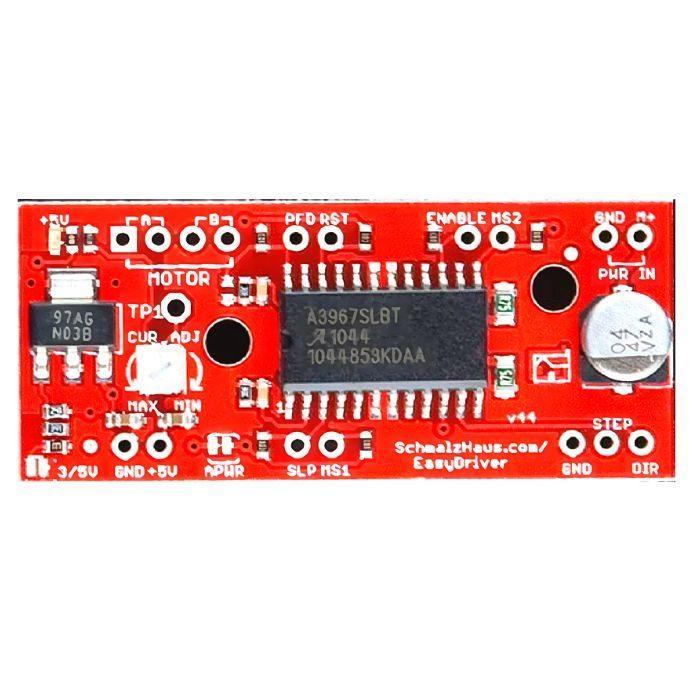
A3967 Stepper Motor Driver This A3967 Stepper Motor Driver For Arduino is the most recent version of EasyDriver v44, which was created in collaboration with Brian Schmalz. When compared to previous versions, it offers more flexibility and control over your stepper motor . It is a simple stepper motor driver that is compatible with most microcontrollers and capable of producing a digital 0 to 5V pulse (0 to 3.3V pulse if you solder SJ2 closed on the EasyDriver). A 7V to 30V power supply is required for the module's motor. The digital interface is powered by an onboard voltage regulator that can be set to 5V or 3.3V. The A3967 is a full-featured microstepping motor driver with an integrated transistor. It is intended for use with bipolar stepper motors in full-, half-, quarter-, and eighth-step modes, with output drive capabilities of 30 V and 750 mA. The A3967 comes with a fixed off-time current regulator that can operate in slow, fast, or mixed current-decay modes. This current-decay control scheme produces less audible motor noise, higher step accuracy, and lower power dissipation. The transistor is essential to the A3967's simple implementation. Simply sending one pulse to the STEP input causes the motor to move one step (full, half, quarter, or eighth depending on two logic inputs). It is not necessary to programme phase-sequence tables, high-frequency control lines, or complex interfaces. The A3967 interface is ideal for applications where a complex P is either unavailable or overburdened. Features: A3967 microstepping driver Adjustable current control from 150mA/phase to 750mA/phase MS1 and MS2 pins are broken out to change microstepping resolution to full, half, quarter and eighth steps (defaults to eighth) Compatible with 4, 6, and 8-wire stepper motors of any voltage Breadboard-compatible pins.
₹228.12  
Backorder Available In Store Pickup Same Day Shipping
₹404.60
Incl. GST (No Hidden Charges)
Iotcart A4988 Stepper Motor D…
(0)
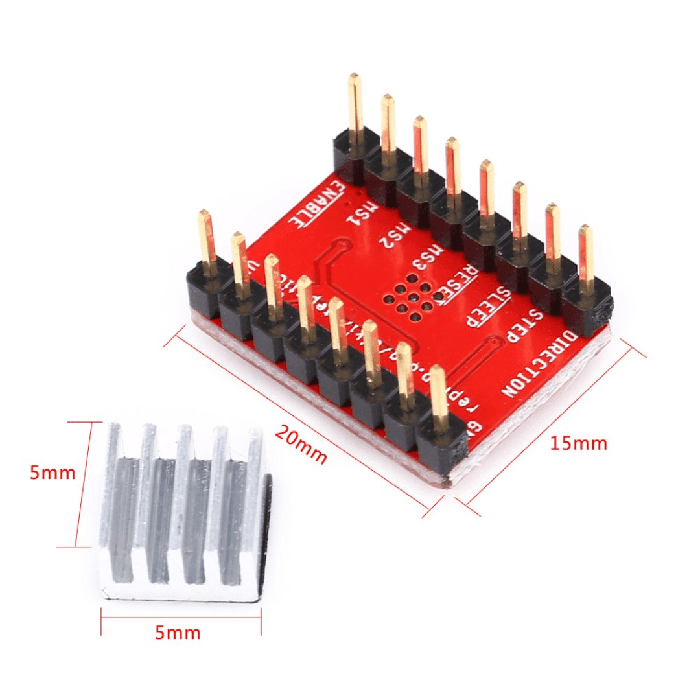
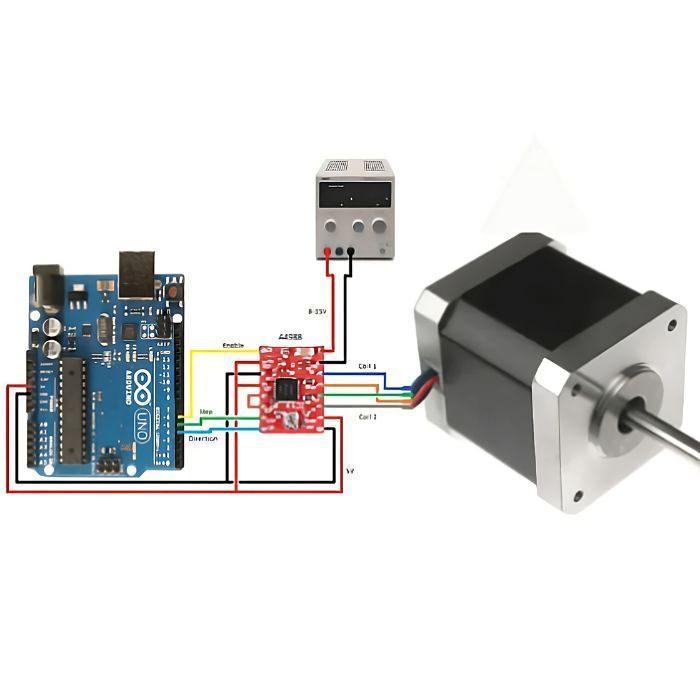
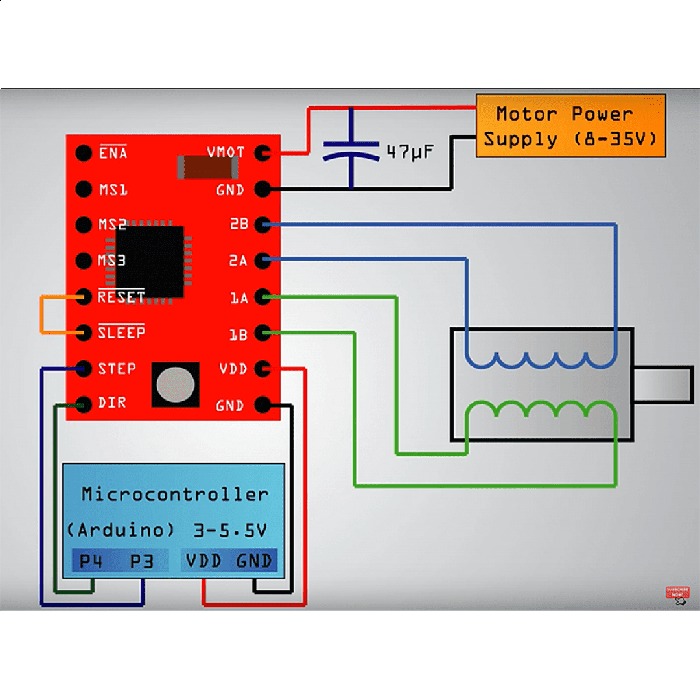
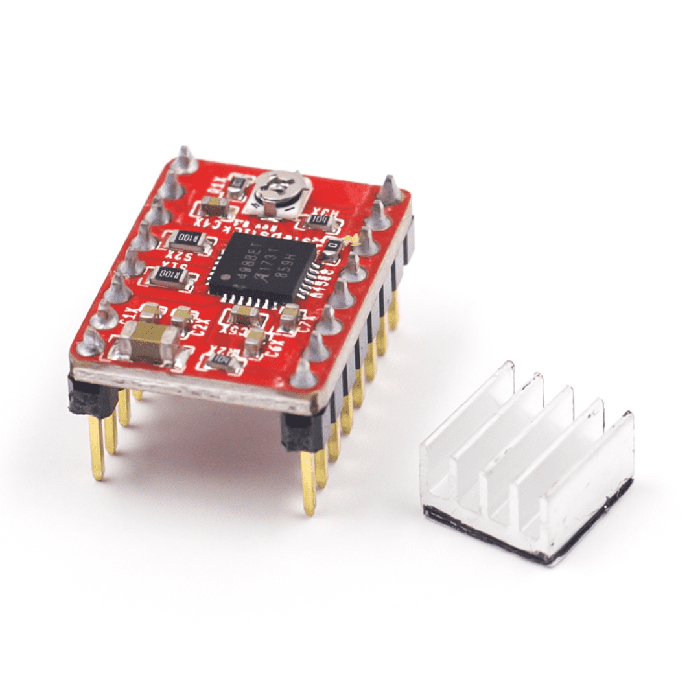
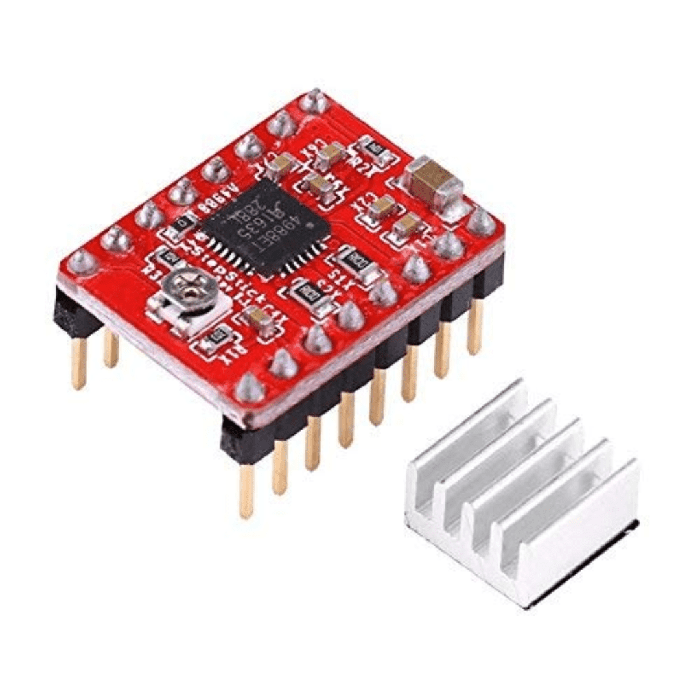
A4988 Stepper Motor Driver Module with Heat Sink For 3D Printer (Red) A4988 Stepper Motor Driver is a complete micro-stepping motor driver with a built-in translator for easy operation. The product can be full, half, 1/4, 1/8, and 1/16 step mode to operate bipolar stepper motor output drive capacity of up to 35 V and ± 2 A. A4988 includes a fixed off-time current regulator, the regulator can slow or mixed decay mode. The converter is the key to the easy implementation of the A4988. In inputting one pulse on the STEP input drives the motor one micros tep. No phase sequence tables, high-frequency control lines, or complex interfaces to programming. A4988 interface is very suitable for complex microprocessor is unavailable or is overburdened. The micro-step operation, the chopping control in the A4988 automatically selects the current decay mode (Slow or Mixed). In the mixed decay mode, the device is initially set to fast decay in the part of the fixed off-time, then a slow decay in the rest of the downtime. Mixed-decay current control scheme results in reduced audible motor noise, increased step accuracy, and reduced power consumption. Internal synchronous rectification control circuitry to improve the pulse-width modulation (PWM) power consumption when operating. Internal circuit protection includes thermal shutdown with hysteresis, under-voltage lockout (UVLO) and crossover current protection. Special power-Sort. If you want to control the stepper motor with this motor driver, you will need a few essential components like Arduino , breadboard, jumper wires, batteries, and power supply. Features: Simple step and direction control interface Five different step resolutions: full-step, half-step, quarter-step, eighth-step, and sixteenth-step Automatic current decay mode detection/choice. Mixed with slow current decay mode Over-temperature thermal shutdown, under-voltage lockout, and crossover-current protection Adjustable current control lets you set the maximum current output with a potentiometer, which lets you use voltages above your stepper motor’s rated voltage to achieve higher step rates check out : Stepper Motor Driver Expansion Board
₹80.12  
Backorder Available In Store Pickup Same Day Shipping
₹141.40
Incl. GST (No Hidden Charges)
Pludo Robotic Walking Dog STE…
(0)
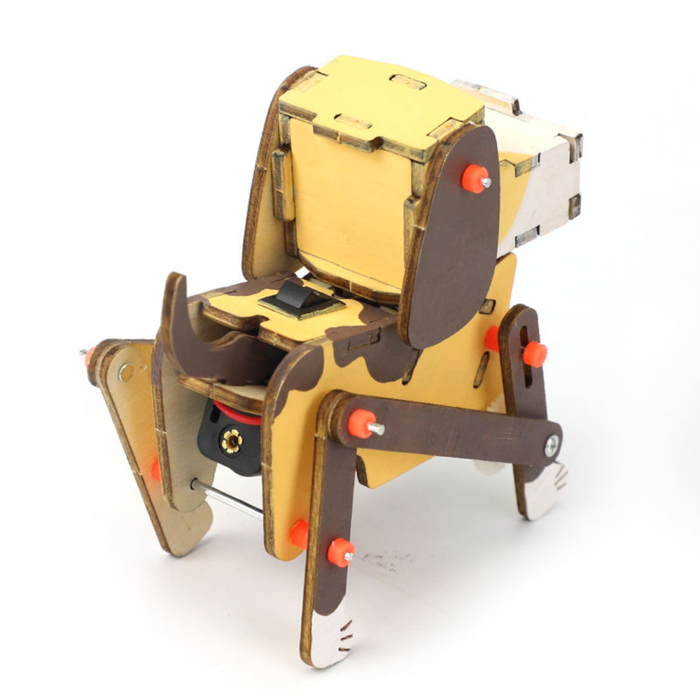
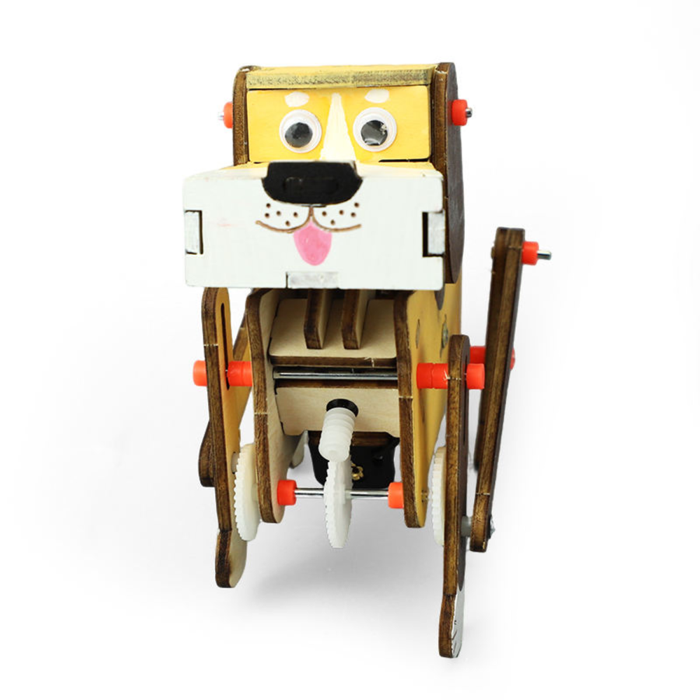
Pludo Robotic Walking Dog - STEM Toy on Motion & Robotics for Ages 8–11 | Grade 3 to 5 This Robotic Walking Dog STEM Toy gives children aged 8–11 an exciting opportunity to explore robotics and engineering through hands-on play. Kids can assemble their own electric robot dog, learning how mechanical parts, circuits, and movement work together in a fun and interactive way. It’s a practical introduction to STEM concepts that makes learning feel like play. The kit encourages creativity, problem-solving, and critical thinking while helping children develop fine motor skills and hand-eye coordination. As they assemble and test their robot dog, children gain confidence and a deeper understanding of how science and technology work in the real world. As children build and test the robot dog, they develop creativity, problem-solving skills, critical thinking, fine motor skills, and hand–eye coordination. The kit works by converting electrical energy from a battery into mechanical motion using a motor. When powered on, the motor drives a set of internal gears that transfer and control movement. These interconnected gears move the legs in a coordinated way, creating lifelike walking motion and clearly demonstrating how motors, gears, and linkages are used in robotics. Perfect for curious young minds, this set also doubles as a smart toy, a versatile toy kit, and a DIY kit, offering hours of engaging and educational entertainment. It’s one of the most exciting DIY robotic kits for kids who love exploring, building, and experimenting, making it an ideal gift for home, school projects, or STEM learning activities. What Your Child Will Learn Build a motor-powered dog that walks and moves, learning how electricity converts into motion. Understand the basics of robotics and simple circuits through fun, guided experimentation. Strengthen fine motor skills, focus, and patience while assembling and wiring each part. Learn how motion, balance, and mechanics work together in real-world machines. Boost creative thinking and problem-solving by customizing and troubleshooting the build. Encourage confidence and curiosity — ideal for home learning, classroom activities, or STEM clubs. Educational Outcomes Electricity & Circuits: Discover how power flows through simple connections to make movement possible. Mechanics: Explore how gears, motors, and linkages work together to create motion. Engineering Thinking: Apply logical reasoning and sequencing while assembling the toy. Creativity & Confidence: Learn by doing - experiment, adapt, and see science come alive through play Features: DIY robotic dog that teaches the fundamentals of movement and electricity. Designed for kids aged 8–11 (Grades 3–5) — perfect for age-appropriate STEM learning. Encourages creativity, customization, and critical thinking through hands-on building. Lets kids explore mechanics and electronics in a safe, interactive way. Made from eco-friendly, high-quality materials for durable, safe playtime. Can be used as a smart toy, DIY project, or learning kit for both home and school environments. Sparks curiosity and love for science, technology, and problem-solving in every build.
₹731.51  
Backorder Available In Store Pickup Same Day Shipping
₹1468.60
Incl. GST (No Hidden Charges)
Pludo STEM Kit DIY Aircraft –…
(0)
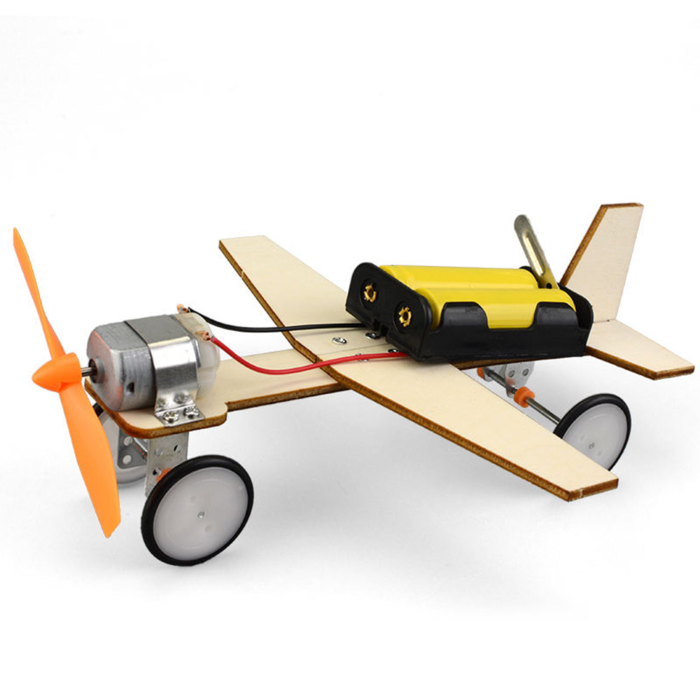
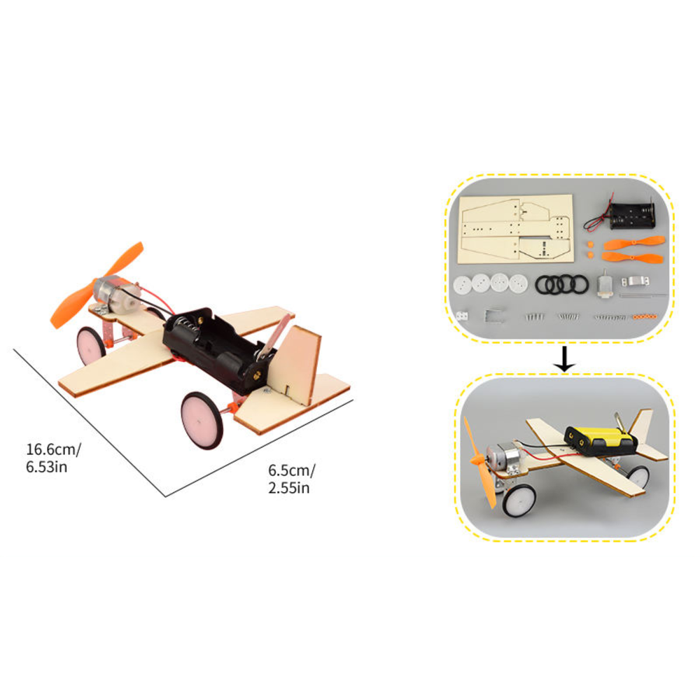
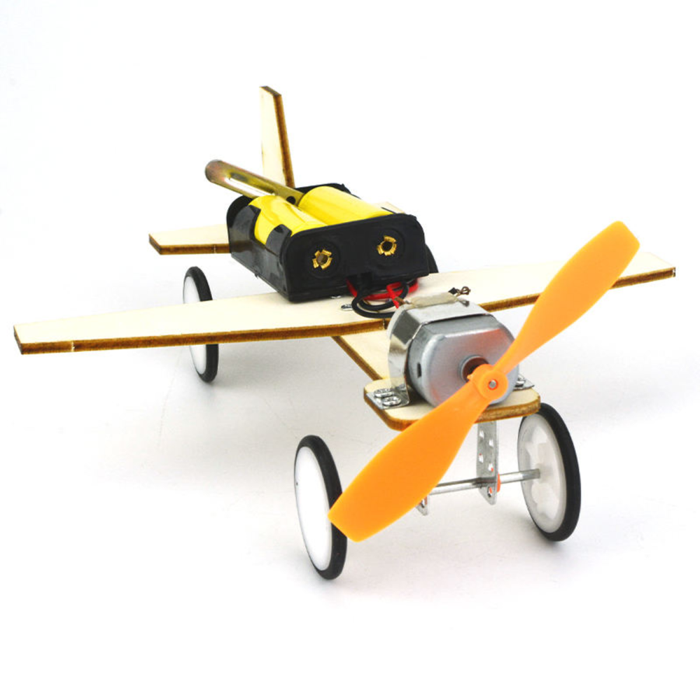
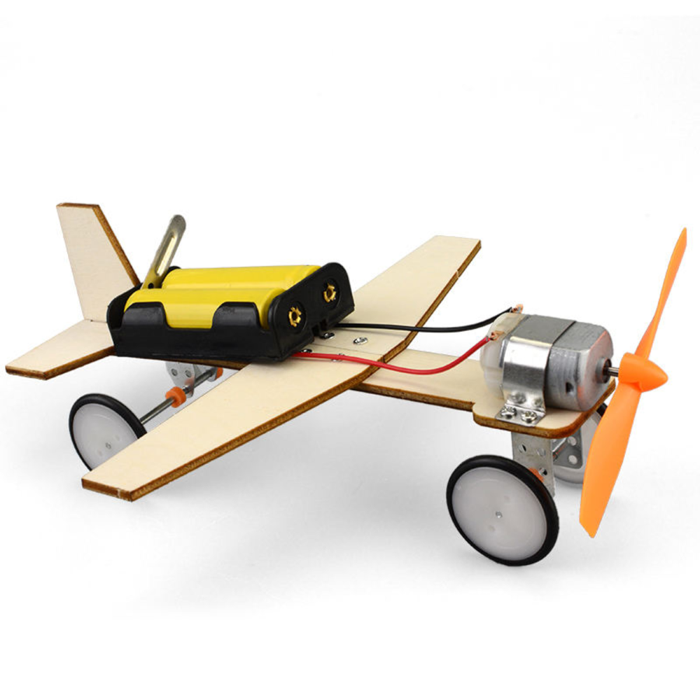
Pludo STEM Kit DIY AIRCRAFT – DIY Science Kit for Kids 11–14 | Grade 6–8 Learn Concepts of Propulsion Ignite your child’s curiosity with the Pludo STEM Kit DIY AIRCRAFT, an exciting science experiment kit designed to make learning physics fun and hands-on. This educational kit introduces children to the fascinating concepts of aerodynamics, motion, and electric energy through a creative DIY aircraft project. As kids build their own wooden electric taxiing aircraft, they discover how power and motion work together in real machines. The model operates by converting electrical energy from a battery into mechanical motion using a small DC motor. When powered, the motor spins the front propeller at high speed, generating forward thrust. This thrust moves the lightweight aircraft along the ground on its wheels, clearly demonstrating how electric motors drive propellers in real aircraft systems. As one of the most engaging STEM kits and kids learning toys, it promotes active learning through play and experimentation. Whether used at home, in classrooms, or for school science projects, this science toy offers an enriching educational experience that blends fun, learning, and real-world application. What Your Child Will Learn: Discover how electric energy powers motion through an engaging aircraft experiment. Understand aerodynamic design principles that keep vehicles stable and efficient. Strengthen logical thinking, creativity, and fine motor skills through hands-on construction. Encourage curiosity and innovation by connecting theoretical science to practical application. Build confidence through problem-solving and experimentation that makes learning exciting. Educational Outcomes Energy Conversion: Explore how electrical energy transforms into motion and kinetic energy. Aerodynamics & Mechanics: Learn about airflow, balance, and motion through practical observation. Physics in Action: Connect real-world concepts of force, friction, and motion with fun experiments. STEM Skill Development: Build confidence in scientific reasoning, assembly, and testing. Collaborative Learning: Encourages teamwork and communication through group or classroom experiments. Did You Know? Aircraft wings are designed to create lift by shaping airflow — the same principle your Electrotaxi model uses to glide smoothly! Features Hands-on DIY science experiment kit that helps kids explore aerodynamics, motion, and electric energy through a fun aircraft-building activity. Encourages curiosity, logical thinking, and creativity as children assemble and test their own electric wooden aircraft model. Designed as an educational kit that supports experiential learning and enhances understanding of basic physics and energy conversion. Made from durable, safe, and eco-friendly materials, ensuring a secure and enjoyable playtime experience. Ideal for children aged 11–14 years (Grades 6–8), offering age-appropriate exposure to science and engineering principles. Promotes teamwork and problem-solving, making it perfect for classroom experiments, home learning, or group science activities. Included manual provides step-by-step guidance for easy assembly, testing, and understanding of the working model. Makes a perfect science toy gift for birthdays, holidays, or school science fairs — a fun way to inspire young minds in STEM learning.
₹788.41  
Backorder Available In Store Pickup Same Day Shipping
₹1258.60
Incl. GST (No Hidden Charges)
7Semi TMC6300 3-Phase BLDC Mo…
(0)
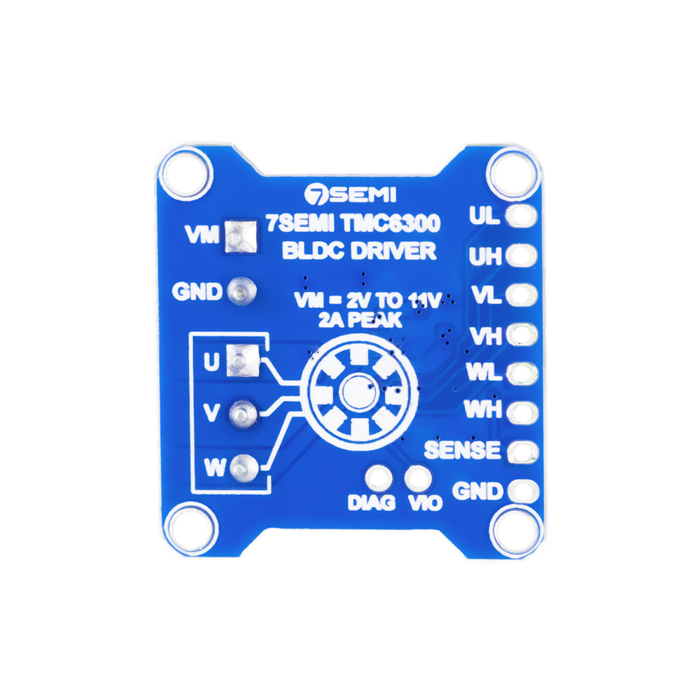
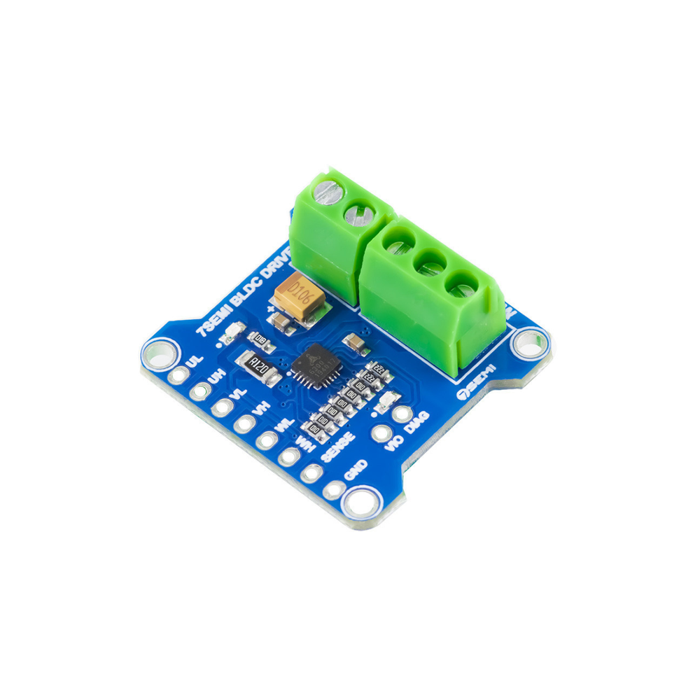
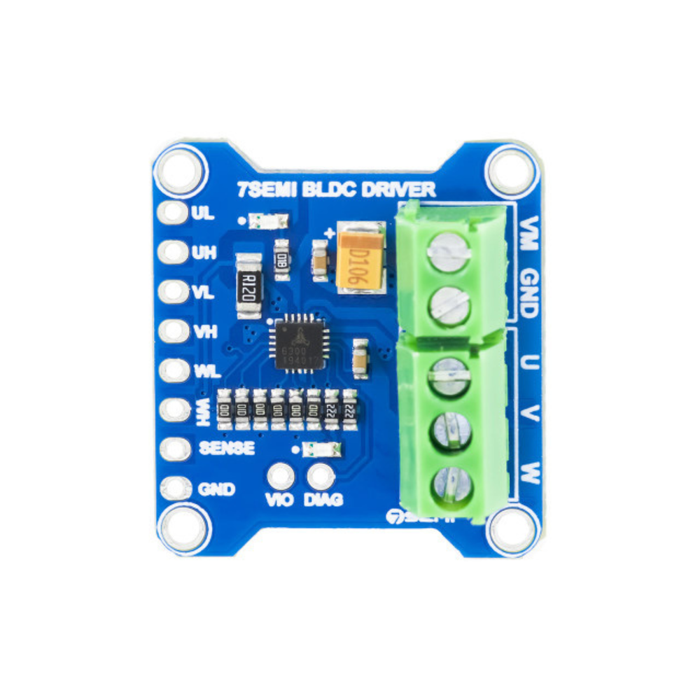
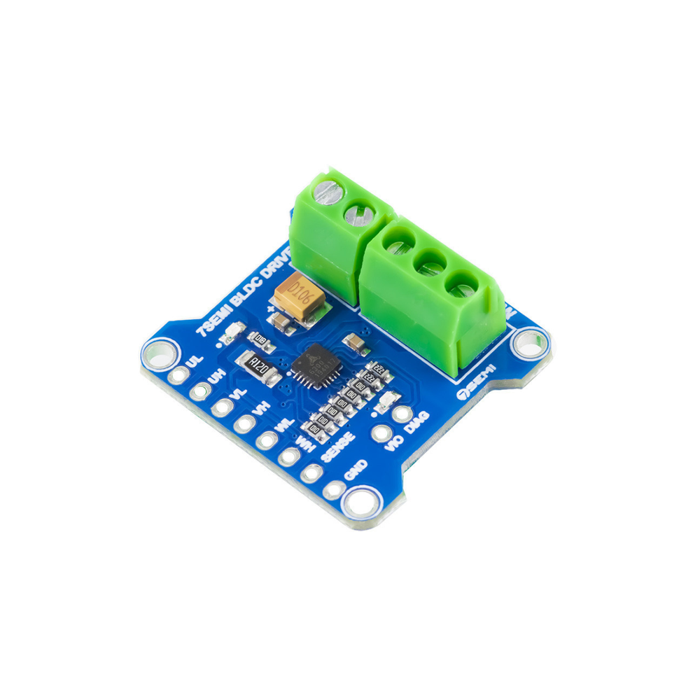
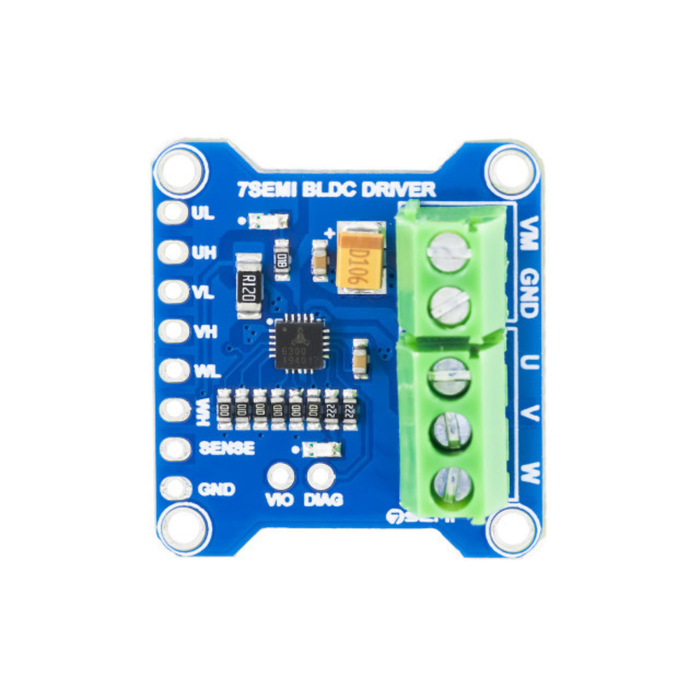
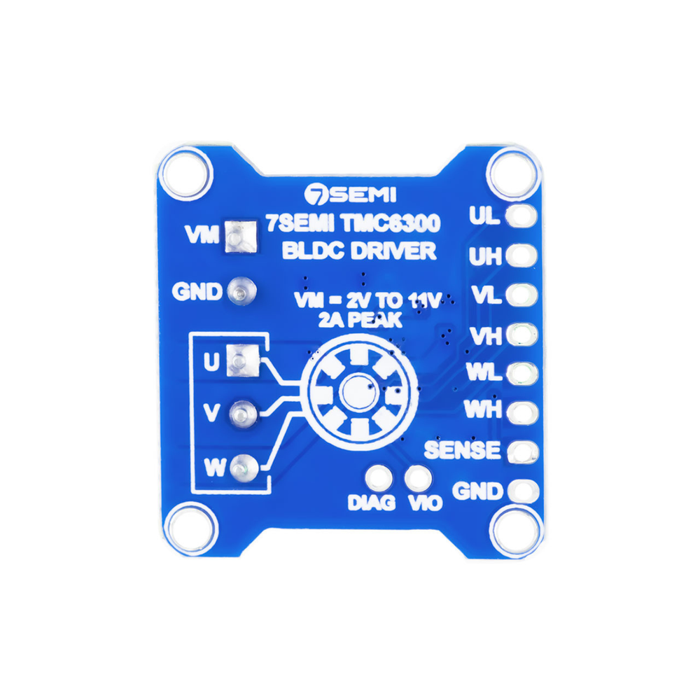
7Semi 3Phase TMC6300 BLDC PMSM Brushless Motor Driver Breakout The 7Semi 3Phase TMC6300 BLDC PMSM Brushless Motor Driver Breakout is a compact, efficient brushless motor driver built for controlling 3-phase brushless motors with ease. It integrates the TMC6300 IC to simplify motor driving, reduce external components, and enable smooth, reliable operation. Designed for practicality and reliability, the board offers easy microcontroller compatibility, stable performance, and built-in protections for safe use. It is well suited for students, hobbyists, and professionals working on robotics, automation, drones, and motor-driven DIY applications. Features: Powered by the TMC6300 motor driver IC with high-side and low-side MOSFET control for each phase Supports 6-PWM input signals for precise and complete motor control Diagnostic output for easy detection of system faults Wide 2–11V operating voltage, ideal for low-power applications Breadboard-compatible design with optimized header alignment Built-in thermal and short-circuit protection for safe operation Breakout Board Pinouts – TMC6300 Motor Driver IC Power & Control Inputs VM / GND – Motor power supply (2–11V) VIO – I/O logic level supply / standby control PWM Control Inputs (High-side & Low-side MOSFETs) UH / UL – Phase U PWM inputs VH / VL – Phase V PWM inputs WH / WL – Phase W PWM inputs Outputs SENSE – Current sense output DIAG – Diagnostic and fault indication output U / V / W – Motor phase outputs from the three half-bridges
₹869.68  
Backorder Available In Store Pickup Same Day Shipping
₹1155.00
Incl. GST (No Hidden Charges)
7Semi Vikram-1101 DRV8837 11V…
(0)
7Semi Vikram-1101 DRV8837 11V DC Motor Driver Breakout The 7Semi Vikram-1101 brings reliable motor control to compact robotics and automation builds, thanks to its efficient DRV8837 driver and wide 1.8V–11V motor voltage support. Designed for smooth brushed DC motor management, it features a stable 1A continuous output and a powerful 3A peak capability, making it ideal for hobby projects, mechatronics, and lightweight robotics systems. With PWM support and simple H-bridge control, achieving variable speed and direction becomes effortless. Engineers and makers appreciate its built-in safeguards, including thermal shutdown, undervoltage lockout, and overcurrent protection ensuring long-term durability even in demanding environments. The Vikram-1101 also offers resistor-set current limiting, eliminating the need for complex setups. Whether you're designing compact robots, automation rigs, or DIY motorized mechanisms, this versatile DC motor driver delivers dependable performance with ease. Features: Supports a motor power voltage range of 1.8V to 11V, making it suitable for a wide variety of small robotics and mechatronics projects. Provides 1A continuous output and 3A peak current, ensuring stable handling of brushed DC motors. Accepts up to 5.5V logic levels on IN pins, allowing easy interfacing with microcontrollers. Enables smooth motor operation through PWM-based speed control for precise performance tuning. Built with current limiting/regulation that works without requiring an inline sense resistor. Equipped with essential protection features including undervoltage lockout, overcurrent protection, and thermal shutdown.
₹88.24  
Backorder Available In Store Pickup Same Day Shipping
₹138.60
Incl. GST (No Hidden Charges)
7Semi Vikram-3025 25A DC Moto…
(0)
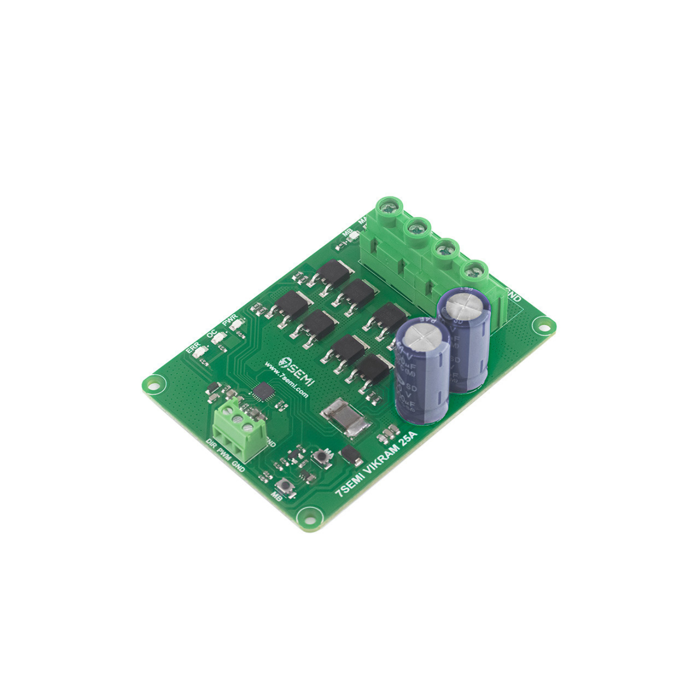
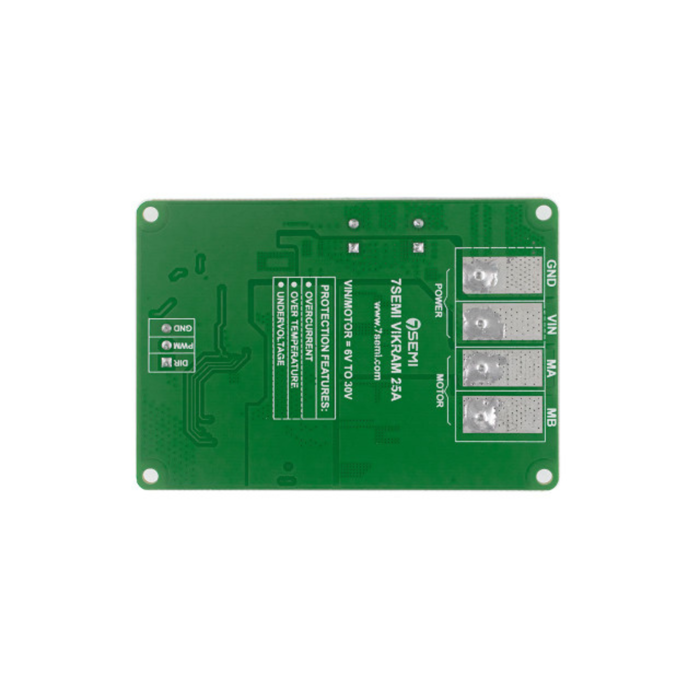
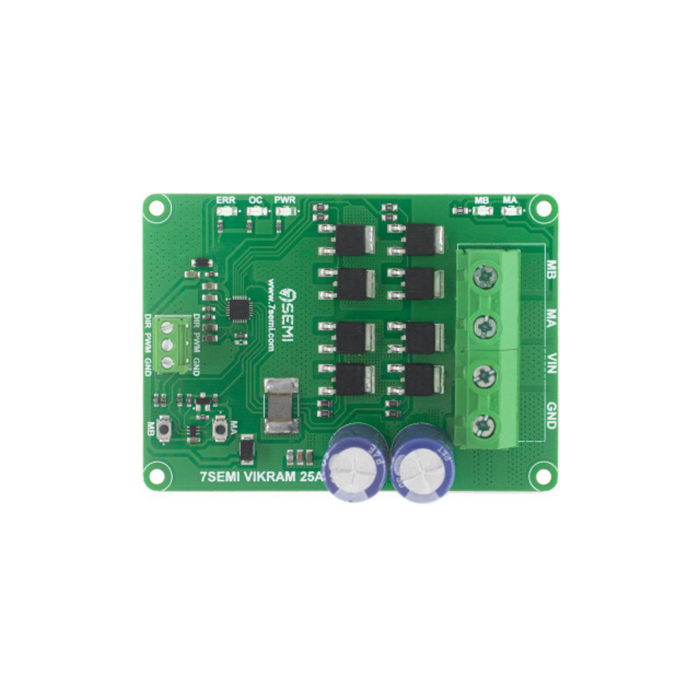
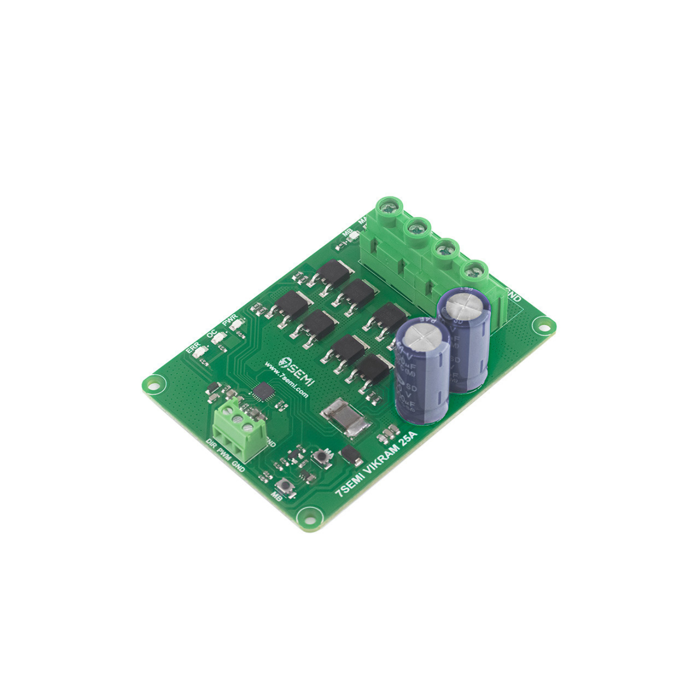
7Semi Vikram-3025 High-Power 25A DC Motor Driver for 6–30V Motors The 7Semi Vikram-3025 is a heavy-duty single-channel DC motor driver built for demanding robotics, automation, and mechatronics projects. Designed to handle 25A continuous load with a 6V–30V operating range, it uses a high-efficiency discrete NMOS H-Bridge that eliminates the need for bulky heat sinks. Whether you're powering high-torque DC motors or creating reliable industrial controls, this driver ensures stable, smooth, and responsive performance. With built-in safety features like overcurrent protection, temperature protection, and undervoltage shutdown, your system stays secure even under heavy loads. This motor driver goes beyond basic control, it includes onboard test buttons, motor output LEDs, and a regulated 5V output for powering microcontrollers, making prototyping extremely convenient. It supports PWM/DIR control signals from a wide range of logic voltages (1.8V to 30V), ensuring compatibility with Arduino, Raspberry Pi, PLCs, and other controllers. It also offers manual control options using a potentiometer and switch, giving both beginners and advanced users flexible control in real-world applications. This makes it a dependable choice for custom robotics, high-power motor control, and automation systems. Features: Provides smooth and reliable bidirectional control for single brushed DC motors. Supports a wide operating voltage range from 6V to 30V for flexible motor compatibility. Handles a continuous motor current of 25A, ideal for high-load or high-torque applications. Includes an onboard 5V regulated output (250mA) to power a microcontroller without an external supply. Onboard test buttons and motor state LEDs allow quick, controller-free testing during prototyping. Offers dual input modes: PWM/DIR for digital control or potentiometer/switch for manual operation. Compatible with 1.8V, 3.3V, 5V, 12V, and 24V logic, making it suitable for Arduino, Raspberry Pi, PLCs, and more. Supports PWM input frequency up to 40kHz with a fixed 16kHz output for quiet motor operation. Built-in protections include active current limiting, overcurrent protection, temperature protection, and undervoltage shutdown.
₹1914.69  
Backorder Available In Store Pickup Same Day Shipping
₹3498.60
Incl. GST (No Hidden Charges)
Anycubic Photon P1 8000cps Re…
(0)
Anycubic Photon P1 3D Printer The Anycubic Photon P1 is an advanced resin 3D printer engineered to deliver near-industrial precision with user-friendly operation. Featuring a high-resolution optical system with over 92% light uniformity, it ensures sharp details, smooth surfaces, and consistent curing across every layer. Its robust mechanical design, including a precision-ground steel build plate and dual-rail Z-axis system, provides exceptional stability and accuracy, making it ideal for professional-grade applications such as prototyping, dental modeling, and intricate design work. Designed for versatility and performance, the Photon P1 supports a wide range of resins, including high-viscosity industrial materials up to 8000 cps. It also introduces advanced technologies such as Wave Release for reduced peel force and a temperature-controlled resin vat for consistent printing even in challenging conditions. With optional dual-material and dual-color printing capability, it enables users to create complex models in a single print, significantly improving workflow efficiency and creative possibilities. Wave Release Technology Wave Release Technology is an advanced innovation designed to significantly improve the reliability and quality of resin 3D printing. It works by optimizing the layer separation process during printing, reducing the peel force required to detach each cured layer from the film. This reduction in force helps prevent common issues such as layer shifting, model deformation, or print failures, especially in complex or delicate designs. Precision-Fitted Industrial-Grade Ball Screw The precision-fitted industrial-grade ball screw enhances the printer’s Z-axis movement by delivering smooth, accurate, and highly stable vertical motion during the printing process. This high-quality component minimizes mechanical backlash and vibrations, ensuring consistent layer alignment and superior print accuracy even for intricate and detailed models. Its robust construction supports long-term durability and reliable performance, making it suitable for continuous industrial use. By maintaining precise positioning throughout each layer, it significantly improves surface finish and overall print quality, especially in high-resolution resin printing applications. Precision-Ground Steel Build Plate The precision-ground steel build plate is engineered to provide a perfectly flat and stable printing surface, ensuring excellent first-layer adhesion and consistent print quality. Its finely machined surface enhances grip for resin prints, reducing the chances of model detachment during the printing process. This high level of flatness and rigidity improves overall accuracy, especially for detailed and high-resolution prints. Built for durability, the steel construction withstands repeated use and maintains its precision over time, making it ideal for professional and industrial applications. Engineered for Ultra-Viscous 8000cps Resin Engineered to handle ultra-viscous resins up to 8000 cps, this feature allows the printer to work efficiently with thicker, high-performance materials that are typically challenging for standard resin printers. It ensures smooth and consistent resin flow, preventing issues like uneven curing or print defects. This capability expands material compatibility, enabling the use of specialized industrial resins for stronger, more durable, and functional prints. As a result, users can achieve higher-quality outputs with improved mechanical properties, making it ideal for advanced engineering, prototyping, and professional applications. Features: High-resolution resin printing with ultra-fine detail Dual-color and dual-material support (optional) LightTurbo 4.0 optical system for uniform curing Wave Release technology for improved reliability Supports high-viscosity industrial resins (up to 8000 cps) Temperature-controlled resin vat for stable performance Intelligent assistant for automated operation Strong and stable mechanical structure Ideal for dental, prototyping, and miniature printing.
₹89405.08  
Backorder Available In Store Pickup Same Day Shipping
₹132998.60
Incl. GST (No Hidden Charges)
Pludo Clap Racer DIY Voice-Co…
(0)
Pludo Clap Racer DIY Car Kit for Kids 8–11 | Grade 3–5 Voice-Controlled Robotic Car Fuel your child’s curiosity and creativity with the Pludo Clap Racer DIY Car kit designed for kids aged 8–11 (Grade 3–5). This hands-on kit lets children build their own working voice-controlled car, learning basic electronics and engineering concepts while having fun. The car operates using a sound sensor that detects claps or loud noises. When sound is detected, the circuit activates the motor, allowing the car to move for a few seconds. This demonstrates how sound signals can control motion, making learning practical and engaging. Assembling the car encourages problem-solving, critical thinking, and fine motor skills, making science exciting and interactive. It’s not just a project - it’s an engaging Voice-Controlled toy Car that brings learning to life. Perfect for home or classroom use, this kit is part of a collection of activity kits and also doubles as one of the most fun science toys for kids. It appeals to curious minds who enjoy smart toys for kids that combine creativity, STEM learning, and interactive play. What Your Child Will Learn Learn how sound waves and sensors interact to control movement. Understand basic electronics and mechanical motion through guided experimentation. Strengthen problem-solving and logical reasoning skills while assembling the car. Boost fine motor coordination and focus by connecting real working components. Build confidence, curiosity, and creativity through self-driven discovery. Ideal for home learning, classroom STEM sessions, or science fairs. Educational Outcomes Sound & Motion Integration: Explore how sound energy can be used to power and control machines. Electronics & Circuits: Learn how simple components like sensors, switches, and motors interact. Mechanical Principles: Understand how gears, wheels, and motion combine in robotics. Critical Thinking: Improve observation, troubleshooting, and logical reasoning skills. STEM Confidence: Build a strong foundation in science and technology while having fun creating. 💡 Did You Know? The same sound-sensing technology used in your child’s car is similar to what’s used in voice assistants and smart devices today! Features DIY Car Kit: Kids assemble their own working voice-controlled car, making learning interactive and rewarding. Voice-Controlled Fun: Introduces basic electronics and mechanics through hands-on play. Enhances Critical Skills: Encourages creativity, problem-solving, and fine motor skill development through assembly. Safe & Durable Materials: Made with high-quality, non-toxic components for safe and long-lasting use. Ideal for Home or Classroom: Perfect for guided STEM lessons or individual projects at home or school. Perfect Gift for Kids: A thoughtful, educational present for birthdays, holidays, or science fairs, combining fun, creativity, and learning in one kit.
₹927.74  
Backorder Available In Store Pickup Same Day Shipping
₹2658.60
Incl. GST (No Hidden Charges)
Pludo Self Balancing Car DIY …
(0)
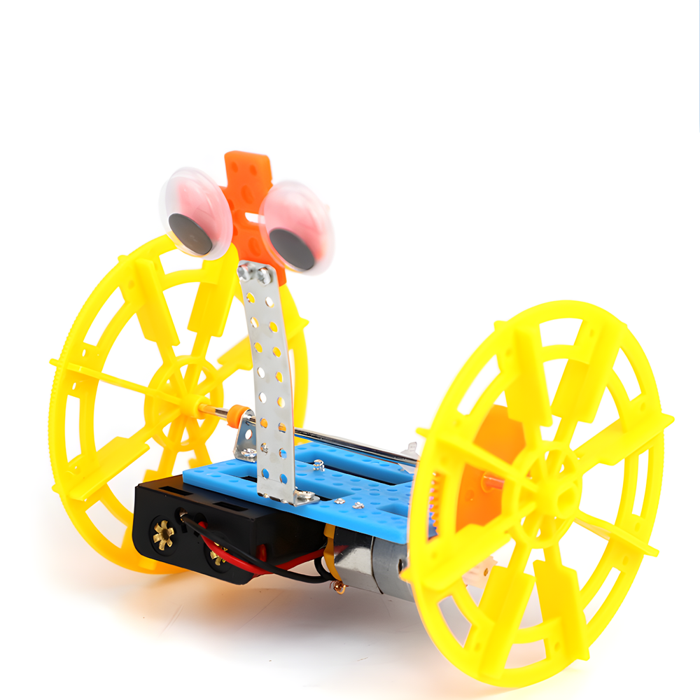
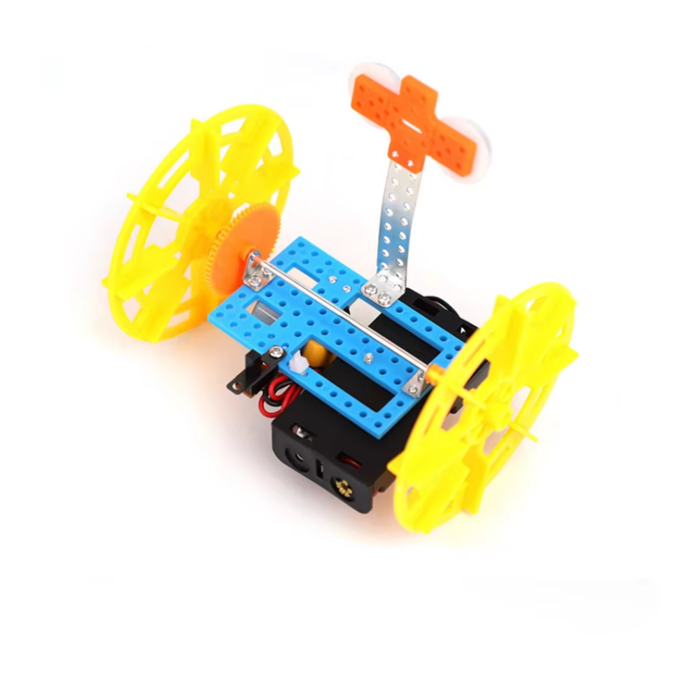
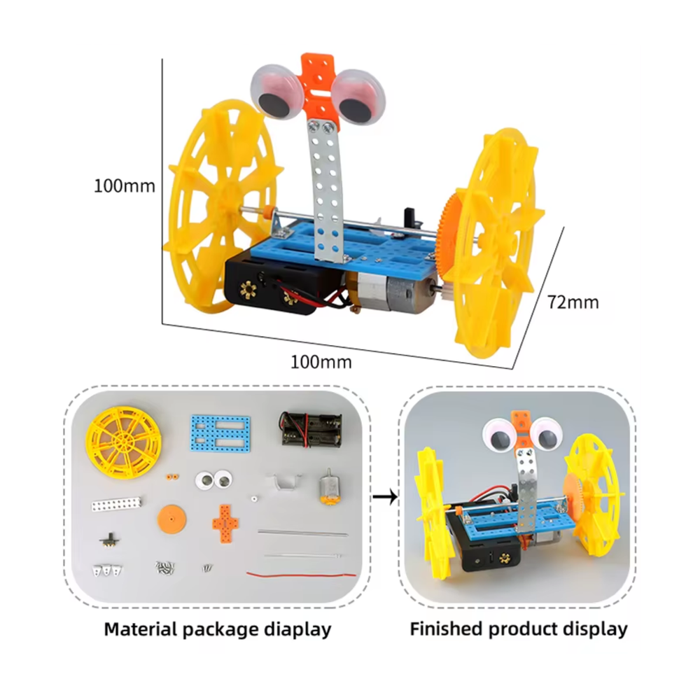
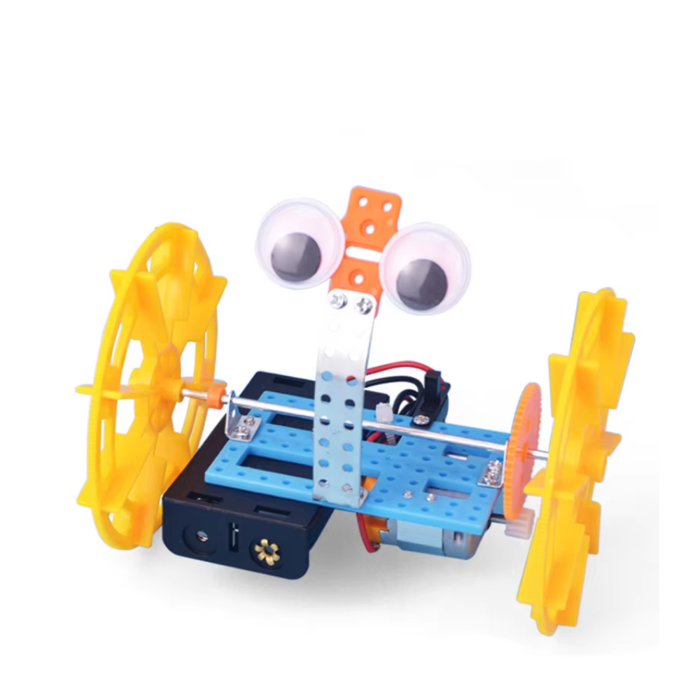
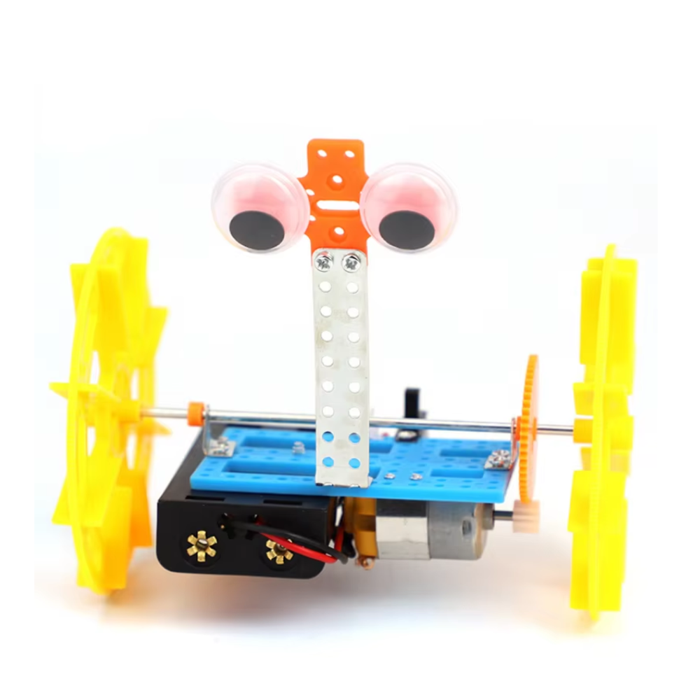
Pludo Self Balancing Car – Balance & Motion Learning DIY Kit for Kids Ages 5–8 | Grade 1-3 Kick-start hands-on learning with a self-balancing car children can build from scratch, turning simple parts into real engineering moments that feel like play. This Robotic Diy Kit project guides young makers to assemble a motor-powered car with a battery holder, gears, and wheels, making energy and motion easy to see in a safe, screen-free activity. With clear steps and child-friendly parts, it introduces basic circuits and mechanics while building fine motor skills, problem-solving, and early confidence. The motor drives gears that rotate both wheels, creating smooth forward motion. Balanced force on each wheel keeps the robot stable, showing how motors and gears work together for controlled movement. Perfect for classrooms, makerspaces, and home learning, the kit rolls smoothly to demonstrate balance and cause-and-effect, ideal for demos, STEM fairs, and early physics lessons. Thoughtfully sized for easy storage, it fits naturally into a starter diy kit setup, complements broader diy science kits, and adds variety to any diy car kit collection, encouraging repeat builds and deeper exploration over time. What Your Child Will Learn Build a motorized car and explore how power, gears, and balance work together to create movement. Understand the flow of electricity and how it drives mechanical motion. Strengthen fine motor skills and spatial awareness through guided assembly. Learn the fundamentals of balance, speed, and direction in a fun, interactive way. Boost focus, patience, and creative thinking by experimenting with different setups. Ideal for STEM learning at home, classrooms, or science fairs, encouraging exploration beyond textbooks. Educational Outcomes Electricity & Circuits: Discover how motors and batteries work together to produce motion. Mechanics in Motion: Understand gear movement, friction, and balance in a two-wheel design. Engineering Mindset: Practice logical sequencing, trial and error, and system-based thinking. Fine Motor Development: Enhance coordination and concentration while assembling small components. Confidence Through Creation: Experience the satisfaction of building something functional from scratch. 💡 Did you know? Robots use the same principles of balance and motion control that your two-wheel car demonstrates - it’s the foundation of robotics! Features: Assemble a simple two-wheel car with motor, gears, wheels, and a battery holder for screen-free learning. Introduces basic electricity and mechanics using child-friendly parts and clear instructions. Demonstrates balance in motion as kids observe how power reaches the wheels and drives movement. Helps develop fine motor skills, problem-solving, focus, and confidence through guided tinkering. Perfect for classroom lessons, STEM fairs, or at-home experiments with easy setup and cleanup. Made with lightweight, durable components that allow repeated builds for continued learning.
₹579.40  
Backorder Available In Store Pickup Same Day Shipping
₹1258.60
Incl. GST (No Hidden Charges)
Bambu Lab H2C Combo 7-Materia…
(0)
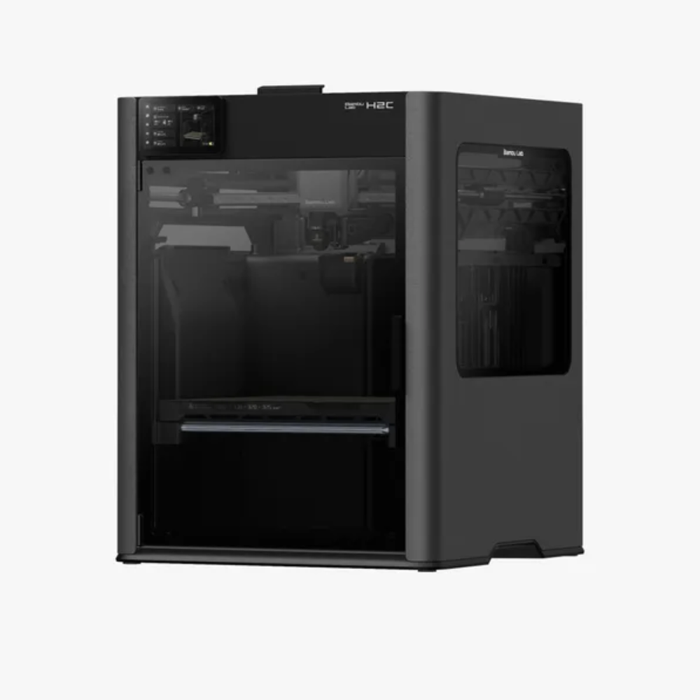
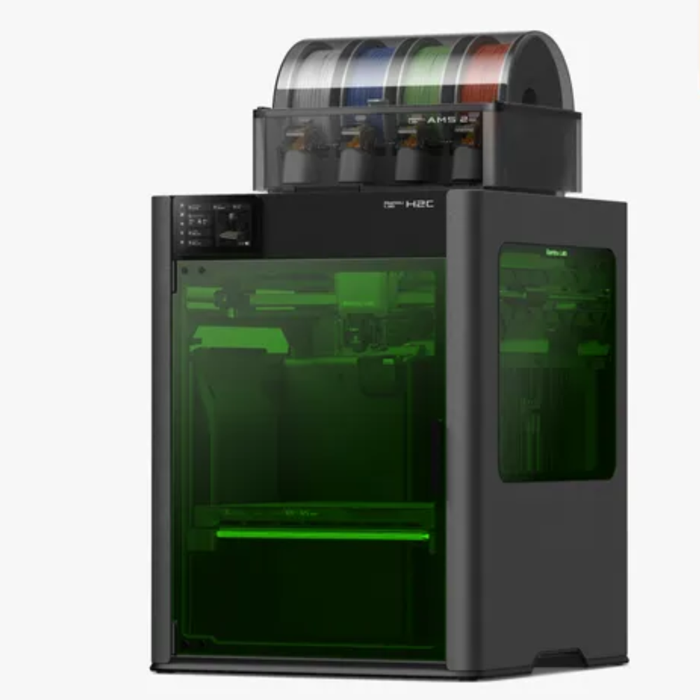
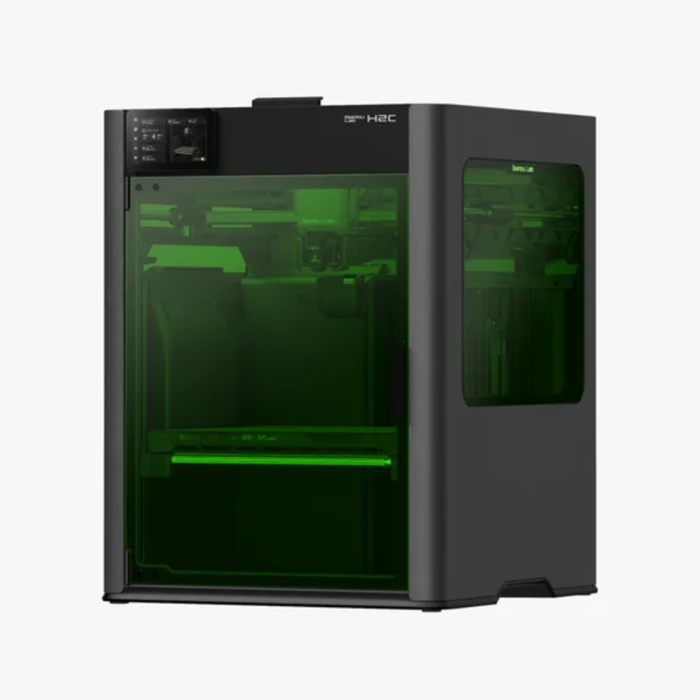
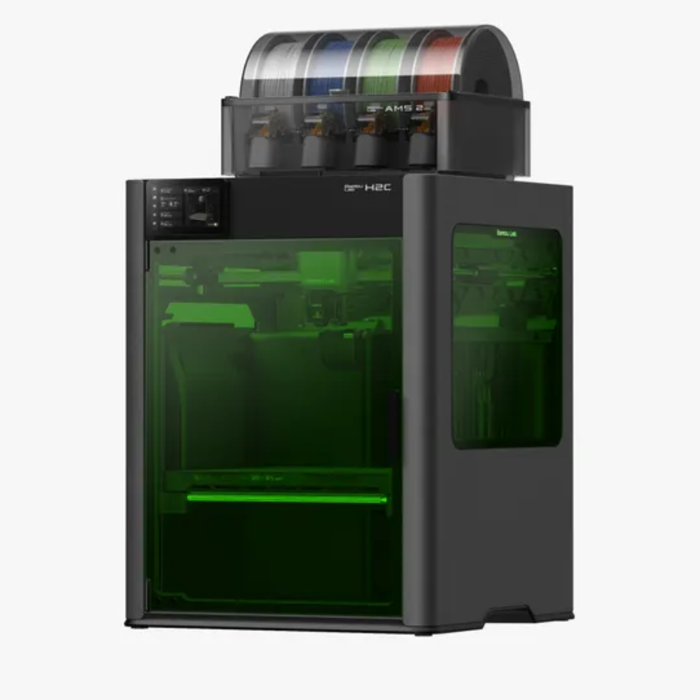
Bambu Lab H2C Combo 3D Printer The Bambu Lab H2C Combo 3D Printer redefines high-performance multi-material 3D printing with precision, speed, and intelligence. Built on advanced Fused Deposition Modeling technology, it features a robust aluminum-steel chassis, fully enclosed chamber, and hardened steel extrusion system capable of handling demanding engineering materials. With support for printing up to seven materials in a single job—without purge waste—the H2C enables complex, integrated designs effortlessly. Its AI-driven monitoring, ultra-fine 50 µm motion accuracy, and automatic calibration ensure consistent, professional-grade results, making it ideal for industrial prototyping, advanced R&D, and professional manufacturing workflows. Purge Saving Multi-Material Printing Using the H2C, it is possible to print as many as seven distinct materials in one pass without needing to purge any nozzles. Merge various material characteristics into a single continuous form and elevate integrated design to an unprecedented level. Integrated TPU Joints for Multi-Color Parts Print durable TPU ball joints for your robot models flexible long-lasting and built for endless motion. Multi-Material Printing With Minimal Purge Waste In conventional single-nozzle multi-material printing, it is necessary to flush out any remnant material when switching filaments. Vortek revolutionizes this process by utilizing a smart hotend-swapping mechanism that substitutes the complete hotend, resulting in quicker, cleaner prints with reduced waste. Fully Automatic Filament Change and Always Delivering the Most Efficient Conversation The Vortek system integrates flawlessly with our dependable AMS (Automatic Material System), enabling the complete automation of the filament replacement procedure, eliminating the necessity for manual loading of each filament into the toolhead. Small Form Factor, More Filaments As only the hotend is exchanged, the setup can accommodate as many as six hotends which are not changeable without greatly decreasing the build capacity. This allows for an increased variety of materials, colors, and options, all within a single print. 8-Second Induction Heating and Contactless Design for Reliability Our top tier induction heating technology heats the nozzle within 8 seconds, greatly minimizing the preheating duration required for changing materials when compared to conventional techniques. Our strict criteria for dependability prompted us to shift from using metal pins that rely on contact, as they are susceptible to oxidation and inconsistent connections. We created a solution without physical contact that guarantees a consistent, high-frequency link, which is essential for accurate temperature management and synchronized intelligent hotend operation. Enclosed for High Performance Printing and Fully Automatic Nozzle Offset Calibration Featuring a continuous enclosure and a flexible air circulation system, the H2C ensures a consistent environment temperature for top quality materials while also purifying the air to create a tidy and secure workspace. Our calibration process for inductive nozzle offset is entirely automated, requiring no manual intervention, calibration plates, or additional setup. Within a matter of minutes, the H2C accurately adjusts the nozzle offset to a tolerance of 25 microns. Dedicated Hotends for Specific Filaments The Vortek system of the H2C allows you to assign one of its six swappable hotends to particular filaments, significantly transforming the use of important engineering substances. This guarantees enhanced reliability and uniformity in printed results. Additionally, each hotend can automatically remember filament data, allowing for an immediate pairing with the appropriate hotend when that same material is loaded again. Smooth Surface, Sharp Edges The H2C utilizes the servo motor within the extruder along with high-resolution eddy current sensors positioned at the nozzle to detect the dynamics of extrusion. This capability allows for accurate control of the extrusion process and the automatic adjustment of Pressure Advance (PA) settings for every filament, leading to smoother surfaces and more defined, sharper edges. Flexible Network Security & Connectivity The H2C provides easy access to cloud connections for controlling the device remotely from any gadget. For applications that require high security, it also offers comprehensive offline capabilities, guaranteeing total physical separation. Users can manage the printer, transfer files, and perform firmware updates without requiring internet access. For those with advanced skills, Developer Mode allows access to the MQTT port, enabling the integration of external components and software. Features: The H2C supports multi material printing for up to 7 different materials, allowing you to produce complex parts in a single run while completely eliminating the need for nozzle purging or creating material waste. The system is equipped with dual hardened steel nozzles capable of reaching 350 °C, which are specifically engineered for long term durability and the processing of high temperature engineering filaments. It features a fully enclosed heated chamber that maintains a steady 65 °C environment to effectively minimize warping and significantly improve layer adhesion for high performance materials. The high force PMSM servo extruder provides up to 10 kg of pushing power, delivering stable and high speed extrusion with 70% more force than traditional stepper motors. By utilizing a vision encoder that automatically compensates for mechanical drift, the printer achieves an ultra precise motion accuracy of 50 µm throughout the entire build. The AI powered print monitoring system uses a network of 59 intelligent sensors and a quad camera vision setup to detect potential printing errors in real time. The H2C features automatic nozzle offset and pressure advance calibration to ensure perfectly smooth surface finishes and consistently sharp edges on every part.
₹348334.84  
Backorder Available In Store Pickup Same Day Shipping
₹456398.60
Incl. GST (No Hidden Charges)
7Semi Vikram-3015 30V 15A DC …
(0)
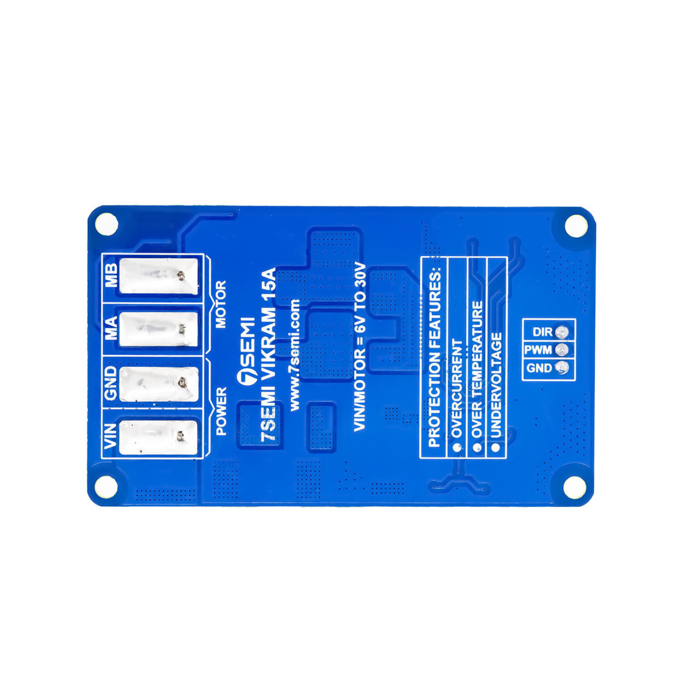
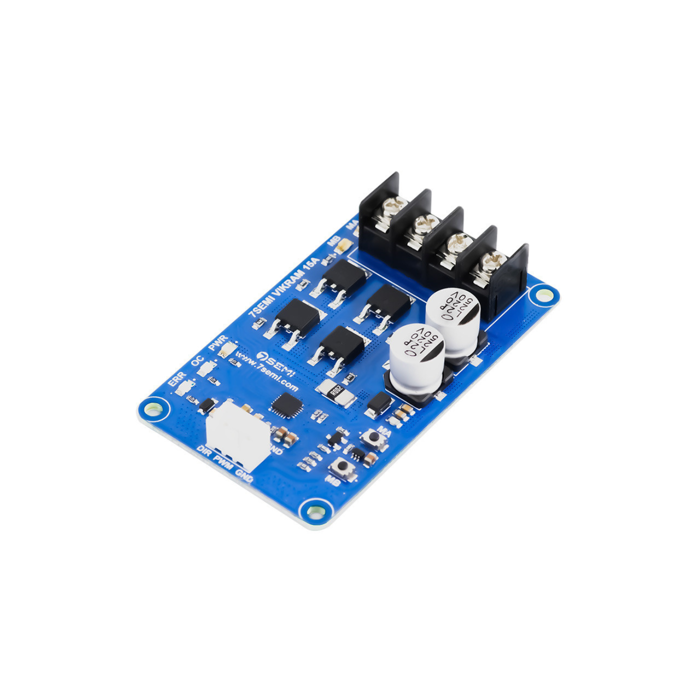
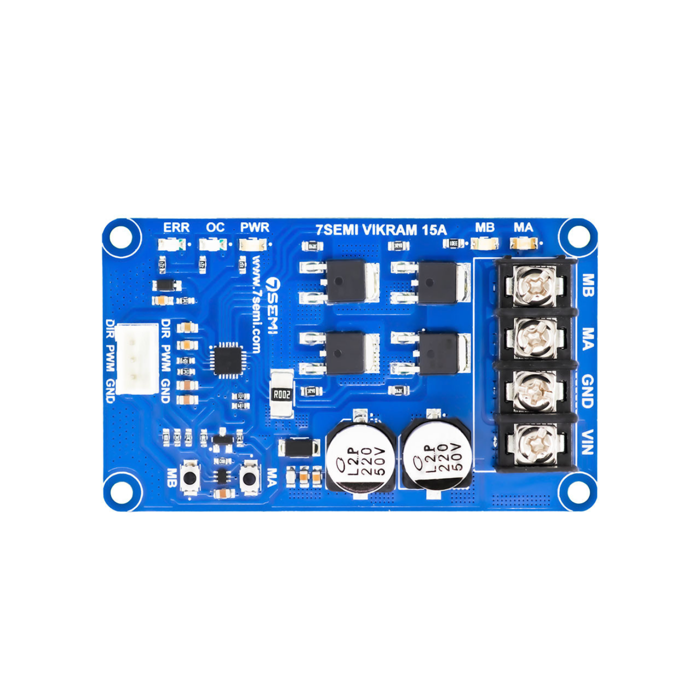
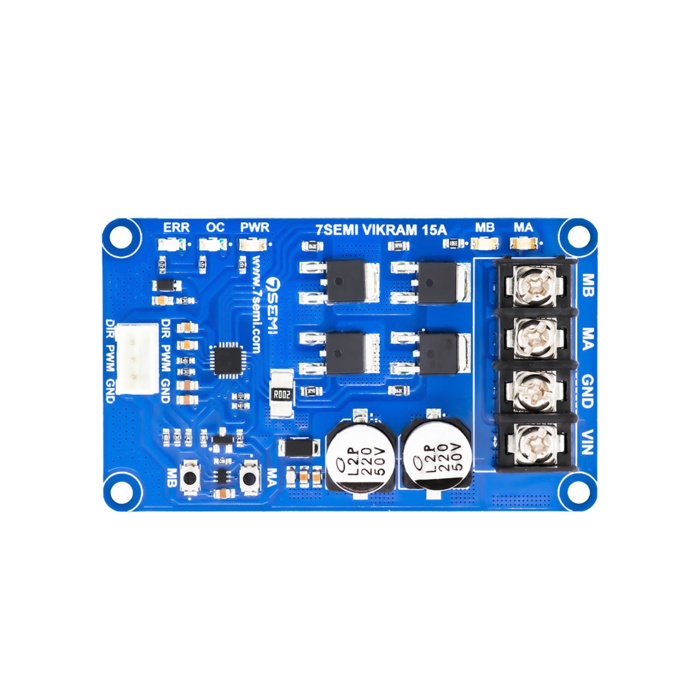
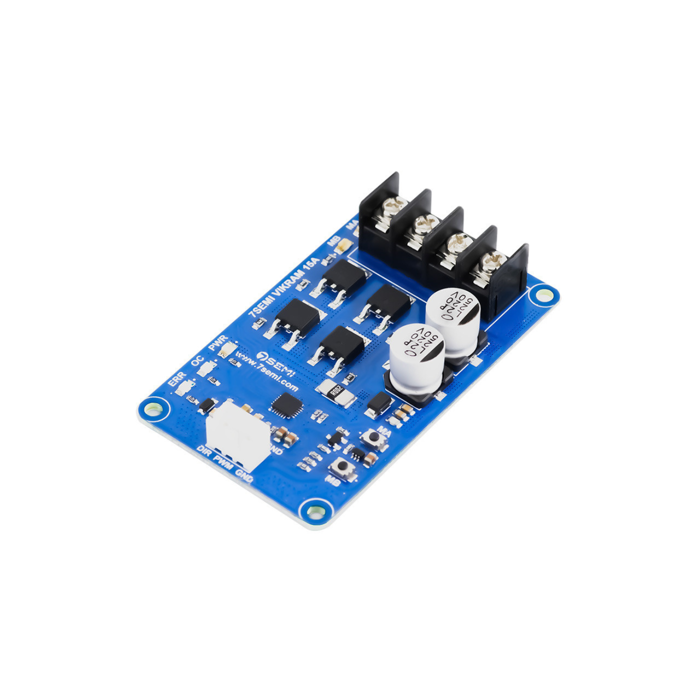
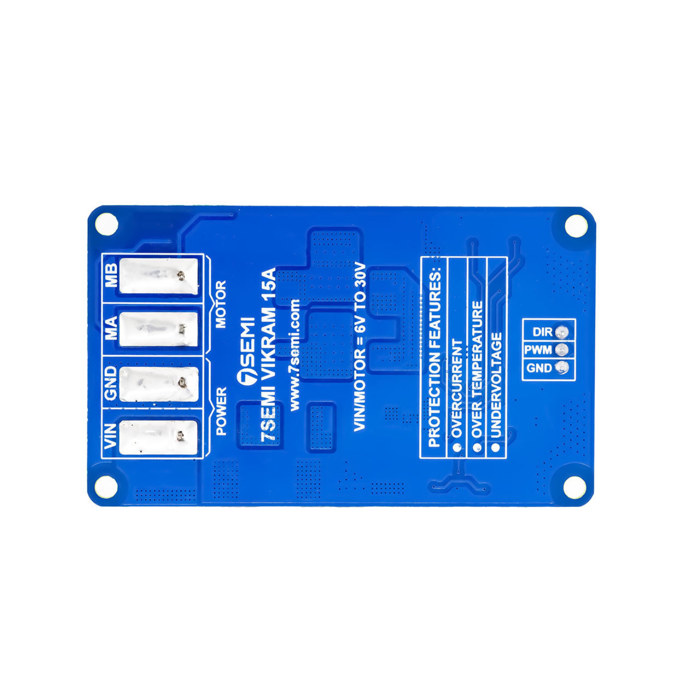
7Semi Vikram-3015 High-Power 30V 15A Single-Channel DC Motor Driver Module The 7Semi Vikram-3015 is a powerful and reliable high-current motor driver designed to handle demanding brushed DC motor applications with ease. Built for makers, robotics engineers, and automation projects, it supports a wide operating voltage range of 6V to 30V and delivers a continuous 15A output without requiring a heat sink. Its fully NMOS H-Bridge architecture ensures excellent efficiency, making it ideal for high-load motor control setups that require consistency and stable performance. With support for 3.3V and 5V logic levels, the Vikram-3015 easily integrates with popular development platforms such as Arduino, Raspberry Pi, and PLC systems. The on-board test buttons, motor output LEDs, and robust protection circuitry, such as overcurrent, overheating, and undervoltage protection, simplify debugging and ensure long-term reliability. Whether you're building robotics systems, automation hardware, or DIY mechatronics, this motor driver provides a dependable foundation for high-torque motor control. Features: Provides smooth bidirectional control for single-channel brushed DC motors, enabling forward and reverse operation with high responsiveness. Operates efficiently across a wide 6V–30V voltage range while delivering a strong and stable 15A continuous current output. Supports both 3.3V and 5V logic inputs, ensuring seamless compatibility with microcontrollers and SBCs like Arduino and Raspberry Pi. Includes onboard testing features such as dedicated buttons and motor output LEDs for quick diagnostics and validation. Offers robust safety mechanisms including overcurrent protection, over-temperature shutdown, and undervoltage lockout for long-term durability. Uses a fully NMOS H-Bridge, improving efficiency and eliminating the need for bulky heat sinks.
₹830.20  
Backorder Available In Store Pickup Same Day Shipping
₹1888.60
Incl. GST (No Hidden Charges)

Features

icon

Full Screen mode

Mode
On
Off

Dark mode

Mode
On
Off

Clear local storage

Clear Cache & Default
0