

Sort by

Browsing
Dot Matrix LED Displays
MAX7219 4 in 1 Dot Matrix Dis…
4 in 1 Dot Matrix Module (MAX7219)
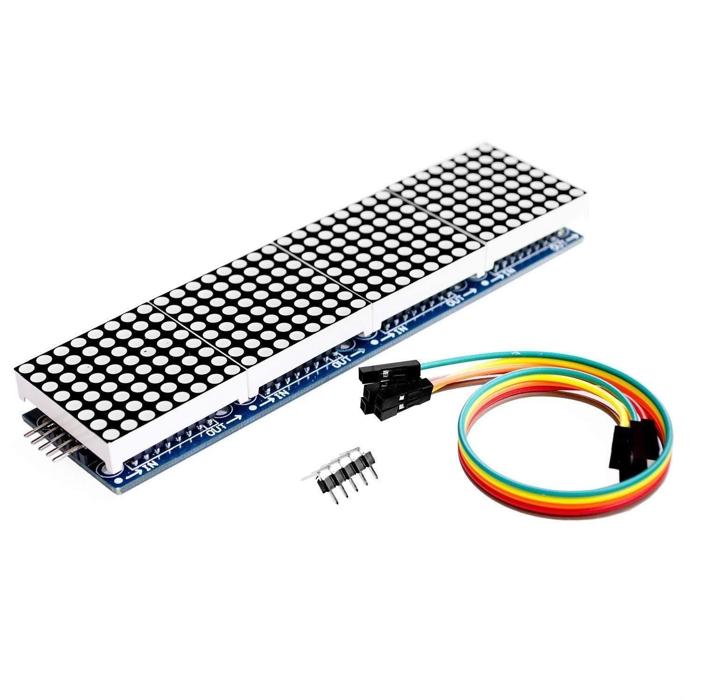
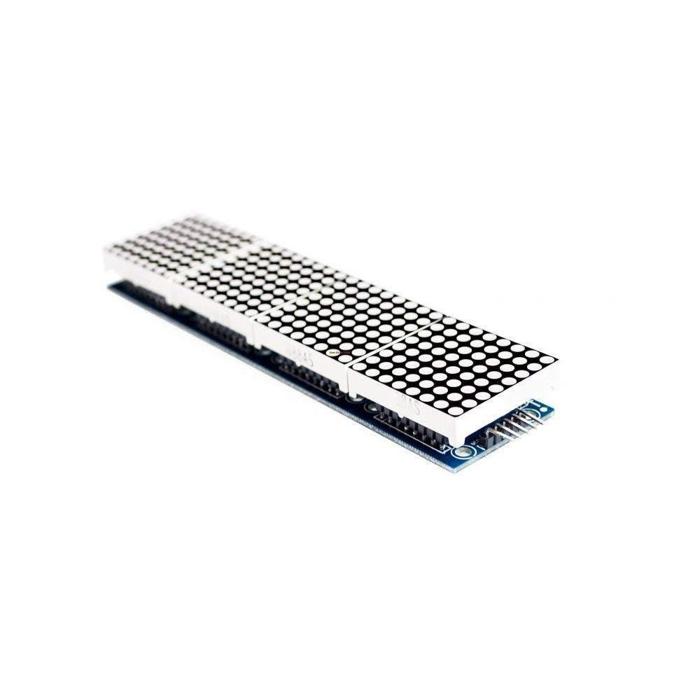
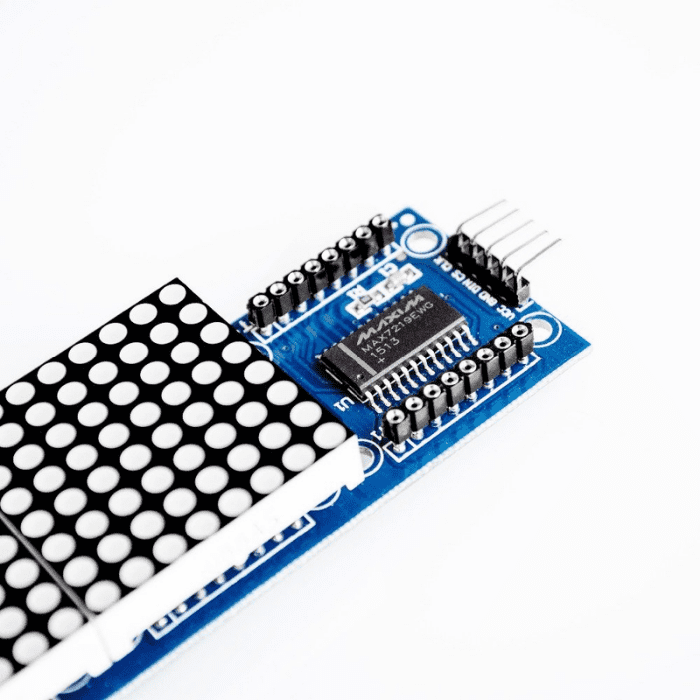
This is a Dot Led Matrix Module with a MAX7219 Driver chip. You will be able to add some great cool animation to your upcoming project by using this
dot matrix display
module. The individual module contains 88 LEDs, each of which is precisely controlled by the MAX7219 driver to produce the desired colour pattern. The main advantage of using this is that users will be able to control all 64 LEDs by simply connecting three output communication wires to microcontrollers such as
Arduino
, etc.
It is also very simple to connect the two modules. Simply connect the previous breakout board's output pins to the new module's input pins, and you can connect as many DOT LED
Matrix
Modules to the Arduino as you want!!! The MAX7219 Dot Led Matrix Module is a common-cathode serial input driver that connects microcontrollers to LED matrices. A 4-wire serial interface allows you to connect any common microcontroller to this module. Without refreshing the entire display, each output can be addressed. This module only needs three I/O lines to drive the display, making it ideal for microcontroller projects. To set the segment current of each LED, only one external register is used.
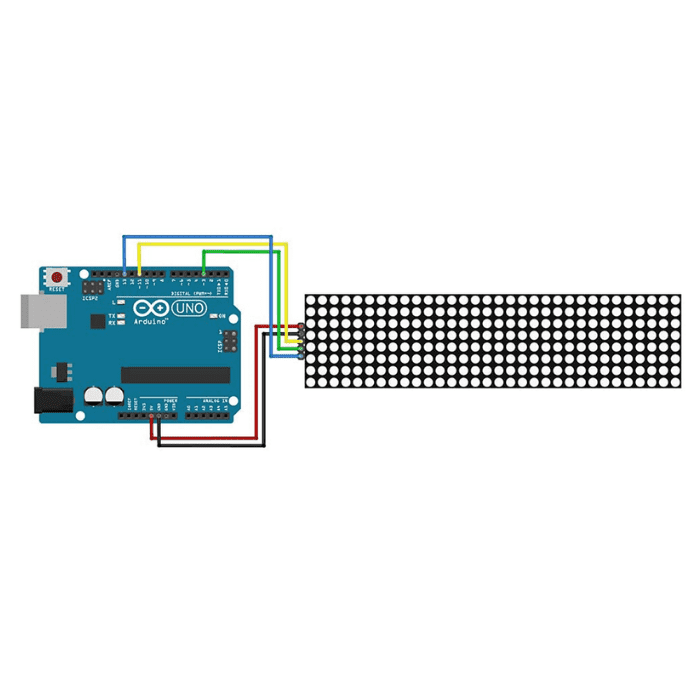
Wiring instructions:
The left side of the module to the input port, the right to an output port
When the control of a single module, simply input port connected to the CPU
When a plurality of cascaded modules, input and output termination CPU, an input terminal of the second output end of the first module a module, the first two modules of the input terminal of the three termination modules, and so on.
Pin connection:
Dot Matrix Display Module to the Arduino
Vcc
5V
GND
GND
DIN
Pin 12
CS
Pin 10
CLK
Pin 11
₹293,76
Incl. GST (No Hidden Charges)
Backorder Available
₹589,40
Incl. GST (No Hidden Charges)
MAX7219 4 in 1 Dot Matrix Display Module
4 in 1 Dot Matrix Module (MAX7219) This is a Dot Led Matrix Module with a MAX7219 Driver chip. You will be able to add some great cool animation to …
As low as
₹293,76
₹293,76
₹589,40
Incl. GST (No Hidden Charges)
Backorder Available
MAX7219 8x8 LED Dot Matrix Di…
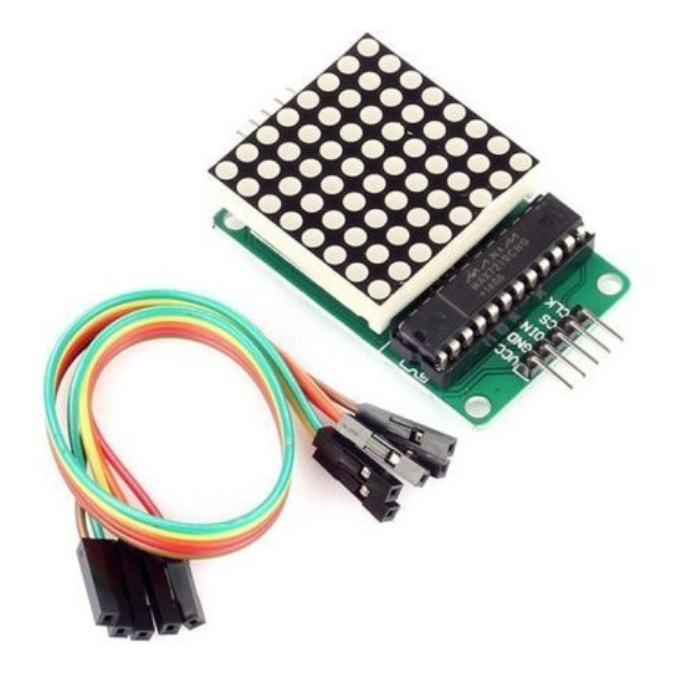
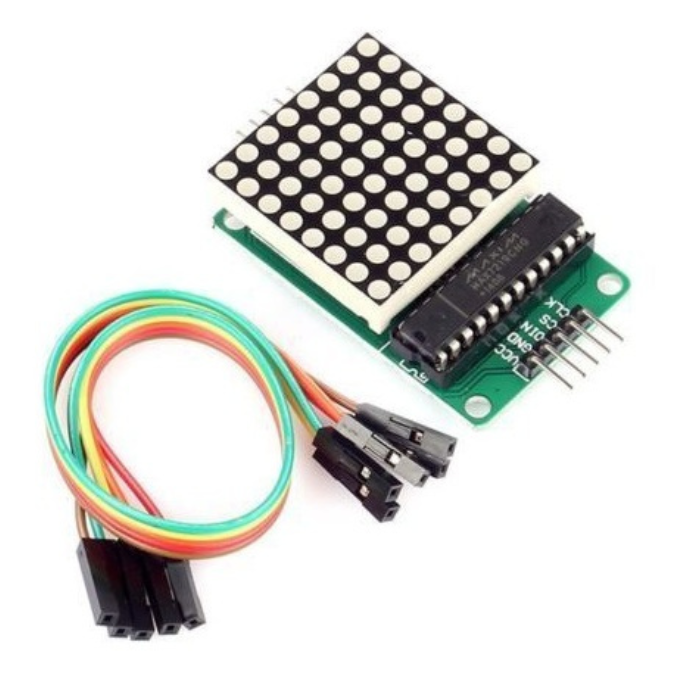
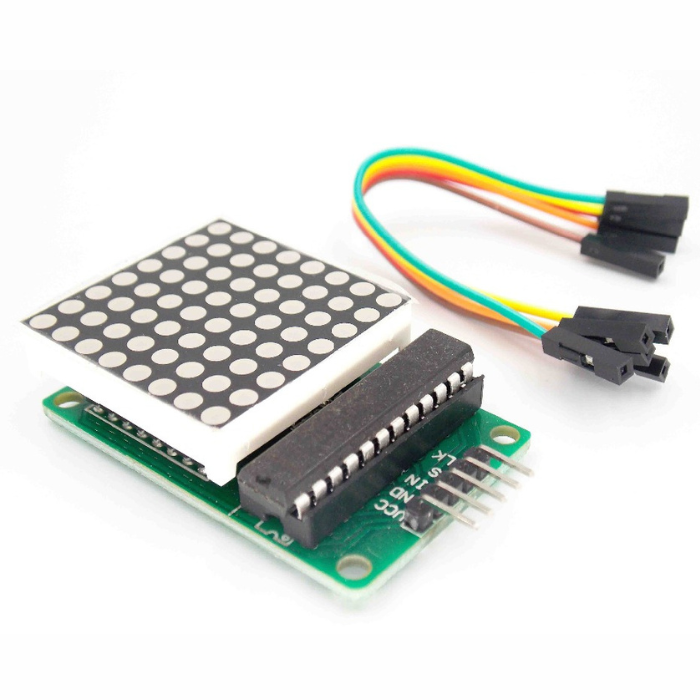
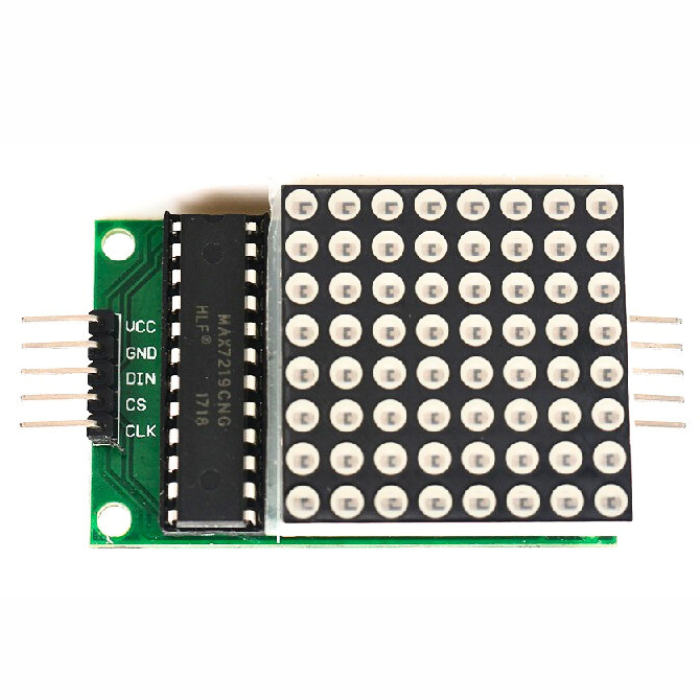
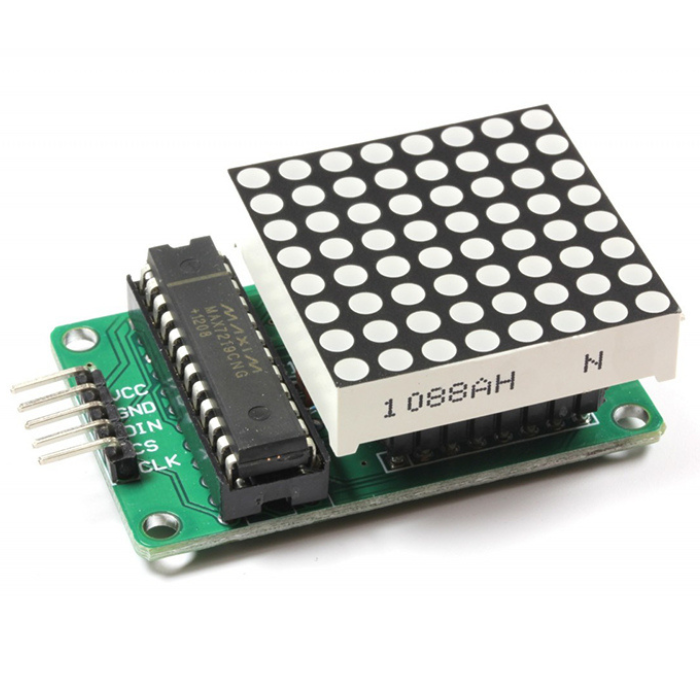
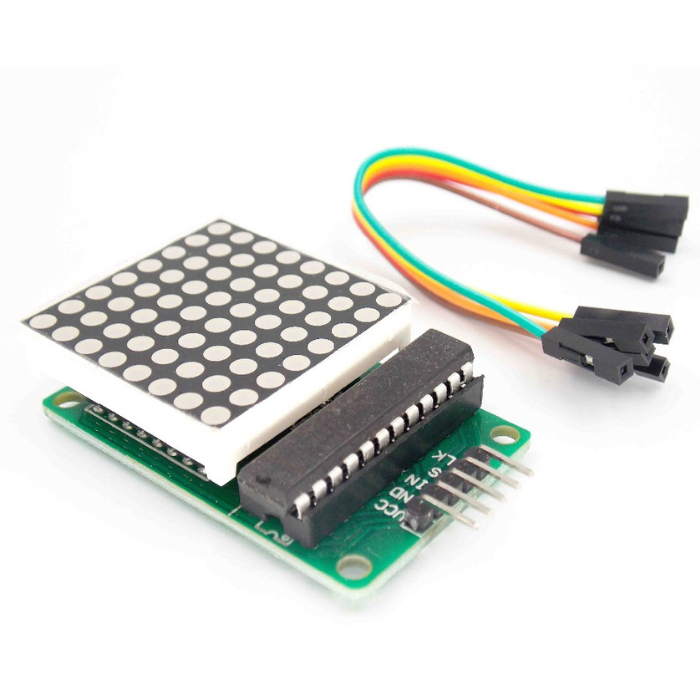
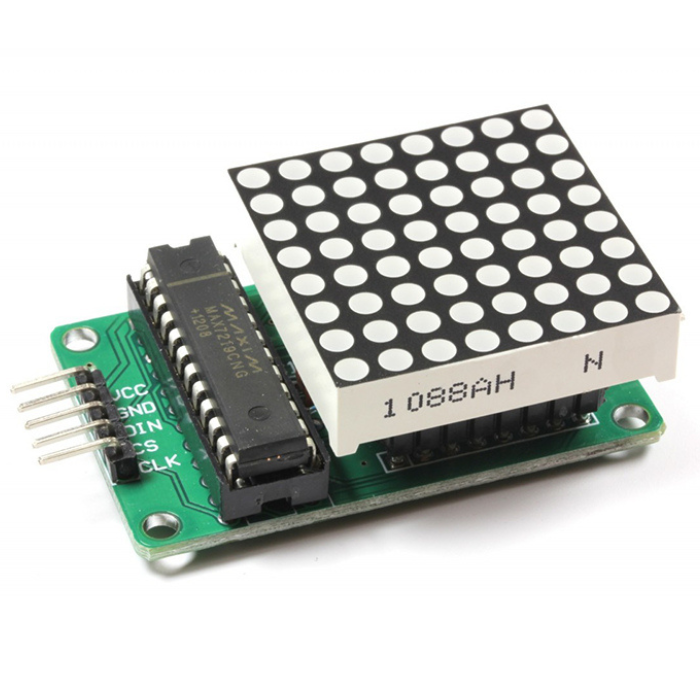
MAX7219 8x8 LED Dot Matrix Display Module
The MAX7219 is a serial input / output common-cathode display driver that is connected to a microprocessor and has an 8-digit 7-segment digital LED display that can also be connected to a bar graph display or 64 separate LEDs. To store each data, an On B BCD encoder with an on-chip, multi-channel scanning loop word drive and an 8 x 8 static RAM is used. To set the current of each LED segment, only one external register is used.
All general-purpose microprocessors can be connected using a simple four-wire serial interface. You can also use this display module in your
Arduino
project as well.
Each data can be addressed in the update, which eliminates the need to rewrite the entire display. MAX7219
Dot Led Matrix display
also allows the user to choose whether to code or not code each data point. The
Dot Led Matrix display
includes a 150A low-power shutdown mode, analogue and digital brightness control, a scan-limit register that allows the user to display 1-8 bits of data, and a let all LED light detection mode. A dot-matrix can be driven with only three IO ports! Flicker-free dot-matrix display! Cascades are supported!
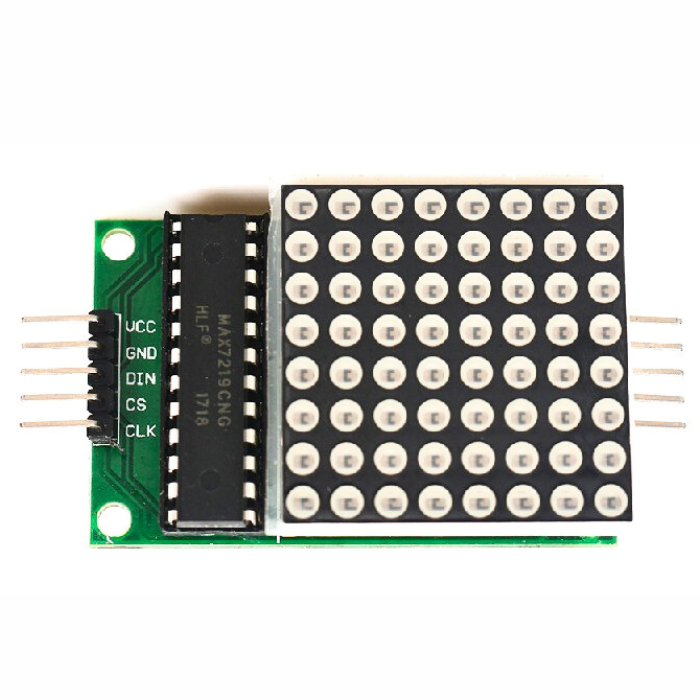
Pin connection:
Dot Matrix Display Module to the Arduino
Vcc
5V
GND
GND
DIN
Pin 12
CS
Pin 10
CLK
Pin 11
Applications:
Bar-Graph Displays
7-Segment Displays
Industrial Controllers
Electronic Panel Meters
LED Matrix Displays
Display symbols, simple graphics, and texts.
₹148,00
Incl. GST (No Hidden Charges)
Backorder Available
₹275,80
Incl. GST (No Hidden Charges)
MAX7219 8x8 LED Dot Matrix Display Module
MAX7219 8x8 LED Dot Matrix Display Module The MAX7219 is a serial input / output common-cathode display driver that is connected to a microprocessor and has an 8-digit 7-segment digital …
As low as
₹148,00
₹148,00
₹275,80
Incl. GST (No Hidden Charges)
Backorder Available
Advanced Digital Electronics …
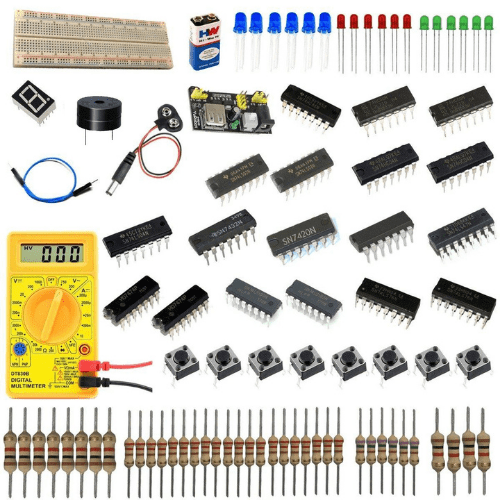
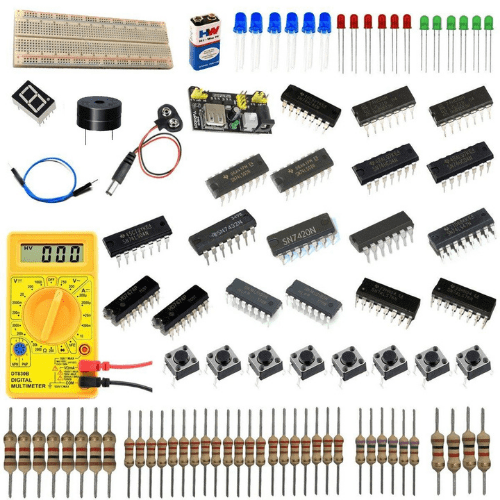
Advanced Digital Electronics Kit
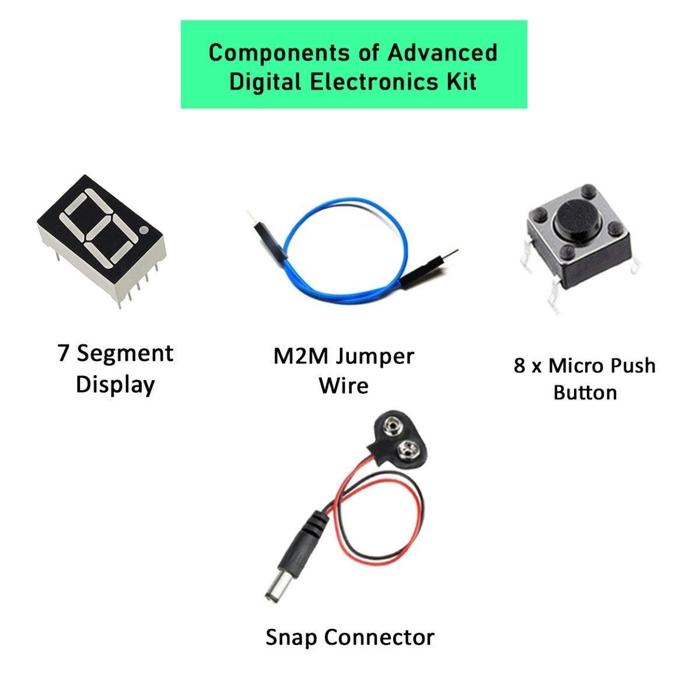
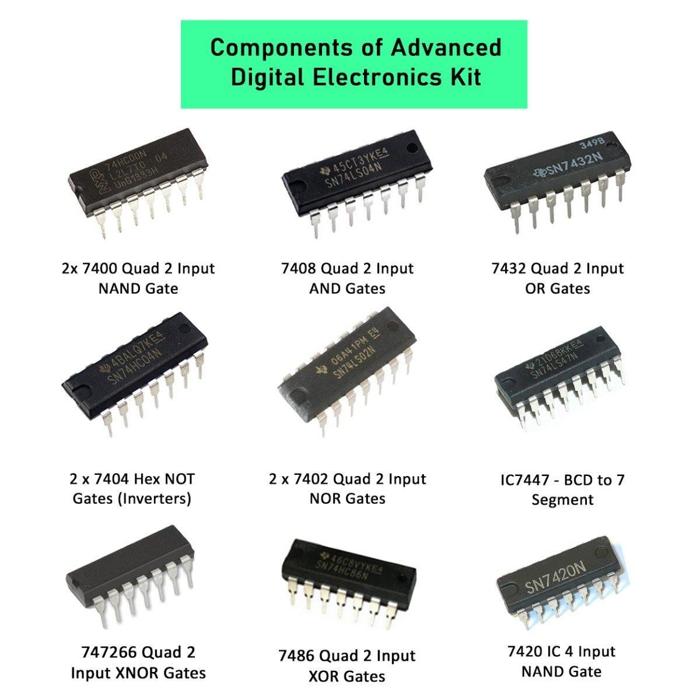
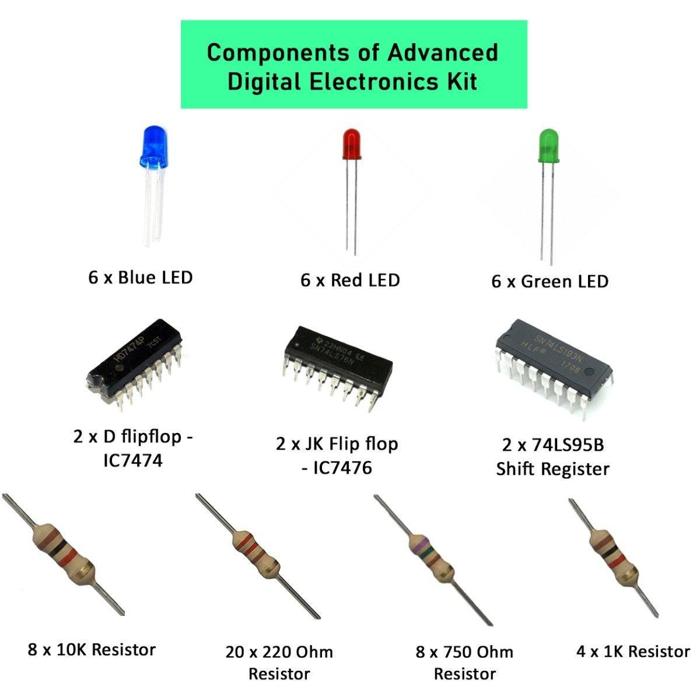
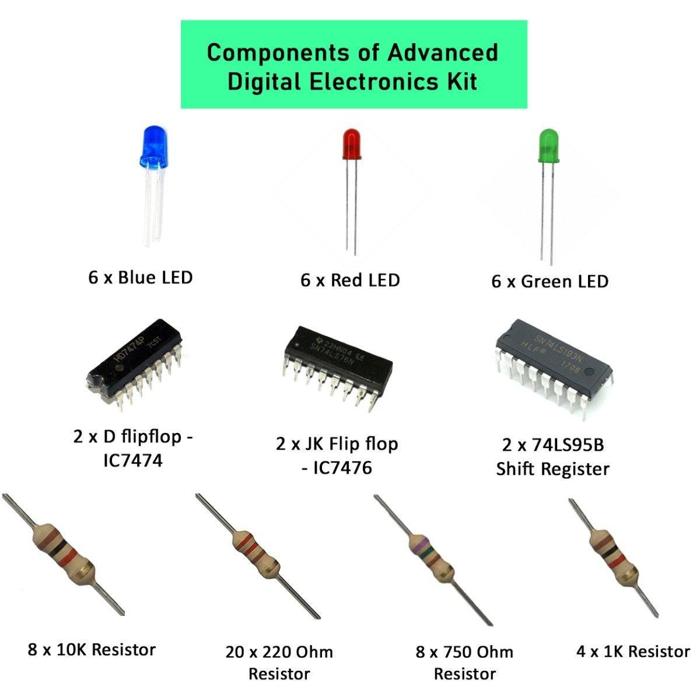
Iotcart has curated the Advanced Digital Electronics Kit for those enthusiasts and students who are well versed with the concepts of boolean algebra and can understand the world of 0's and 1's. This advanced kit will dwell deeper into the domain of digital electronics with flip flops, shift registers, counters, 7 segments, multipliers, and more. Along with the kit, you will also get a Manual designed for Advanced Digital Electronics kit to guide you and challenge you with experiments.
Led[Light-emitting diode]:
LED
is an abbreviation for light-emitting diode. LED lighting products use up to 90% less energy than incandescent light bulbs. An electrical current flows through a microchip, illuminating the tiny light sources known as LEDs, resulting in visible light.
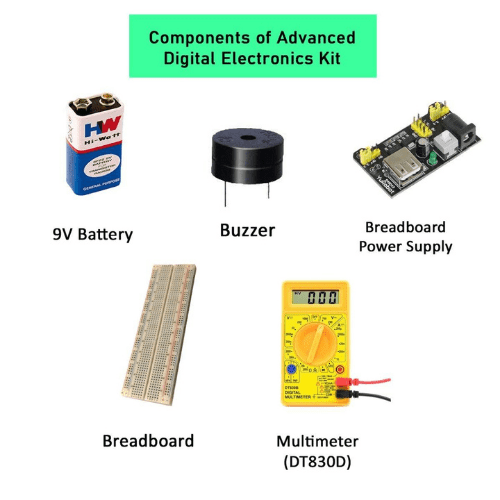
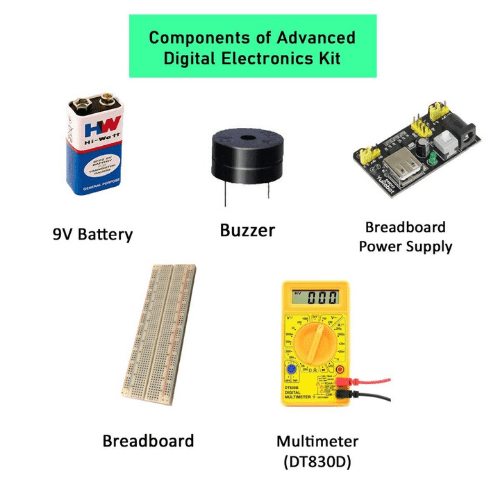
Breadboard:
A
breadboard
(also known as a plug block) is used to create temporary circuits. It is beneficial to designers because it allows components to be easily removed and replaced. It is useful for someone who wants to build a circuit in order to demonstrate its operation and then reuse the components in another circuit.
Breadboard Power Supply:
The 3.3V/5V
Breadboard Power Supply Module
has a multi-purpose female USB socket as well as dual 5 V and 3.3 V power rails. The 3.3V/5V Breadboard Power Supply Module is designed to fit snugly into a standard 400 or 800 tie-point breadboard.
Multimeter:
?A
multimeter
is a measuring device that can measure a variety of electrical properties. A typical multimeter can measure voltage, resistance, and current, and is also known as a volt-ohm-milliammeter (VOM) because it includes a voltmeter, an ammeter, and an ohmmeter.
Resistor:
A
resistor
is a component of an electronic circuit that limits or regulates the flow of electrical current. Resistors can also be used to supply a fixed voltage to an active device such as a transistor.
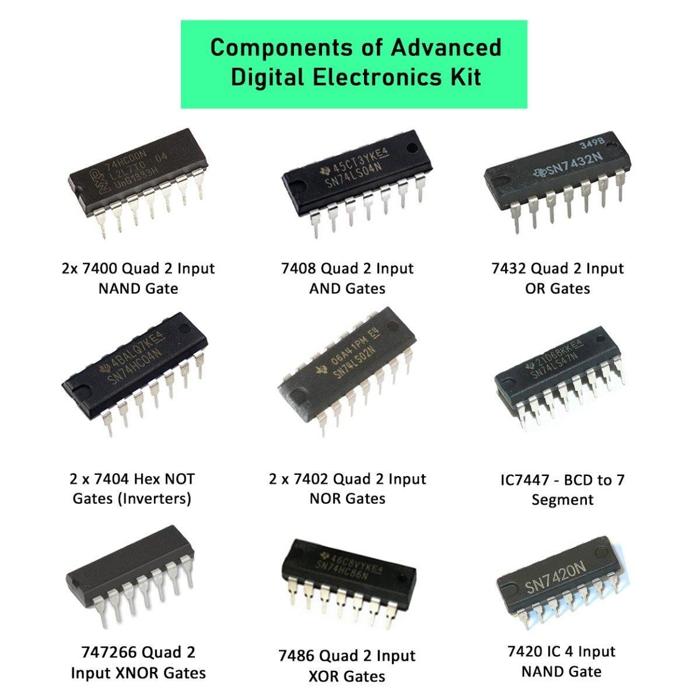
IC [Integrated Circuit]:
The
IC [Integrated Circuit]
is a small electronic device made of semiconductor material that contains many microscopic elements like diodes and transistors. Capacitors and resistors.
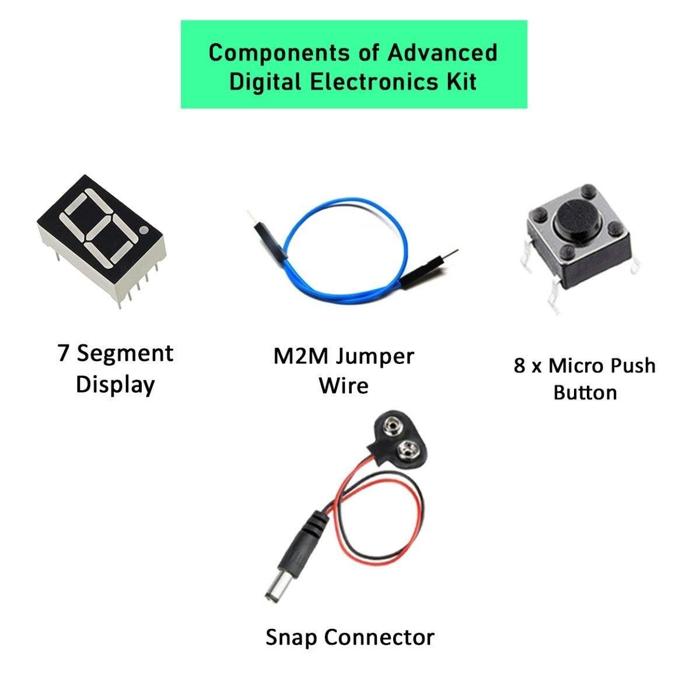
Jumper Wire:
A
jumper wire
is an electric wire used for connecting remote electric circuits on printed circuit boards. It is possible to short-circuit and short-cut (jump) to the electric circuit by connecting a jumper wire to the circuit.
7-segment display:
A
seven-segment display
is a type of electronic display device for displaying decimal numerals that is less complex than dot matrix displays.
Hi-Watt 9V Battery:
The most common and portable 9V battery is the
Hi-Watt 9V Battery
. It is non-rechargeable and provides a high-capacity, low-cost solution for a wide range of electronic devices. This battery provides a high-capacity and low-cost solution for a wide range of electronic devices. It is used in conjunction with its own
battery snap
. The battery clip can be used to power LEDs or other devices using a 9V battery. It's used in electronic toys, clocks, walkie-talkies, smoke alarms, hand-held test equipment, digital instruments, transistor radios, and other applications.
Micro Pushbutton:
The
micro pushbutton
is a small and inexpensive single pole single-through switch (SPST) that can be soldered on a printed circuit board (PCB). When pressed, this push button closes a circuit and is typically used as a reset button.
Note
: The package dimensions are 22x15cms and weigh about 50 grams.
Sample Experiment:-
Building a Binary Counter using J-K Flip Flop :-
Material Required:
Breadboard Power Supply
9V Battery
DC Barrel Jack
Breadboard
JK Flip flop - IC7476
Jumper Wires
Procedure:
A binary counter can be constructed from J-K flip-flops by taking the output of one cell to the clock input of the next. The J and K inputs of each flip-flop are set to 1 to produce a toggle at each cycle of the clock input. For every two toggles of the first cell, a toggle is produced in the second cell, and so on down to the fourth cell. This produces a binary number equal to the number of cycles of the input clock signal. This device is sometimes called a "ripple through" counter. The same device is useful as a frequency divider.
In the 3-bit ripple counter, three flip-flops are used in the circuit. As here ‘n’ value is three, the counter can count up to 2
3
= 8 values .i.e. 000,001,010,011,100,101,110,111. The circuit diagram and timing diagram are given below.
Circuit Diagram:
Timing Diagram:
The output waveform of Q1 is given as a clock pulse to the flip flop J2K2. So, when Q1 goes from 1 to 0 transitions, the state of Q2 is changed. The output of Q2 is the MSB.
INPUT
OUTPUT
Number of Pulses
Q2
Q1
Q0
0
-
-
-
1
0
0
0
2
0
0
1
3
0
1
0
4
0
1
1
5
1
0
0
6
1
0
1
7
1
1
0
8
1
1
1
This circuit can be further connected to the BCD to 7-segment IC to get the BCD output onto the 7-segment display.
Applications:
The Advanced Digital Electronics kit can be used to build various combinational circuits such as BCD decoder drivers.
To build serial to parallel data converters.
To build binary counters.
To build binary multipliers.
₹1057,10
Incl. GST (No Hidden Charges)
Backorder Available
₹1955,80
Incl. GST (No Hidden Charges)


Advanced Digital Electronics Kit
Advanced Digital Electronics Kit Iotcart has curated the Advanced Digital Electronics Kit for those enthusiasts and students who are well versed with the concepts of boolean algebra and can understand …
As low as
₹1057,10
₹1057,10
₹1955,80
Incl. GST (No Hidden Charges)
Backorder Available
4.3in Serial Interface Electr…
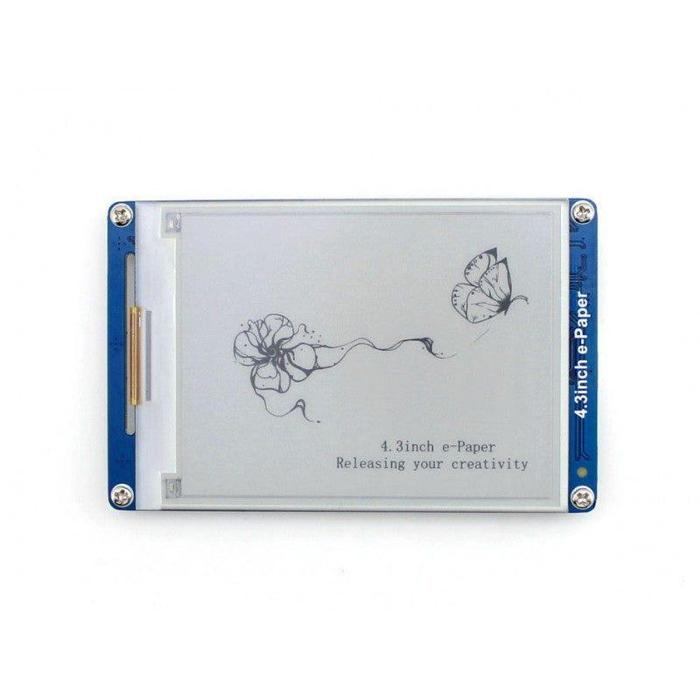
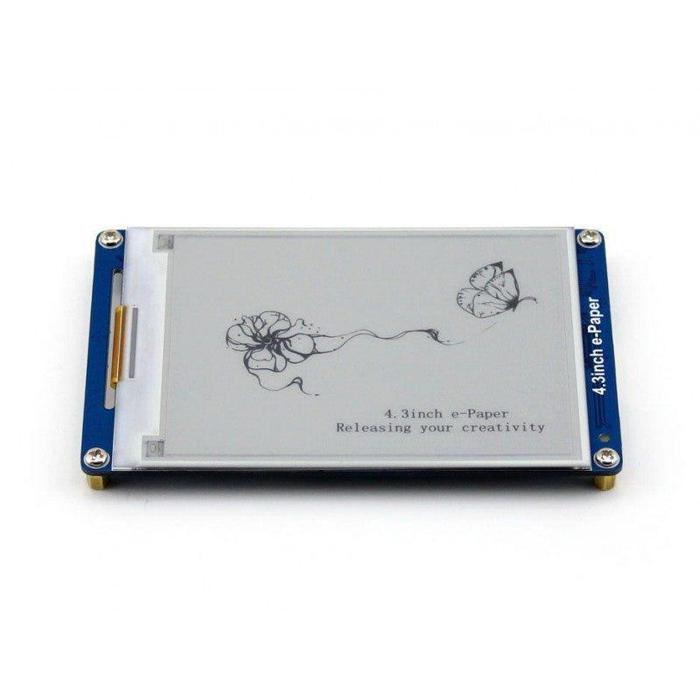
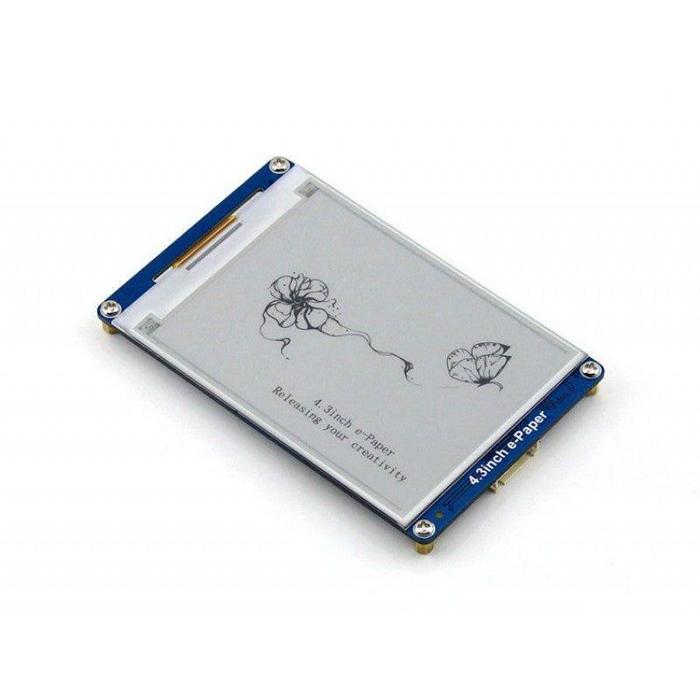
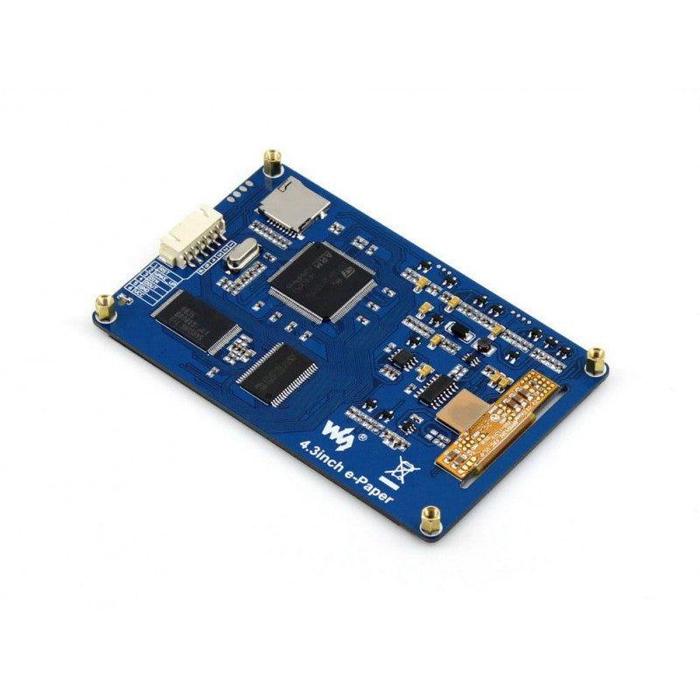
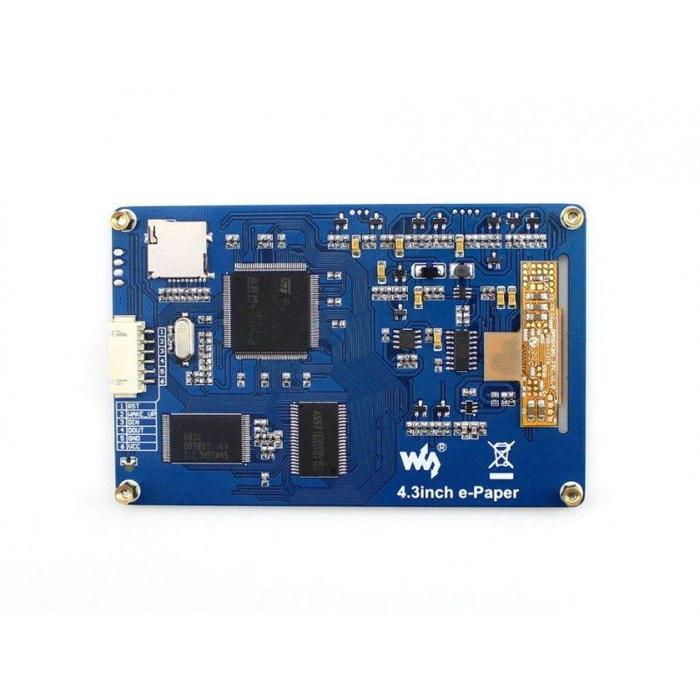
4.3in Serial Interface Electronic Paper Display
This E-Ink display module, 4.3inch, 800x600 resolution, with serial interface and embedded font libraries, is far more user friendly than its competitors. You don't need to understand the intricate underlying details of e-Paper or the specific algorithms for displaying graphics, texts, and images. All it requires is a serial interface, and all that matters is your imagination.
Features:
Easy to use, displays any contents via one serial interface, including geometric graphics, texts, and images
Embedded font libraries, supports 32, 48 and 64 dot matrix GBK Chinese fonts and English fonts
Built-in 128MB NandFlash, allows the font/image data to be stored in either an external TF card or the internal NandFlash
4 grey level displaying, 800×600 resolution
Adjustable serial interface baud rate, 115200 by default when power up
Powered from 3.3V to 5V, compatible with logic level
Ultra low power consumption, sleeping current lower than 5mA
Comes with host computer software, control it directly on your computer
Applications:
e book
Shopping mall POS
Price label
Industry instrument
₹5179,80
Incl. GST (No Hidden Charges)
Backorder Available
₹10808,00
Incl. GST (No Hidden Charges)
4.3in Serial Interface Electronic Paper Display
4.3in Serial Interface Electronic Paper Display This E-Ink display module, 4.3inch, 800x600 resolution, with serial interface and embedded font libraries, is far more user friendly than its competitors. You don't …
As low as
₹5179,80
₹5179,80
₹10808,00
Incl. GST (No Hidden Charges)
Backorder Available
7 Segment Led Display (Common…
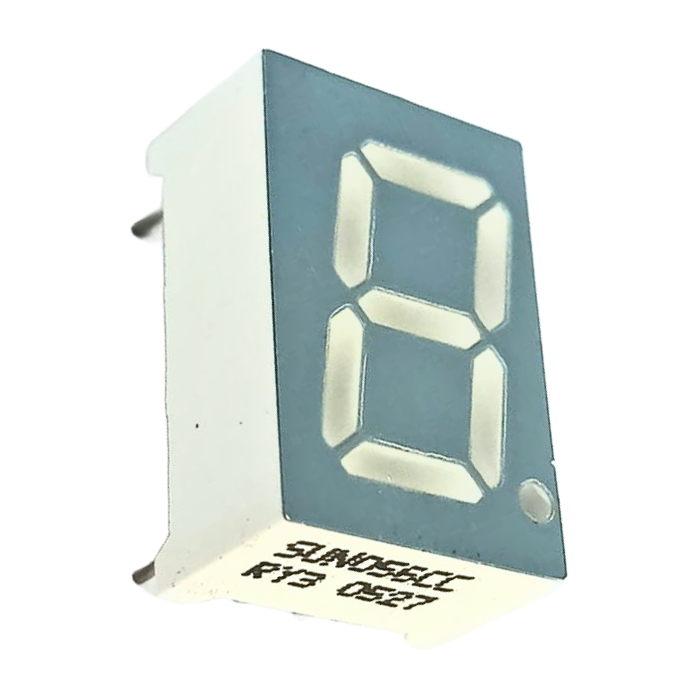
7 Segment Led Display (Common Cathode)
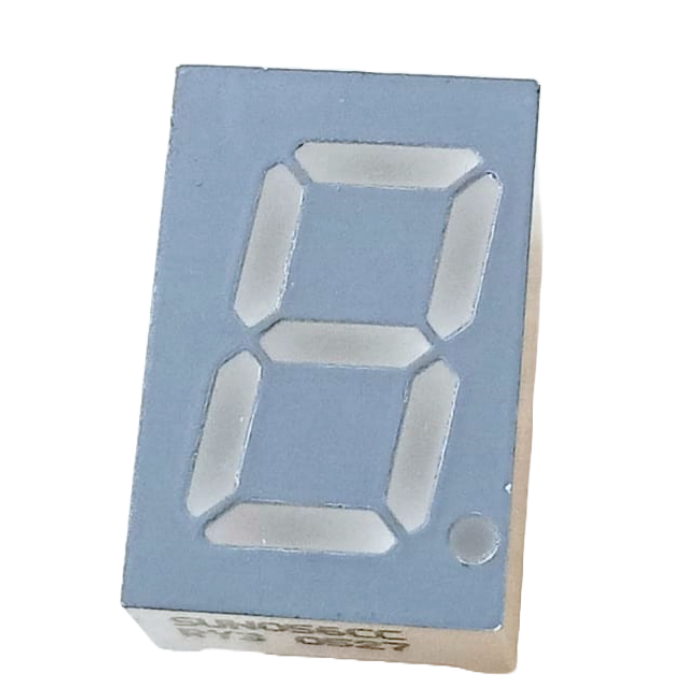
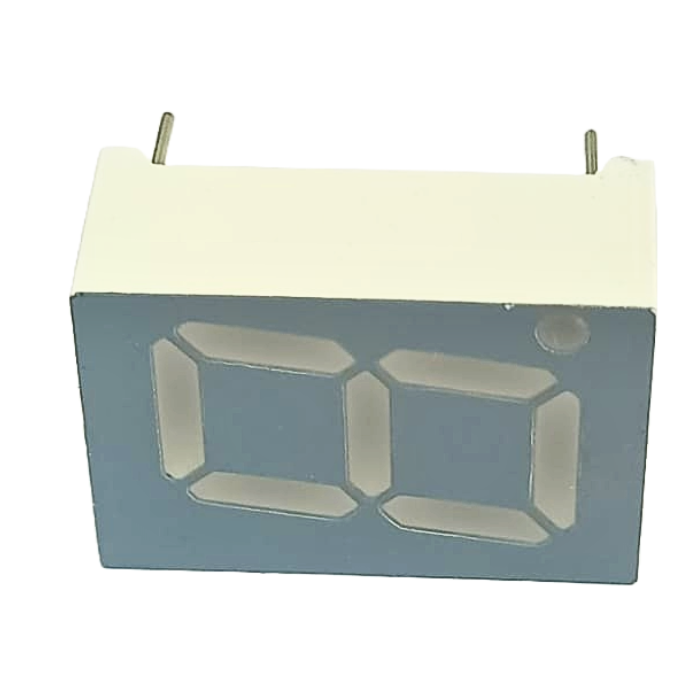
7 Segment Led Display (Common Cathode), is a form of an electronic display device for displaying decimal numerals that is an alternative to the more complex dot matrix displays.
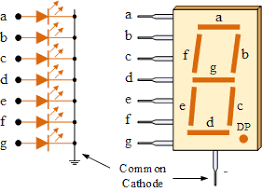
In a common cathode display, all of the LED segment cathode connections are connected to logic "0" or ground. Individual segments are illuminated by applying a "HIGH" or logic "1" signal to the individual Anode terminals via a current limiting resistor (a-g).
Read more:
Implementation of 7 segment LED display Controller on FPGA
Seven-segment displays or ( 7 segment displays) are widely used in digital clocks, electronic meters, basic calculators, and other electronic devices that display numerical information. If you want to use a 7 Segment Led Display in your
Arduino
project, then you will need a few components like
breadboard
,
jumper wires
,
resistors
,
capacitors
and
transistors
.
Iotcart offers at best Common Cathode 7 segment display price in India. Don't settle for anything less than the best— Buy Common Cathode 7 Segment Display now for your next project from Iotcart.
Get
0.96” OLED Display Module
– High-Contrast Blue Screen
Common Cathode Configuration
Common Cathode 7 Segment Display Truth Table
In a common cathode 7 segment display, all the cathodes of the LEDs are linked together. Each LED is accompanied by a current-limiting resistor connected between it and the +VCC. In this configuration, to activate a specific LED, it is connected to +5V. Thus, by connecting inputs a to g to VCC, digits ranging from 0 to 9 can be displayed. For instance, to display the digit 3, LEDs a, b, c, d, and g will emit light, while the remaining LEDs will remain inactive. Consequently, the illuminated LEDs will take the form of the digit 3.
Common Cathode 7 Segment Display Pinout:
Features:
Pin Type: DIP (Dual In-line Package)
Common Cathode Configuration
High Light Intensity Output for optimal viewing
Simple and easy interface with microcontrollers
Applications:
Digital Clocks: Used to display time in a clear and easily readable format.
Electronic Meters: Applied in various measuring instruments for numerical data display.
Basic Calculators: Utilized for showcasing numerical calculations and results.
Counters and Timers: Applied in devices that count or time events, such as countdown timers.
Temperature Displays: Utilized in temperature monitoring systems for numeric temperature readouts.
Numeric Displays: Suitable for any application requiring the display of numeric information.
DIY Electronics Projects: Used by hobbyists and DIY enthusiasts in various electronic projects.
Price Displays: Employed in retail settings for displaying product prices.
Scoreboards: Used in sports and games to display scores and relevant information.
Process Control Systems: Integrated into systems for displaying numeric process parameters.
How to Check 7-Segment Display is Common Anode or Cathode
₹8,90
Incl. GST (No Hidden Charges)
Backorder Available
₹29,40
Incl. GST (No Hidden Charges)
7 Segment Led Display (Common Cathode)
7 Segment Led Display (Common Cathode) 7 Segment Led Display (Common Cathode), is a form of an electronic display device for displaying decimal numerals that is an alternative to the …
As low as
₹8,90
₹8,90
₹29,40
Incl. GST (No Hidden Charges)
Backorder Available
7 Segment Led Display (Common…
7 Segment Led Display
(Common Anode)
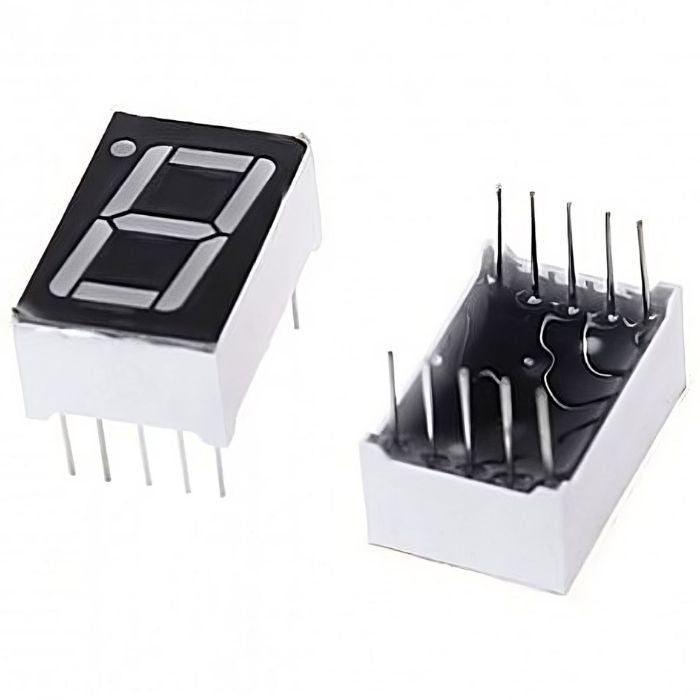
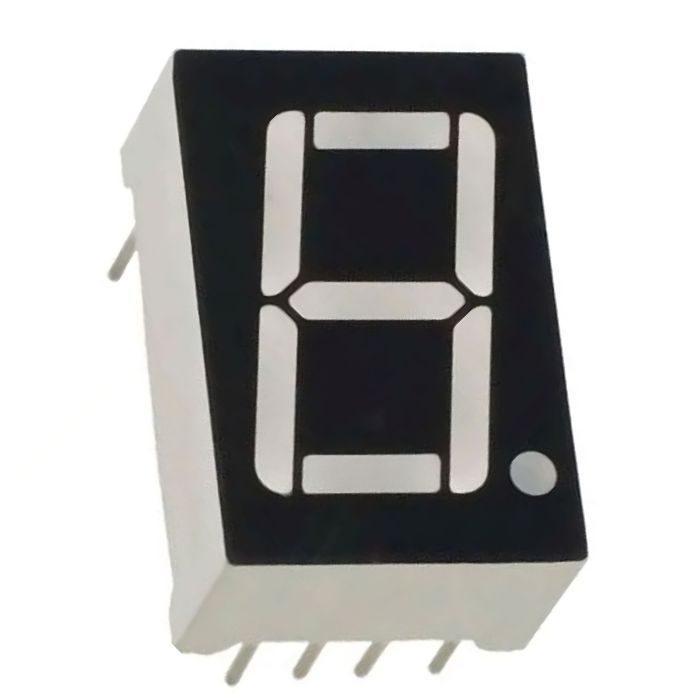
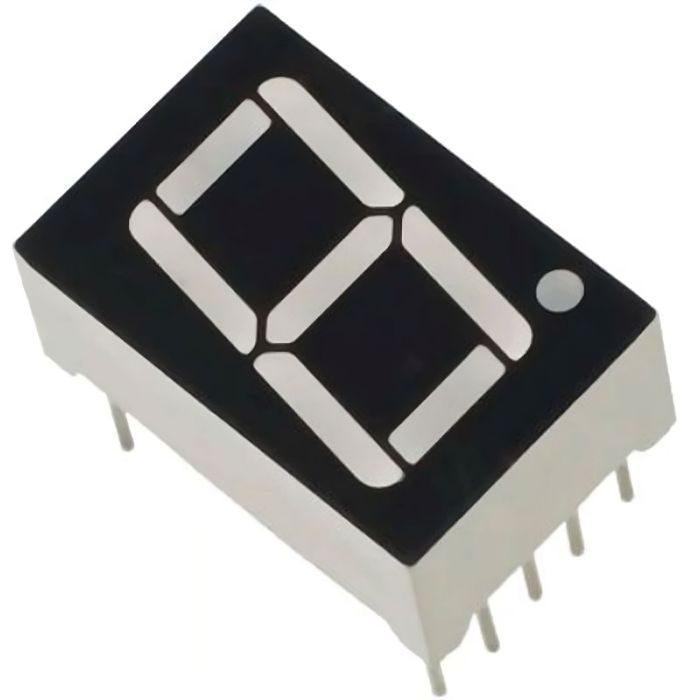
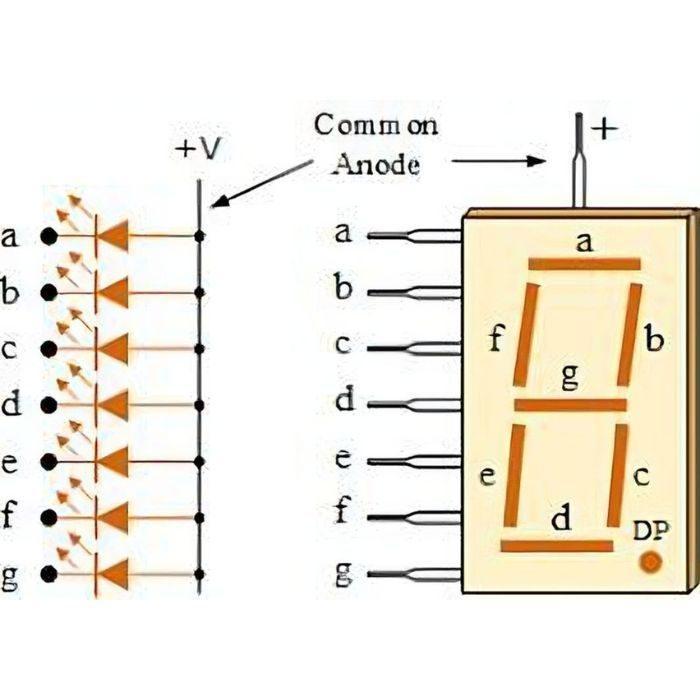
7 Segment Led Display (Common Anode), is a form of an electronic display device for displaying decimal numerals that is an alternative to the more complex dot matrix displays.
The Common Anode (CA)
- In the common anode display, all of the LED segment anode connections are connected to logic "1." Individual segments are illuminated by applying a ground, logic "0" or "LOW" signal to the Cathode of the specific segment via a suitable current limiting resistor (a-g). Common anode displays are more popular in general because many logic circuits can sink more current than they can source. Also, a common cathode display is not a direct replacement in a circuit for a common anode display, and vice versa, because it is equivalent to connecting the LEDs in reverse, and thus no light emission occurs. The specific set of LEDs is forward biased depending on the decimal digit to be displayed.
Seven-segment displays or ( 7 segment displays) are widely used in digital clocks, electronic meters, basic calculators, and other electronic devices that display numerical information. If you want to use 7 Segment Led Display in your
Arduino
project, then you will need a few components like
breadboard
,
jumper wires
,
resistors
,
capacitors
and
transistors
.
₹10,02
Incl. GST (No Hidden Charges)
Backorder Available
₹26,60
Incl. GST (No Hidden Charges)
7 Segment Led Display (Common Anode)
7 Segment Led Display (Common Anode) 7 Segment Led Display (Common Anode), is a form of an electronic display device for displaying decimal numerals that is an alternative to the …
As low as
₹10,02
₹10,02
₹26,60
Incl. GST (No Hidden Charges)
Backorder Available
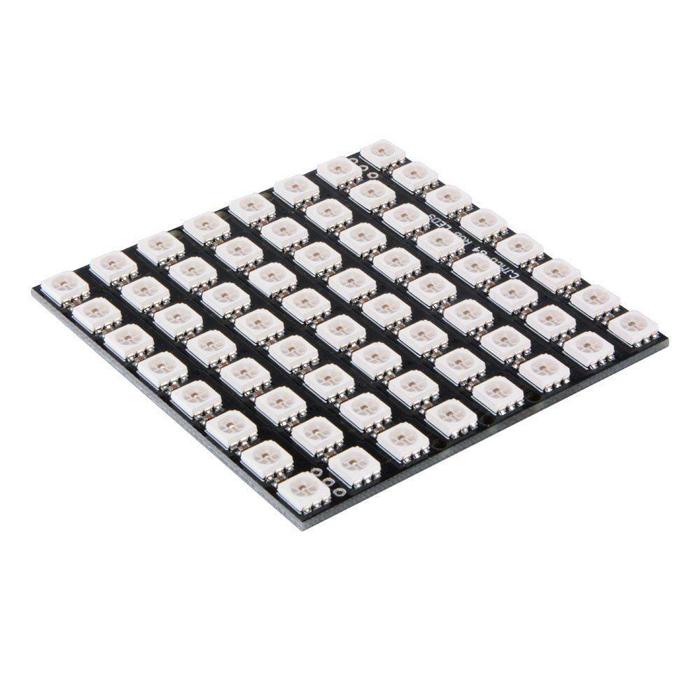
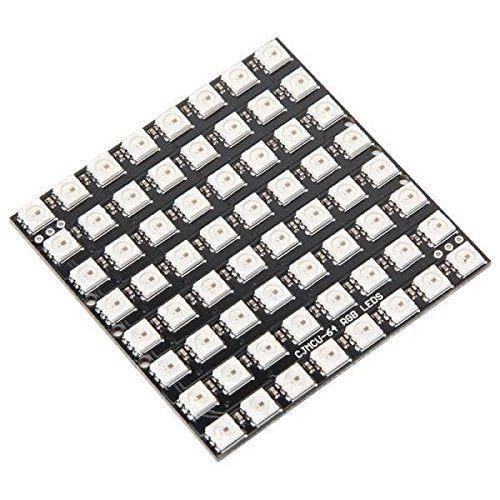
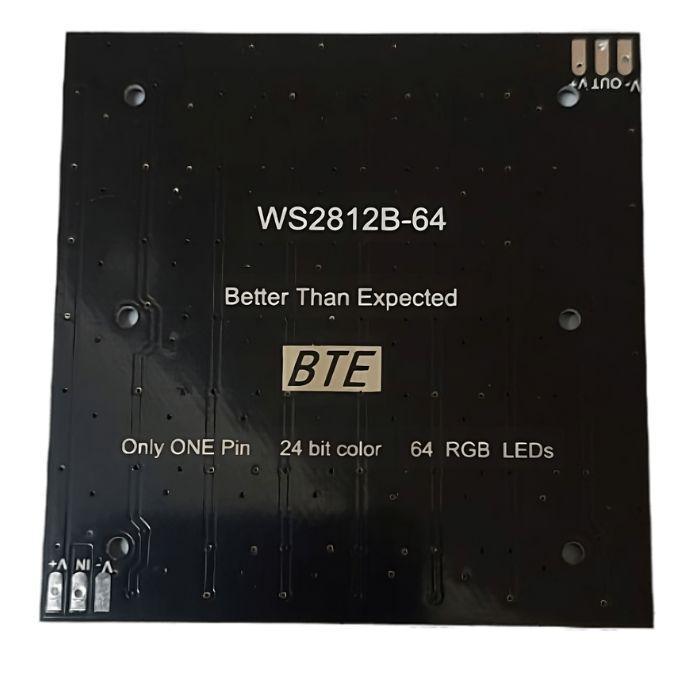
WS2812 64 Bit RGB LED Matrix
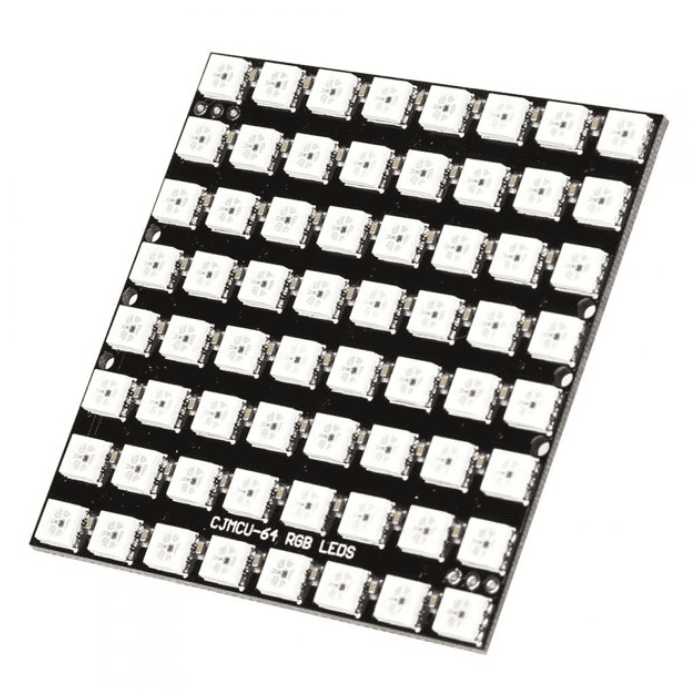
WS2812 64-Bit RGB LED Matrix Panel
This is a high-quality 8x8 RGB LED Dot Matrix Panel. The WS2812 64-bit LED Matrix provides bright, colorful lighting with 256 brightness levels per pixel. It's great for e-textiles, games, and animations. The flexible design lets it fit on curved surfaces easily. It works on a low 5V power supply, making it energy-efficient. This LED matrix display is compatible with Raspberry Pi, Arduino, and ESP32. With two simple 3-pin connectors, it’s easy to connect to Arduino or microcontrollers. Perfect for makers and DIYers, this LED dot matrix display adds amazing visuals and long-lasting performance to your projects.
Features:
Flexible and durable with a flexible backing RGB Matrix.
Offers stunning lighting effects with 256 brightness levels per pixel.
Can be easily bent and adjusted to fit any curved surface.
Operates on low-voltage 5V input, making it energy-efficient.
Easy setup with two 3-pin connection ports.
Made with high-quality components for longevity and consistent performance.
Applications:
Animation creation
Game development
Creative projects
E-textiles
Display design
Interior decor
Educational purposes
Prototyping
Art installations
Signage
₹153,55
Incl. GST (No Hidden Charges)
Backorder Available
₹348,60
Incl. GST (No Hidden Charges)
WS2812 64 Bit RGB LED Matrix
WS2812 64-Bit RGB LED Matrix Panel This is a high-quality 8x8 RGB LED Dot Matrix Panel. The WS2812 64-bit LED Matrix provides bright, colorful lighting with 256 brightness levels per …
As low as
₹153,55
₹153,55
₹348,60
Incl. GST (No Hidden Charges)
Backorder Available
