

Sort by

Browsing
8051, ARM, PIC, AVR
CH340G USB to Serial Converter
CH340G USB to Serial Converter
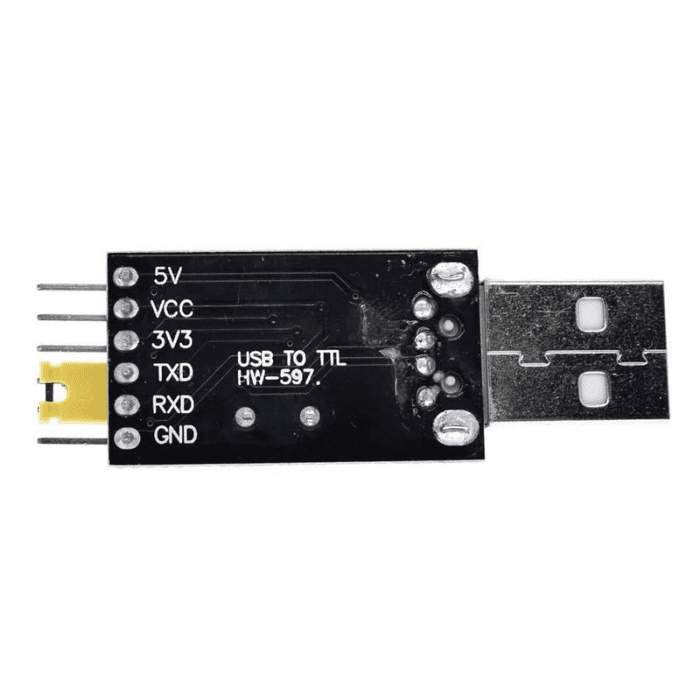
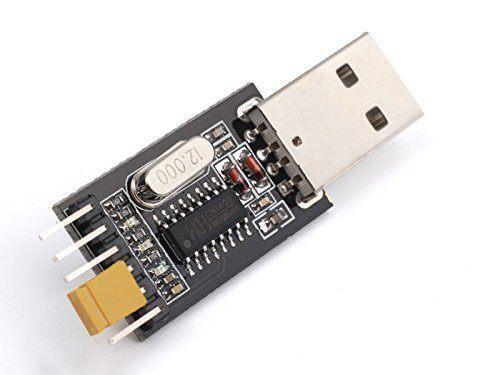
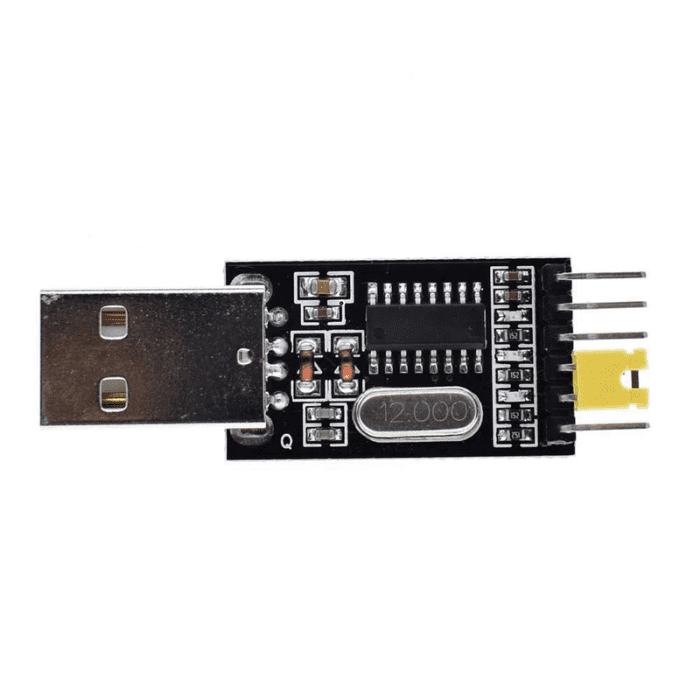
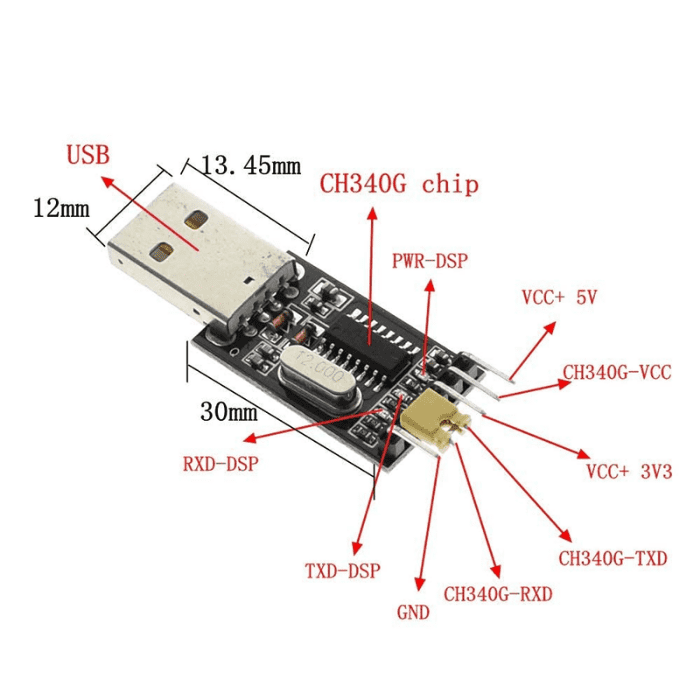
This is CH340G USB To TTL(Serial) Converter, USB to TTL / USB-TTL /STC microcontroller programmer / PL2303 in nine upgrades plate with a transparent cover Compatible with ARDUINO, RASPBERRY PI, AVR, PIC, 8051, etc. This USB–TTL converter is based on CH340G USB to Serial TTL converter chip. The module can be used for 3.3V logic level signals and has the option to switch from 5V to 3.3V logic level using a 2 pin shunt supplied with the module. The CH340 USB to serial adaptor makes use of the CH340 USB to serial IC to provide a low-cost alternative to our popular FTDI-based module. Although much cheaper this module doesn’t lack in features or usability.
Note:
Once you have installed the drivers the module will appear as a normal serial COM port on your computer making it compatible with most terminal programs and development environments such as the Arduino IDE.
The module includes a small switch that allows the voltage available at the VC (Supply output) pin to be switched between 3.3 and 5V. Data pins include TX and RX. These digital pins are at 5V TTL levels allowing them to be directly interfaced with most 5V microcontrollers.
What does the CH340G USB to Serial TTL converter support?
The USB to serial converter supports WINDOWS 98 / ME / 2000 / XP / Server 2003 / VISTA /Server 2008 / Win7 / Win8 32 Bit / 64.
For the purpose of communication, the USB serial converter supports USB1.1 or USB2.0/USB3.0.
It also supports RS232, RS485, and RS422 interfaces.
The CH340G USB to Serial converter also supports common MODE contact signal and IRDA SIR infrared communication.
Applications:
Programming
USB to UART Converter
Debugging
Serial Monitor
₹75,66
Incl. GST (No Hidden Charges)
Backorder Available
₹138,60
Incl. GST (No Hidden Charges)
CH340G USB to Serial Converter
CH340G USB to Serial Converter This is CH340G USB To TTL(Serial) Converter, USB to TTL / USB-TTL /STC microcontroller programmer / PL2303 in nine upgrades plate with a transparent cover …
As low as
₹75,66
₹75,66
₹138,60
Incl. GST (No Hidden Charges)
Backorder Available

ATmega128
The Atmel® AVR® ATmega128 is a low-power CMOS 8-bit microcontroller based on the AVR enhanced RISC architecture. By executing powerful instructions in a single clock cycle, the ATmega128 achieves throughputs approaching 1MIPS per MHz allowing the system designer to optimize power consumption versus processing speed.
Peripheral Features
Programmable I/O Lines
53 Programmable I/O Lines
Timers
Two 8-bit Timer/Counters and Two Expanded 16-bit Timer/Counters with Separate Prescalers and Compare Modes
ADC
8-channel, 10-bit ADC
Serial Interface
2 Programmable Serial USARTs
Master / Slave Interface
SPI Serial Interface
PWM
Two 8-bit PWM Channels and 6 PWM Channels with Programmable Resolution from 2 to 16 Bits
Watch Dog Timer
Programmable Watch Dog Timer With on chip Oscillator
Power Supply
Type
DC
Operating Voltage
2.7V - 5.5V
Special Features
Internal Oscillator
Internal Calibrated Oscillator
External Oscillator
Up to 16 MHz
Interrupt Source
External and Internal
Clock Frequency Setting
Adjustable through Software
₹422,84
Incl. GST (No Hidden Charges)
Backorder Available
₹904,40
Incl. GST (No Hidden Charges)
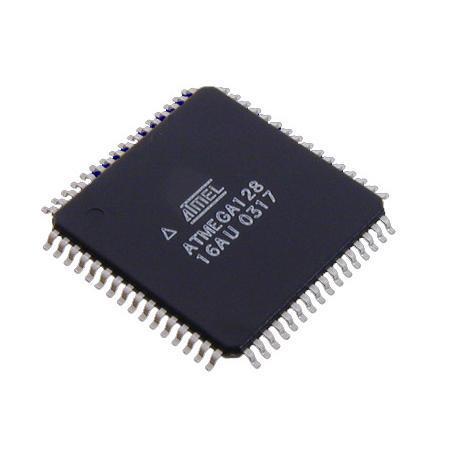
ATmega128
The Atmel® AVR® ATmega128 is a low-power CMOS 8-bit microcontroller based on the AVR enhanced RISC architecture. By executing powerful instructions in a single clock cycle, the ATmega128 achieves throughputs …
As low as
₹422,84
₹422,84
₹904,40
Incl. GST (No Hidden Charges)
Backorder Available
ATmega16
ATmega16
The
ATmega
ATmega16 is a low-power CMOS 8-bit microcontroller based on the AVR enhanced RISC architecture. By executing powerful instructions in a single clock cycle, the ATmega16 achieves throughputs approaching 1 MIPS per MHz allowing the system designer to optimize power consumption versus processing speed.
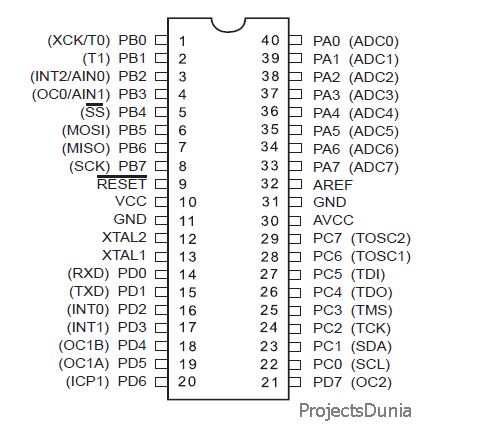
Pinout:
Pinout of ATmega16
1
PB0(XCK/T0)
Pin 0 of PORTB
T0( Timer0 External Counter Input)
XCK ( USART External Clock I/O)
2
PB1(T1)
Pin 1 of PORTB
T1(Timer1 External Counter Input)
3
PB2(INT2/AIN0)
Pin 2 of PORTB
AIN0(Internal Analog Comparator Positive Input)
INT2( External Interrupt 2 Input)
4
PB3(OC0/AIN1)
Pin 3 of PORTB
AIN1(Internal Analog Comparator Negative Input)
OC0 (Timer0 Output Compare Match Output) or PWM output
5
PB4(SS )
Pin 4 of PORTB
SS (SPI Slave Select Input). This pin is low when controller acts as slave.
[Serial Peripheral Interface (SPI) for programming]
6
PB5(MOSI)
Pin 5 of PORTB
MOSI (Master Output Slave Input). When controller acts as slave, the data is received by this pin.
[Serial Peripheral Interface (SPI) for programming]
7
PB6(MISO)
Pin 6 of PORTB
MISO (Master Input Slave Output). When controller acts as slave, the data is sent to master through this pin.
[Serial Peripheral Interface (SPI) for programming]
8
PB7(SCK)
Pin 7 of PORTB
SCK (SPI Bus Serial Clock). This is the clock shared between this controller and other system for accurate data transfer.
[Serial Peripheral Interface (SPI) for programming]
9
RESET
Reset Pin (Active Low Reset)
10
VCC
Connected to +5V
11
GND
Connected to GROUND
12
XTAL2
Connected to Crystal Oscillator
13
XTAL1
Connected to Crystal Oscillator
14
PD0(RXD)
Pin 0 of PORTD
RXD (USART Input Pin)
[USART Serial Communication Interface
can be used for programming]
15
PD1(TXD)
Pin 1 of PORTD
TXD (USART Output Pin)
[USART Serial Communication Interface
can be used for programming]
16
PD2(INT0)
Pin 2 of PORTD
External Interrupt INT0
17
PD3(INT1)
Pin 3 of PORTD
External Interrupt INT1
18
PD4(OC1B)
Pin 4 of PORTD
OC1B (Timer Output Compare Match Output) or PWM output
19
PD5(OC1A)
Pin 5 of PORTD
OC1A (Timer Output Compare Match Output) or PWM output
20
PD6(ICP)
Pin 6 of PORTD
Timer/Counter1 Input Capture Pin
21
PD7 (OC2)
Pin 7 of PORTD
Timer/Counter2 Output Compare Match Output
22
PC0 (SCL)
Pin 0 of PORTC
TWI Interface
23
PC1 (SDA)
Pin 1 of PORTC
TWI Interface
24
PC2 (TCK)
Pin 2 of PORTC
JTAG Interface
25
PC3 (TMS)
Pin 3 of PORTC
JTAG Interface
26
PC4 (TDO)
Pin 4 of PORTC
JTAG Interface
27
PC5 (TDI)
Pin 5 of PORTC
JTAG Interface
28
PC6 (TOSC1)
Pin 6 of PORTC
Timer Oscillator Pin 1
29
PC7 (TOSC2)
Pin 7 of PORTC
Timer Oscillator Pin 2
30
AVcc
Vcc for Internal ADC Converter
31
GND
GROUND
32
AREF
Analog Reference Pin for ADC
33
PA7 (ADC7)
Pin 7 of PORTA
ADC (Analog to Digital Converter) Channel 7
34
PA6 (ADC6)
Pin 6 of PORTA
ADC (Analog to Digital Converter) Channel 6
35
PA5 (ADC5)
Pin 5 of PORTA
ADC (Analog to Digital Converter) Channel 5
36
PA4 (ADC4)
Pin 4 of PORTA
ADC (Analog to Digital Converter) Channel 4
37
PA3 (ADC3)
Pin 3 of PORTA
ADC (Analog to Digital Converter) Channel 3
38
PA2 (ADC2)
Pin 2 of PORTA
ADC (Analog to Digital Converter) Channel 2
39
PA1 (ADC1)
Pin 1 of PORTA
ADC (Analog to Digital Converter) Channel 1
40
PA0 (ADC0)
Pin 0 of PORTA
ADC (Analog to Digital Converter) Channel 0
Applications:
Hobbyists applications
Engineers design
Temperature control systems
Analog signal measuring and manipulations.
Embedded systems like coffee machine, vending machine.
Motor control systems.
Digital signal processing.
Peripheral Interface system.
₹232,57
Incl. GST (No Hidden Charges)
Backorder Available
₹490,00
Incl. GST (No Hidden Charges)
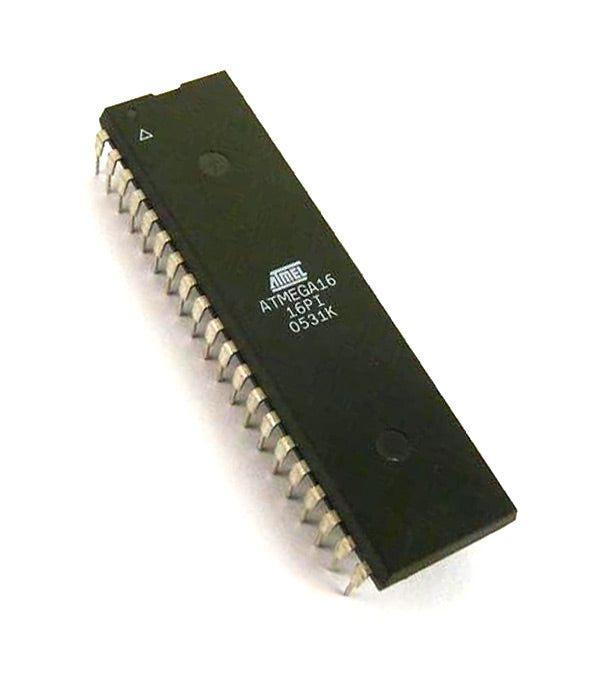
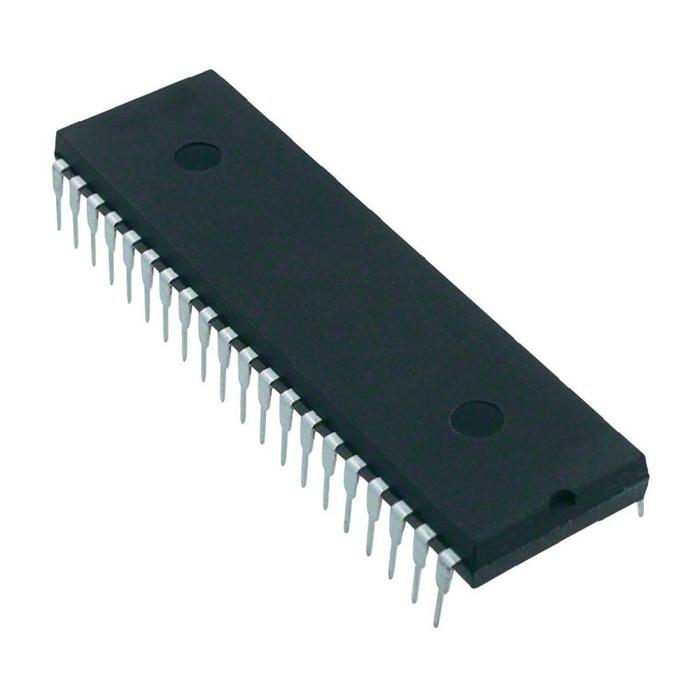
ATmega16
ATmega16 The ATmega ATmega16 is a low-power CMOS 8-bit microcontroller based on the AVR enhanced RISC architecture. By executing powerful instructions in a single clock cycle, the ATmega16 achieves throughputs …
As low as
₹232,57
₹232,57
₹490,00
Incl. GST (No Hidden Charges)
Backorder Available
ATmega162
ATmega162
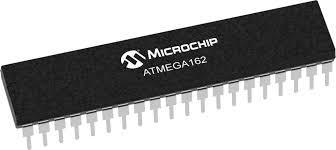
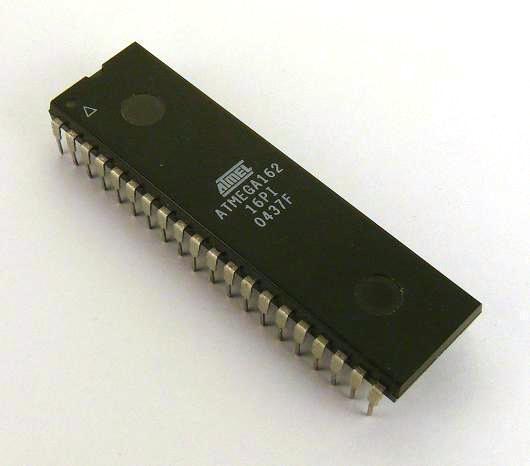
The ATmega162 is a low-power CMOS 8-bit microcontroller based on the AVR-enhanced RISC architecture. By executing powerful instructions in a single clock cycle, the
ATmega
achieves throughputs approaching 1 MIPS per MHz allowing the system designer to optimize power consumption versus processing speed.
The AVR core combines a rich instruction set with 32 general-purpose working registers. All 32 registers are directly connected to the Arithmetic Logic Unit (ALU), allowing two independent registers to be accessed in one single instruction executed in one clock cycle. The resulting architecture is more code efficient while achieving throughputs up to ten times faster than conventional CISC microcontrollers.
In order to maximize performance and parallelism, the AVR uses a Harvard architecture – with separate memories and buses for program and data. While one instruction is being executed, the next instruction is pre-fetched from the program memory. Program flow is provided by conditional and unconditional jump and call instructions, able to directly address the whole address space. Most AVR instructions have a single 16-bit word format. Every program memory address contains a 16- or 32-bit instruction.
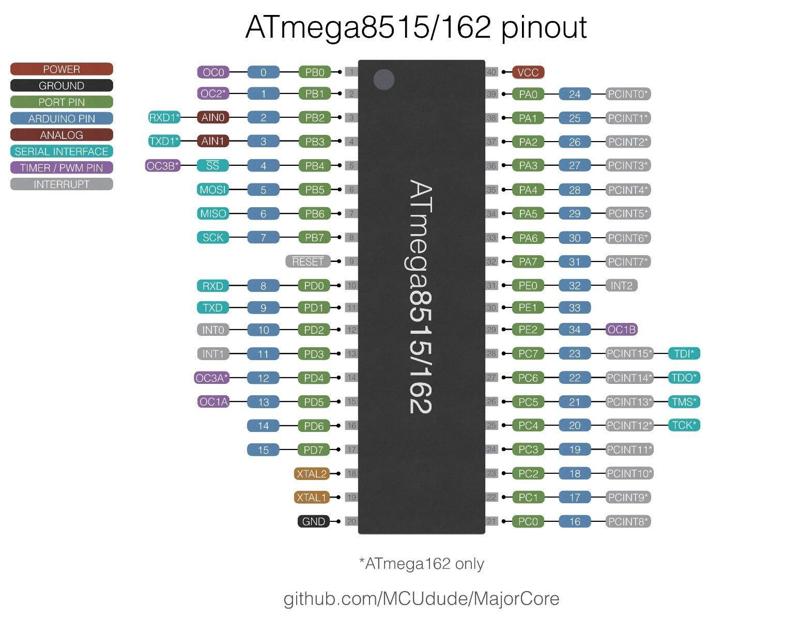
Pinout:
Pinout Of ATmega162
Applications:
Industrial Automation
Automotive Applications
Medical Devices
Consumer Electronics
Internet of Things (IoT)
₹839,00
Incl. GST (No Hidden Charges)
Backorder Available
₹1117,20
Incl. GST (No Hidden Charges)
ATmega162
ATmega162 The ATmega162 is a low-power CMOS 8-bit microcontroller based on the AVR-enhanced RISC architecture. By executing powerful instructions in a single clock cycle, the ATmega achieves throughputs approaching 1 …
As low as
₹839,00
₹839,00
₹1117,20
Incl. GST (No Hidden Charges)
Backorder Available
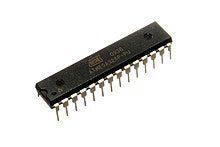
ATmega168
ATmega168
The
Atmel
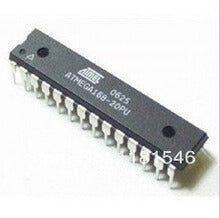
ATmega168 is a low-power CMOS 8-bit microcontroller based on the AVR-enhanced RISC architecture. By executing powerful instructions in a single clock cycle, the ATmega168 achieves throughputs approaching 1 MIPS per MHz allowing the system designer to optimize power consumption versus processing speed.
The AVR core combines a rich instruction set with 32 general-purpose working registers. All 32 registers are directly connected to the Arithmetic Logic Unit (ALU), allowing two independent registers to be accessed in one single instruction executed in one clock cycle. The resulting architecture is more code efficient while achieving throughputs up to ten times faster than conventional CISC microcontrollers.
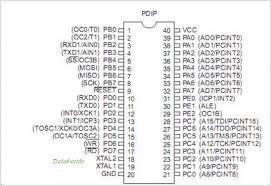
Pinout:
Pinout of ATmega168
Applications:
Multiple DIY projects.
Projects requiring more than logical control for devices.
Microcontroller applications for multiple device interface/Control.
₹338,27
Incl. GST (No Hidden Charges)
Backorder Available
₹492,80
Incl. GST (No Hidden Charges)
ATmega168
ATmega168 The Atmel ATmega168 is a low-power CMOS 8-bit microcontroller based on the AVR-enhanced RISC architecture. By executing powerful instructions in a single clock cycle, the ATmega168 achieves throughputs approaching …
As low as
₹338,27
₹338,27
₹492,80
Incl. GST (No Hidden Charges)
Backorder Available
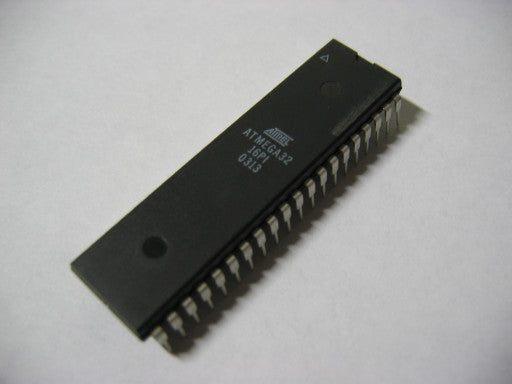
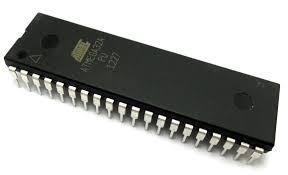
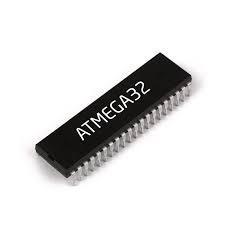
ATmega32
The high-performance, low-power Atmel 8-bit AVR RISC-based microcontroller combines 32KB of programmable flash memory, 2KB SRAM, 1KB EEPROM, an 8-channel 10-bit A/D converter, and a JTAG interface for on-chip debugging. The device supports a throughput of 16 MIPS at 16 MHz and operates between 4.5-5.5 volts.
By executing instructions in a single clock cycle, the device achieves throughputs approaching 1 MIPS per MHz, balancing power consumption and processing speed
₹332,71
Incl. GST (No Hidden Charges)
Backorder Available
₹651,00
Incl. GST (No Hidden Charges)
ATmega32
The high-performance, low-power Atmel 8-bit AVR RISC-based microcontroller combines 32KB of programmable flash memory, 2KB SRAM, 1KB EEPROM, an 8-channel 10-bit A/D converter, and a JTAG interface for on-chip debugging. …
As low as
₹332,71
₹332,71
₹651,00
Incl. GST (No Hidden Charges)
Backorder Available
ATMEGA328P SMD IC for Arduino…
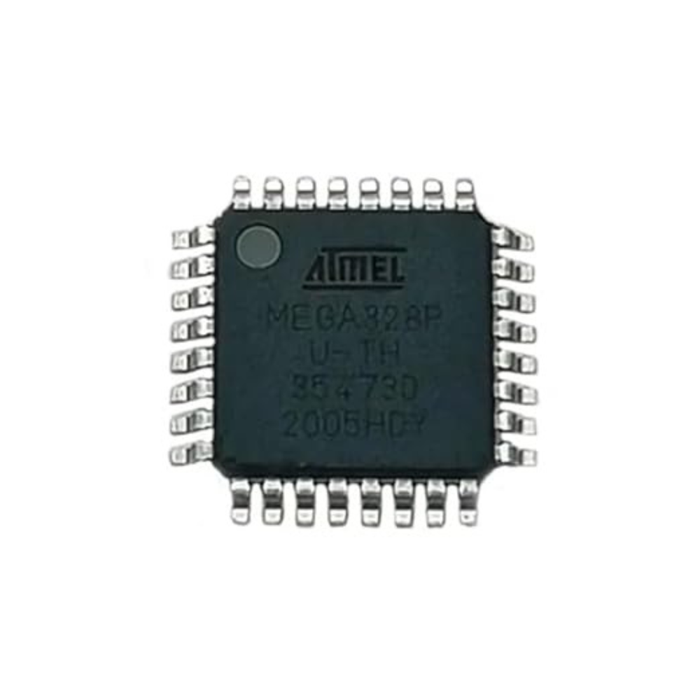
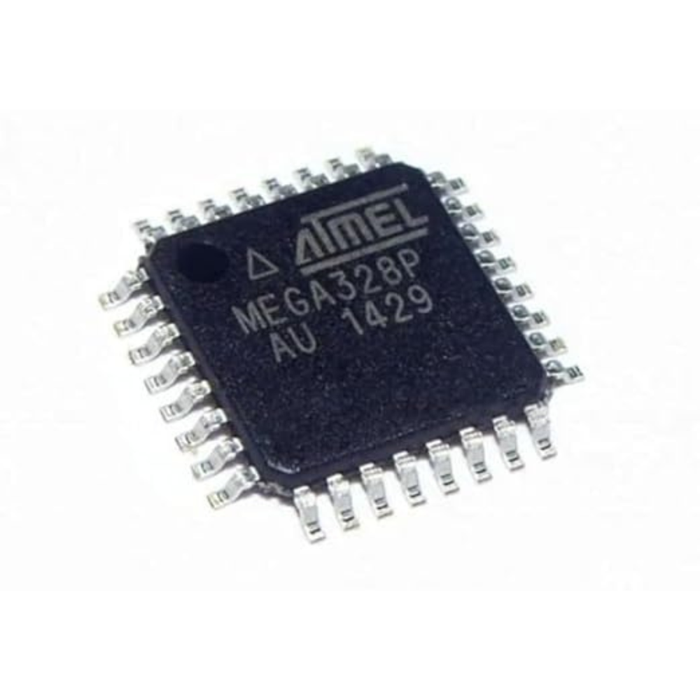
ATMEGA328P SMD IC for Arduino Nano/UNO – AVR Microcontroller
The ATMEGA328P SMD IC (ATMEGA328P-AU) is a high-performance 8-bit AVR microcontroller widely used in Arduino Nano and Arduino Uno boards.
Designed with picoPower technology, this SMD version includes 32KB ISP Flash, 2KB SRAM, 1KB EEPROM, multiple timers, USART, SPI, and I2C support.
Making it ideal for embedded electronics, DIY projects, automation systems, and IoT applications. Its compact SMD package makes it suitable for custom PCB designs and small-form-factor projects.
This microcontroller is fully compatible with Arduino IDE, making programming easy using an AVR programmer or bootloader.
With features like 23 GPIO pins, 6-channel 10-bit ADC, watchdog timer, and flexible power-saving modes, the ATMEGA328P SMD IC delivers powerful performance while maintaining low power consumption.
Whether you're building a new Arduino-compatible board or repairing an existing one, this IC provides reliability, stability, and seamless integration.
Features:
ATMEGA328P-AU SMD AVR microcontroller used in Arduino Nano/UNO boards.
Supports 32KB Flash memory with read-while-write capability, 1KB EEPROM, and 2KB SRAM.
Fully compatible with Arduino IDE; can be programmed using an AVR programmer.
Offers 23 GPIO pins, 3 timers/counters, watchdog timer, and hardware serial communication.
Integrated SPI, I2C (TWI), and USART interfaces for seamless connectivity.
Operates on 1.8V to 5.5V, suitable for low-power and battery-based projects.
6-channel 10-bit ADC (8-channel in TQFP package) for accurate analog sensing.
SMD design ideal for custom PCBs, compact electronics, and embedded projects.
₹347,18
Incl. GST (No Hidden Charges)
Backorder Available
In Store Pickup
Same Day Shipping
₹1118,60
Incl. GST (No Hidden Charges)

ATMEGA328P SMD IC for Arduino Nano/UNO – AVR Microcontroller
ATMEGA328P SMD IC for Arduino Nano/UNO – AVR Microcontroller The ATMEGA328P SMD IC (ATMEGA328P-AU) is a high-performance 8-bit AVR microcontroller widely used in Arduino Nano and Arduino Uno boards. Designed …
As low as
₹347,18
₹347,18
₹1118,60
Incl. GST (No Hidden Charges)
Backorder Available
In Store Pickup
Same Day Shipping
ATmega328P-U PDIP-28 8 BIT Mi…
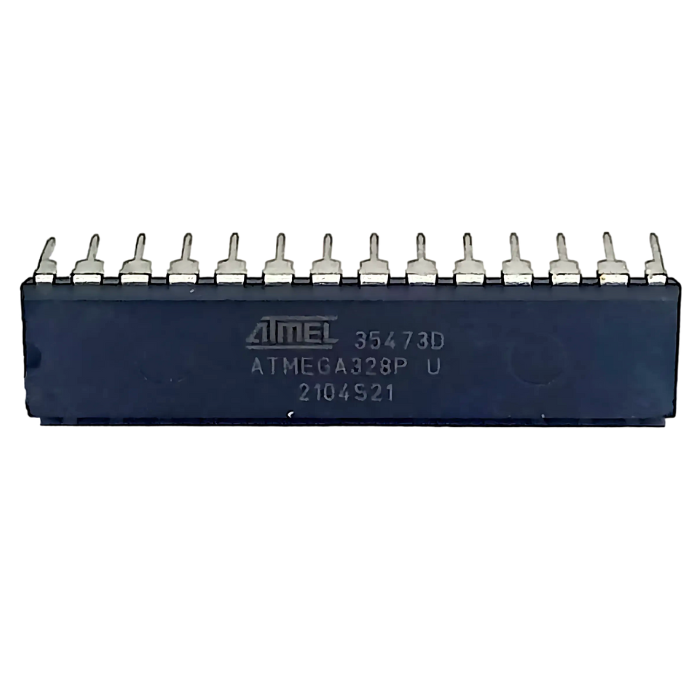
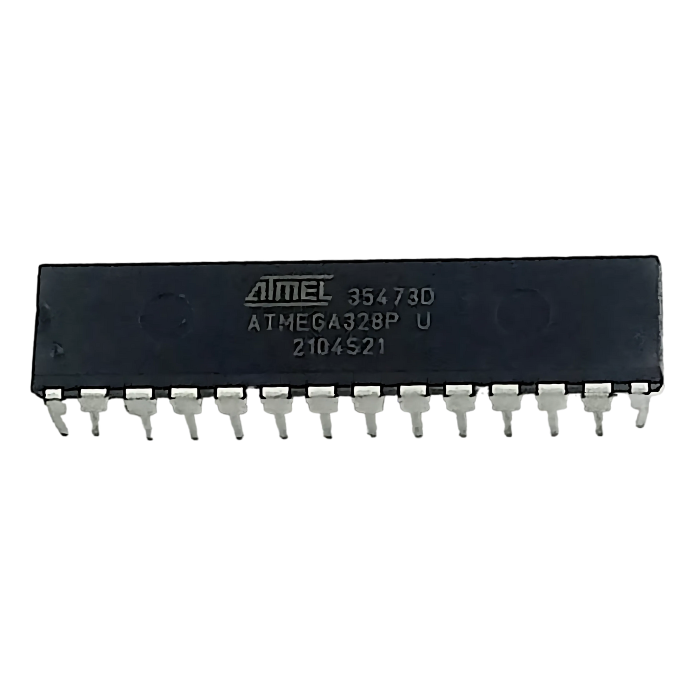
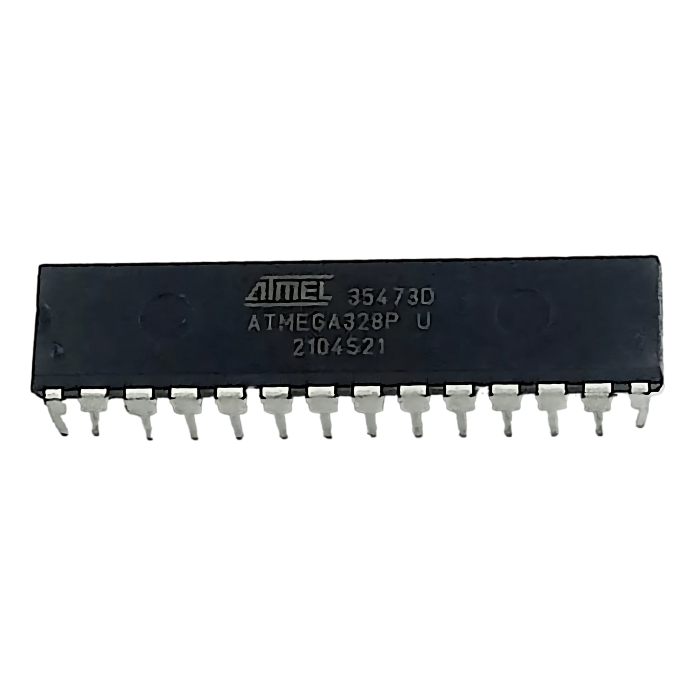
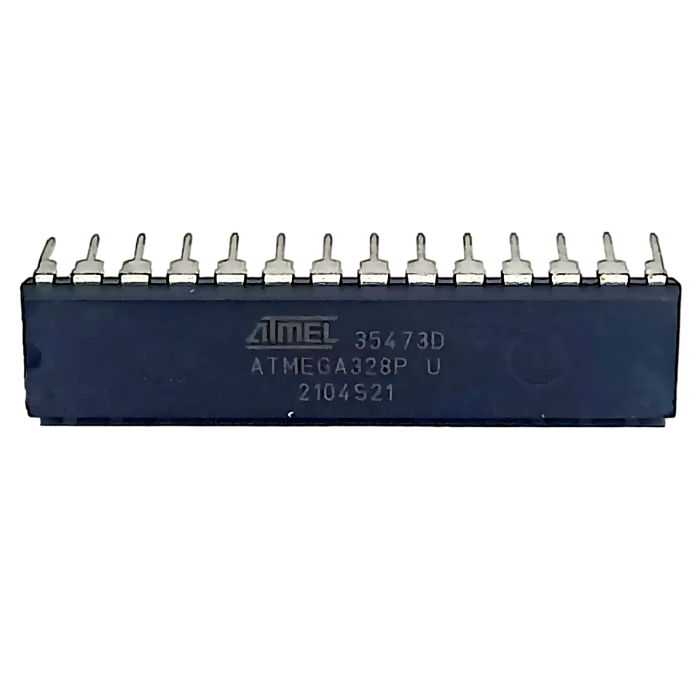
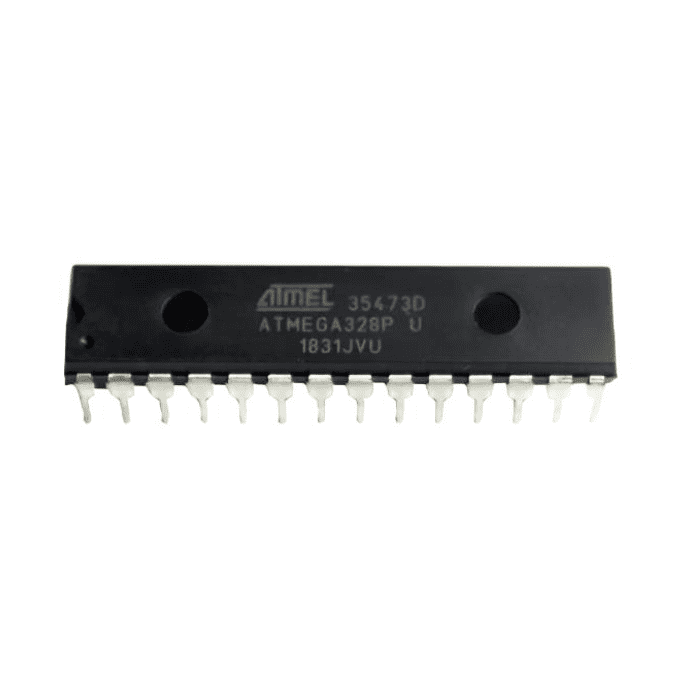
ATmega328P-U PDIP-28 8 BIT Microcontroller IC
The
Atmel
ATmega328 IC is a 32K 8-bit microcontroller based on the AVR architecture. Many instructions are executed in a single clock cycle providing a throughput of almost 20 MIPS at 20MHz. The ATMEGA328P-U comes in an PDIP 28 pin package and is suitable for use on our
28 pin AVR Development Board
.
The ATmega328P-U AVR is supported with a full suite of program and system development tools including C Compilers, Macro Assemblers, Program Debugger/Simulators, In-Circuit Emulators, and Evaluation Kits.
Applications:
Industrial control systems
Switched-mode power supply (SMPS) and power regulation systems
Digital data processing
Analog signal measuring and manipulation
Embedded systems like coffee machines, vending machines
Motor control systems
Display units
Key Features:
Additional Features Features
Internal calibrated oscillator
Power on reset and programmable brown out detection
External and internal interrupts
6 sleep modes including idle, ADC noise reduction, power save, power down, standby, and extended standby
I/O and Package
23 programmable I/O lines
28 pin PDIP package
Speed Grades:
0-4 MHz at 1.8-5.5V
0-10 MHz at 2.7-5.5V
0-20 MHz at 4.5-5.5V
Low power consumption mode at 1.8V, 1 MHz and 25°C:
Active Mode: 0.3 mA
Power-down Mode: 0.1 ?A
Power-save Mode: 0.8 ?A (Including 32 kHz RTC)
Pinout:
₹301,55
Incl. GST (No Hidden Charges)
Backorder Available
₹628,60
Incl. GST (No Hidden Charges)
ATmega328P-U PDIP-28 8 BIT Microcontroller IC
ATmega328P-U PDIP-28 8 BIT Microcontroller IC The Atmel ATmega328 IC is a 32K 8-bit microcontroller based on the AVR architecture. Many instructions are executed in a single clock cycle providing …
As low as
₹301,55
₹301,55
₹628,60
Incl. GST (No Hidden Charges)
Backorder Available
Elementz AVR USB Programmer w…
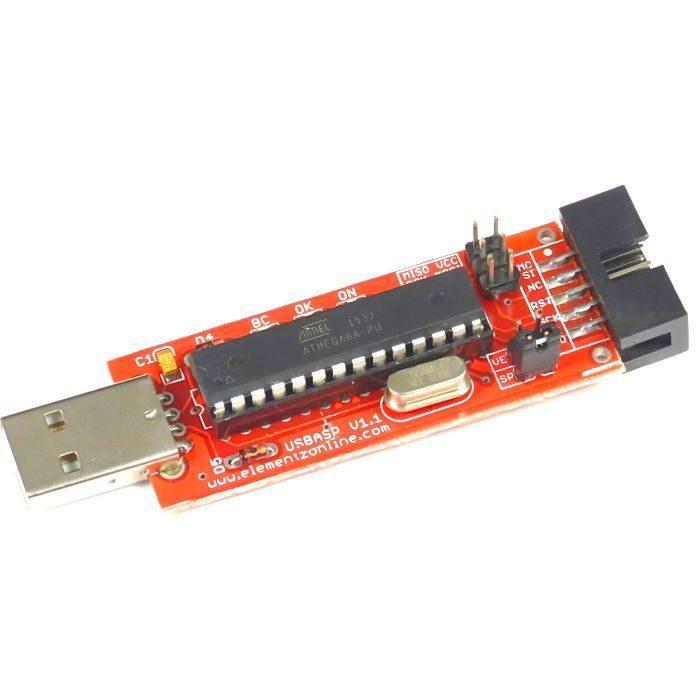
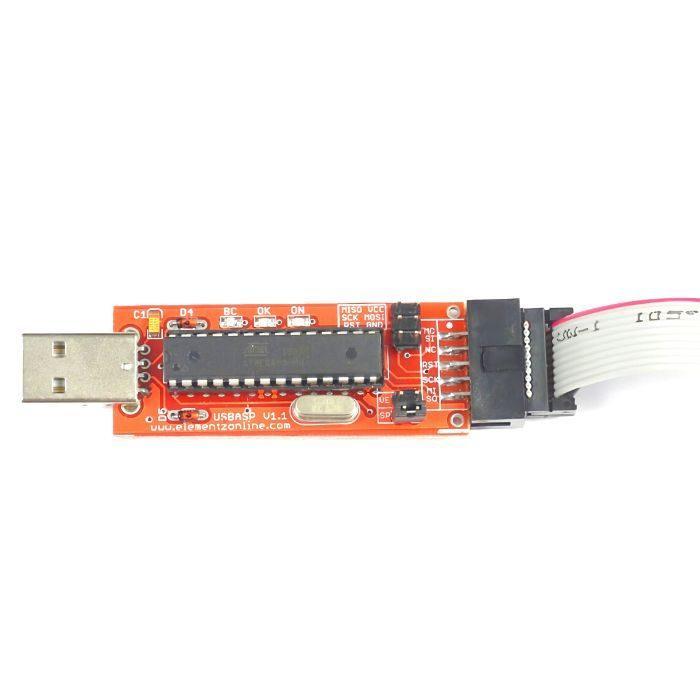
Elementz AVR USB Programmer with Cable
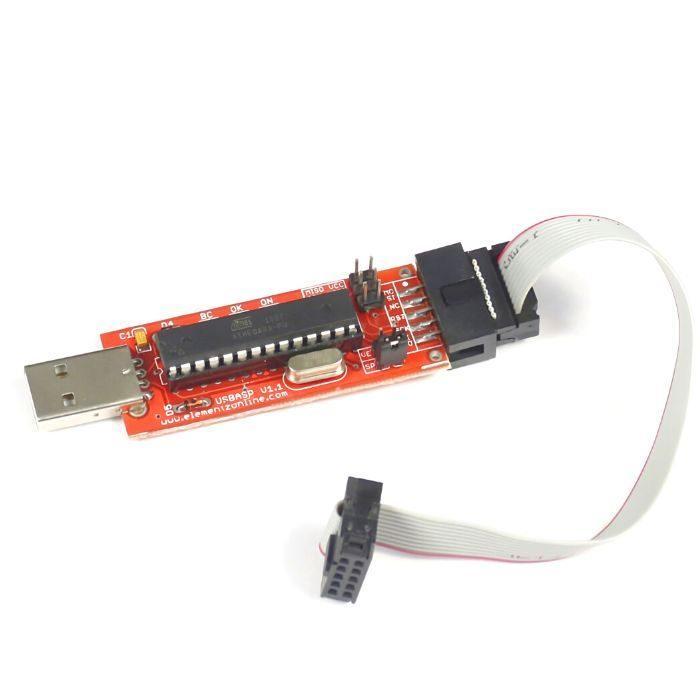
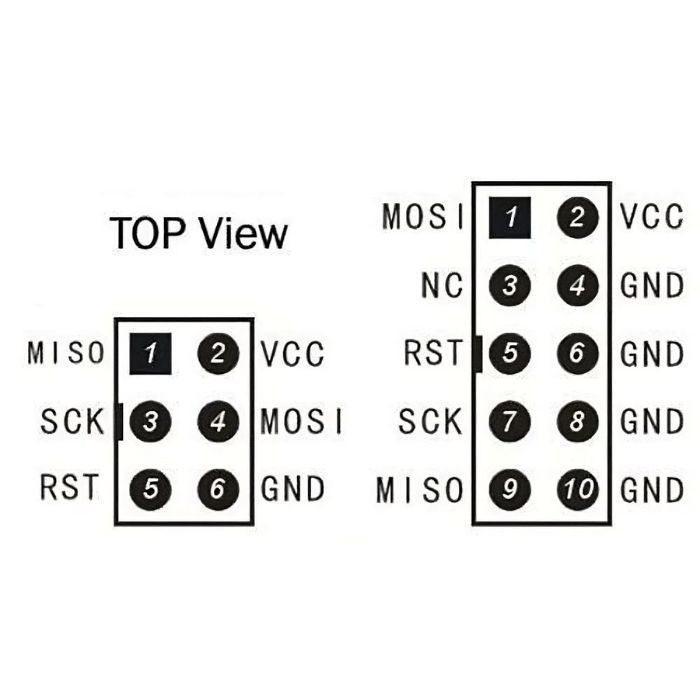
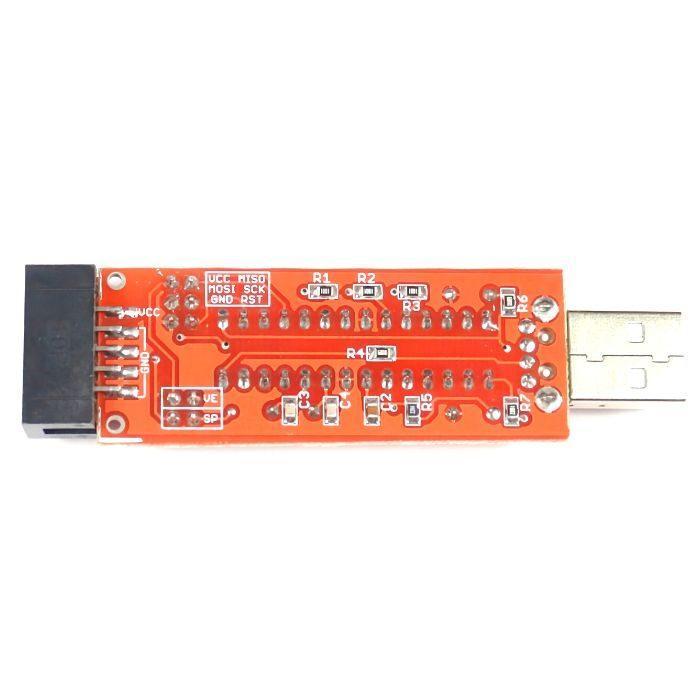
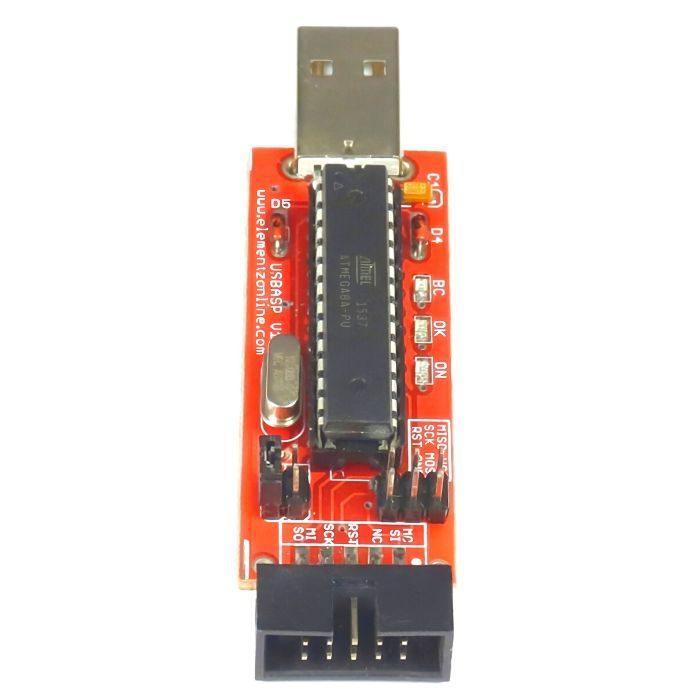
USB AVR USBISP programmer will allow users to painlessly transfer hex programs to most ATMEL AVR microcontrollers. It is more reliable than most other AVR programmers available. Entire AVR programmer has been built with using common parts and fits in the case of the serial connector. This AVR programmer is compatible with AVRdude GUI software.
This can be used to program : AT90S1200,2313,2323,2343,4414,4433,4434,8515,8535, ATMEGA103,128,1280,1281,16,161,162,163,165,168,169, ATMEGA 2560,2561,32,323,325,3250,328,329,3290,406,48,64, ATMEGA 640,644,645,6450,649,6490,8,8515,8535,88, ATTINY 11,12,13,15,22,2323,25,26,261,28,44,45,461,84,85,86, AT90CAN128,32,64, AT90PWM2, CAPABLE OF PROGRAMMING BOTH 3.3V & 5V AVR MICROCONTROLLERS
read more :
Implementation of PWM in AVR
₹388,35
Incl. GST (No Hidden Charges)
Backorder Available
₹663,60
Incl. GST (No Hidden Charges)
Elementz AVR USB Programmer with Cable
Elementz AVR USB Programmer with Cable USB AVR USBISP programmer will allow users to painlessly transfer hex programs to most ATMEL AVR microcontrollers. It is more reliable than most other …
As low as
₹388,35
₹388,35
₹663,60
Incl. GST (No Hidden Charges)
Backorder Available
8051 Development Board (Made …
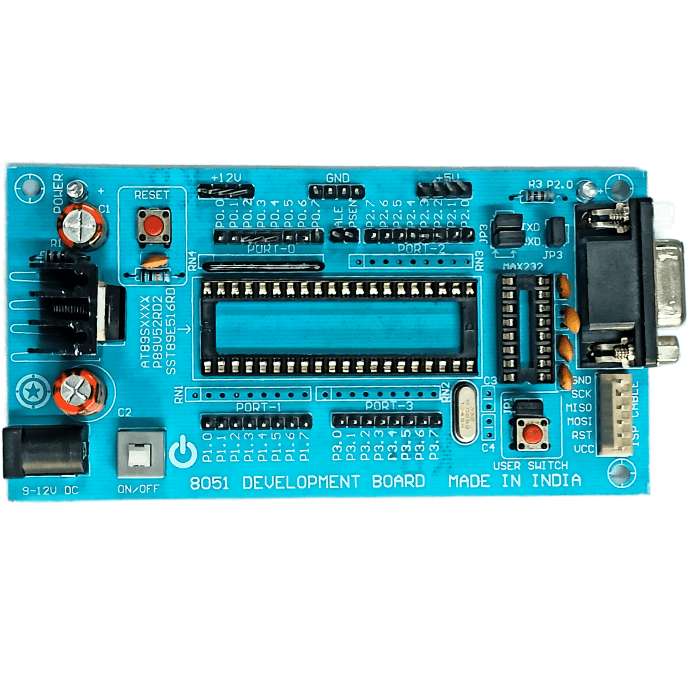
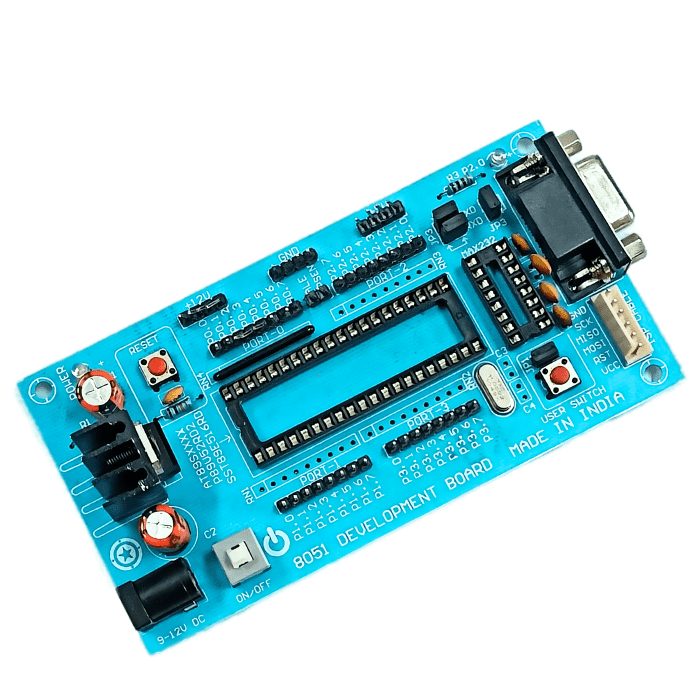
8051 Development Board (Made in India)
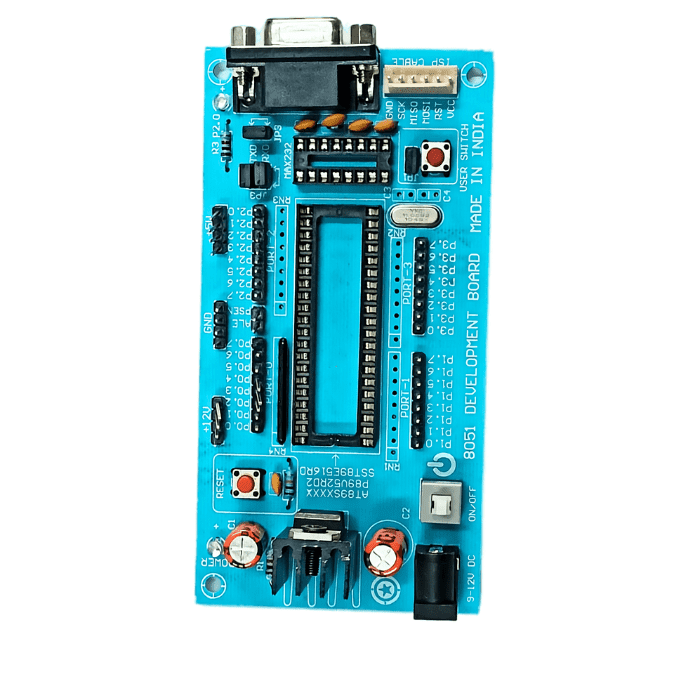
The 8051 Development Board is equipped with an Atmel AT89S52 Microcontroller IC and an RS232 chip. It features a DIP 40 Pin IC Socket for easy insertion and removal of chips, and can support a range of chips including AT89S51, AT89S52, P89V51RD2, and 8052. The board is built with a high-quality FR-4 (1.6 mm) PCB.
In addition, the board has an on-board RS232 circuit that enables easy communication with a PC and other RS232 serial devices such as GPS modules, GSM modems, and RFID. It also has an extra Vcc bus (5V and 12V) and GND bus for power supply to external peripherals.
The
8051 board
has an on-board bridge rectifier, allowing it to accept both AC and DC input voltages for power supply. It is also equipped with a 5mm Power Plug-in DC Jack, a Power ON-OFF switch, a 5V regulator (LM7805) circuit, and a power indication RED LED.
Other features of the board include an on-board reset button, a quartz crystal 11.05892 MHz, a GREEN USER LED at Pin P2.0, an input user switch Pin P3.3, and an input external interrupt switch (INT1) at P3.3 through jumper JP2. Port extensions are provided for all PORT with detailed labeling for easy identification of pins, and external pull-up resistors are included for port use.
The
development board
also has an on-board ISP connector for loading HEX files into microcontrollers such as AT89S51/52. It has four 3mm mounting holes for easy mounting.
read more :
How to Choose a Microcontroller
Applications
Embedded Systems
Robotics
Internet of Things (IoT)
Industrial Automation
₹283,74
Incl. GST (No Hidden Charges)
Backorder Available
₹418,60
Incl. GST (No Hidden Charges)
8051 Development Board (Made in India)
8051 Development Board (Made in India) The 8051 Development Board is equipped with an Atmel AT89S52 Microcontroller IC and an RS232 chip. It features a DIP 40 Pin IC Socket …
As low as
₹283,74
₹283,74
₹418,60
Incl. GST (No Hidden Charges)
Backorder Available
