

Sort by
ARM-JTAG-20-10 Plug-in Adapte…
ARM-JTAG-20-10 Plug-in Adapter for JTAG 20-Pin to 10-Pin with 20 cm Cable - 7Semi
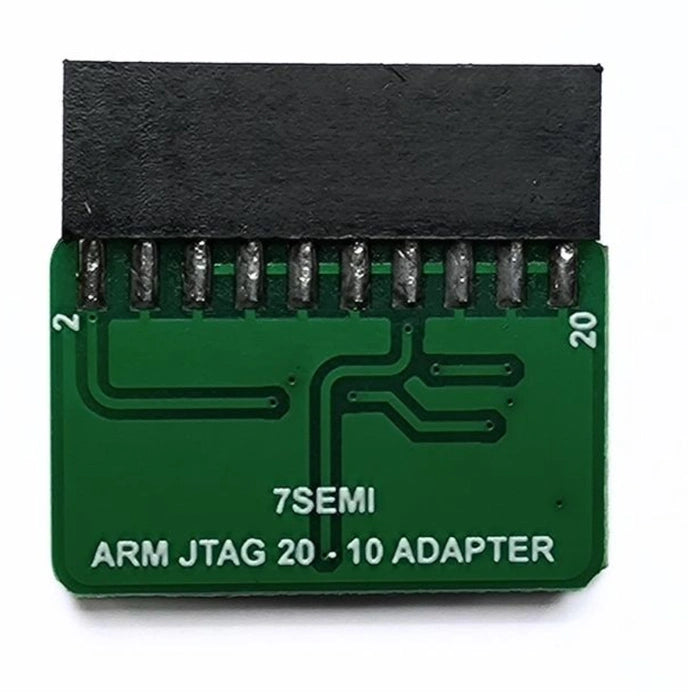
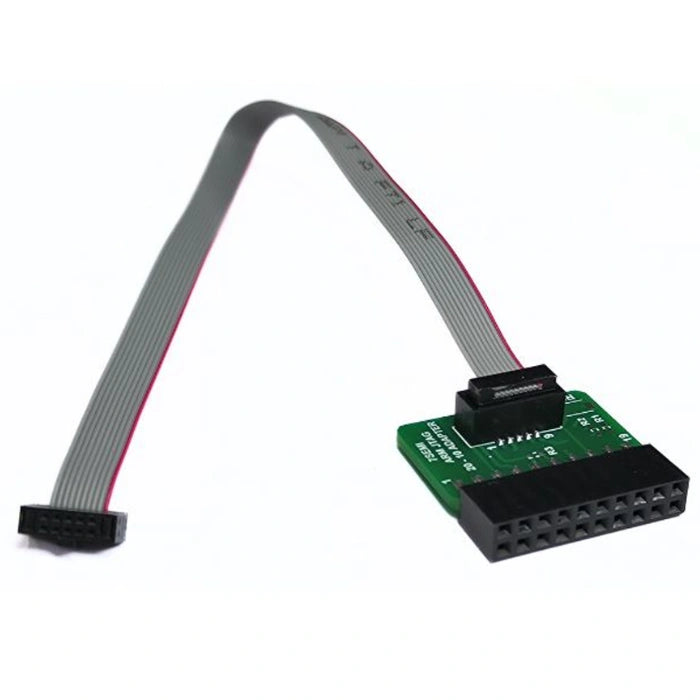
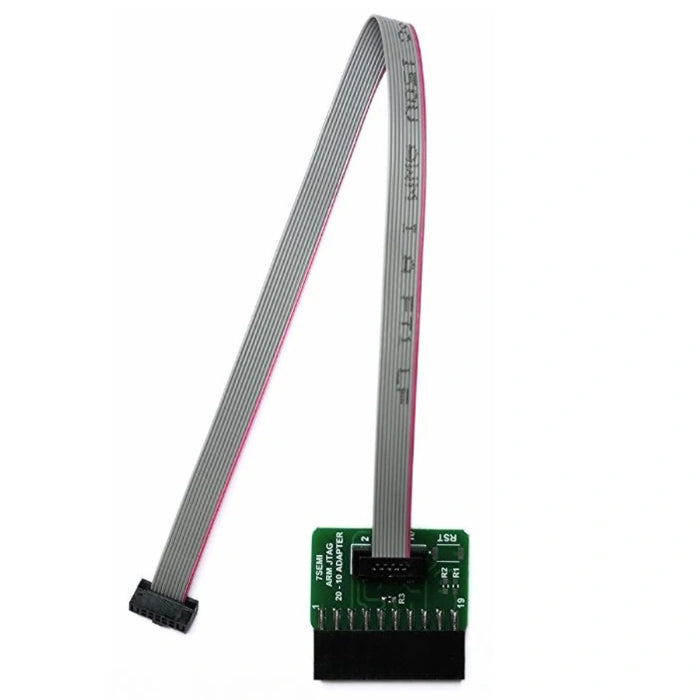
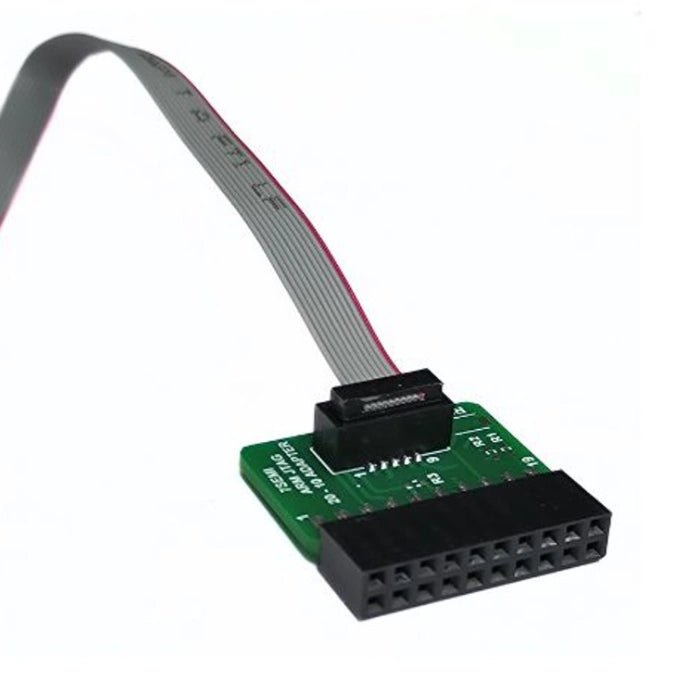
The 7Semi ARM-JTAG-20-10 Plug-in Adapter simplifies ARM microcontroller programming and debugging by converting the standard 20-pin JTAG (0.1") interface to a compact 10-pin (0.05") layout. Ideal for development boards with smaller connectors, this adapter ensures compatibility with a wide range of JTAG and SWD programmers/debuggers including ARM-USB-OCD, ARM-USB-TINY, and Segger JLINK.
Following the official ARM JTAG standard pinout, this adapter guarantees reliable signal integrity and consistent operation across various platforms. With a compact size of 25x25 mm and a 20 cm ribbon cable, it offers flexibility for use in tight spaces or densely packed boards. Whether you're a developer working on embedded systems or a hobbyist working with constrained hardware, this adapter delivers convenience and compatibility in a robust form factor.
Features:
Interface Conversion:
Enables smooth adaptation from larger 20-pin headers to smaller 10-pin headers.
Wide Compatibility:
Works with a variety of ARM JTAG/SWD debuggers and programmers.
Official Standard Layout:
Designed following the ARM standard JTAG pinout.
Compact and Durable:
Small 25mm x 25mm footprint for ease of use in tight spaces.
Flexible Connectivity:
Comes with a 20 cm, 0.05" pitch ribbon cable for versatile installation.
₹500.73
MRP. ₹838.60
Incl. GST (No Hidden Charges)
Incl. GST (No Hidden Charges)
ARM-JTAG-20-10 Plug-in Adapter for JTAG 20-Pin to 10-Pin with 20 cm Cable - 7Semi
ARM-JTAG-20-10 Plug-in Adapter for JTAG 20-Pin to 10-Pin with 20 cm Cable - 7Semi The 7Semi ARM-JTAG-20-10 Plug-in Adapter simplifies ARM microcontroller programming and debugging by converting the standard 20-pin …
As low as
₹500.73
₹500.73
MRP. ₹838.60
Incl. GST (No Hidden Charges)
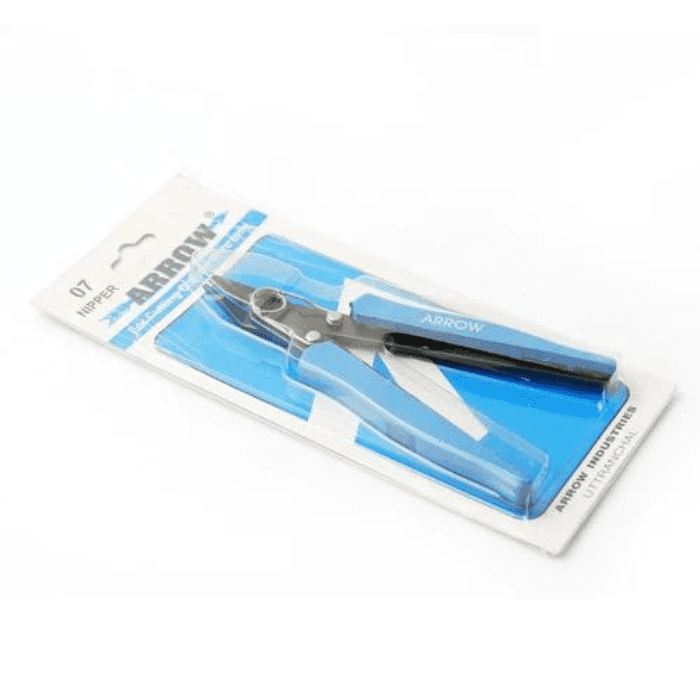
Arrow Wire Nipper 07
Arrow Wire Nipper 07
The Arrow Nipper 07 with cushioned grips for cutting copper and aluminum conductors. This is made of high carbon alloy steel and induction hardened for longer life. It is suitable for electronics, House Hold, computers, and PCB assemblies.
If you have just started soldering or are planning to learn to solder then this is a very important tool for you. This instrument has various names normally it is called a cutter, side cutter or lead cutter. It is normally used to cut wire or leads (legs) of components also they can be used to strip the insulation off of a wire.
Applications:
Electronics
House Hold
Computers
PCB assemblies
₹80.12
Incl. GST (No Hidden Charges)
Out of Stock
MRP. ₹117.60
Incl. GST (No Hidden Charges)


Arrow Wire Nipper 07
Arrow Wire Nipper 07 The Arrow Nipper 07 with cushioned grips for cutting copper and aluminum conductors. This is made of high carbon alloy steel and induction hardened for longer …
As low as
₹80.12
₹80.12
MRP. ₹117.60
Incl. GST (No Hidden Charges)
Out of Stock
ASAIR Temperature and Humidit…
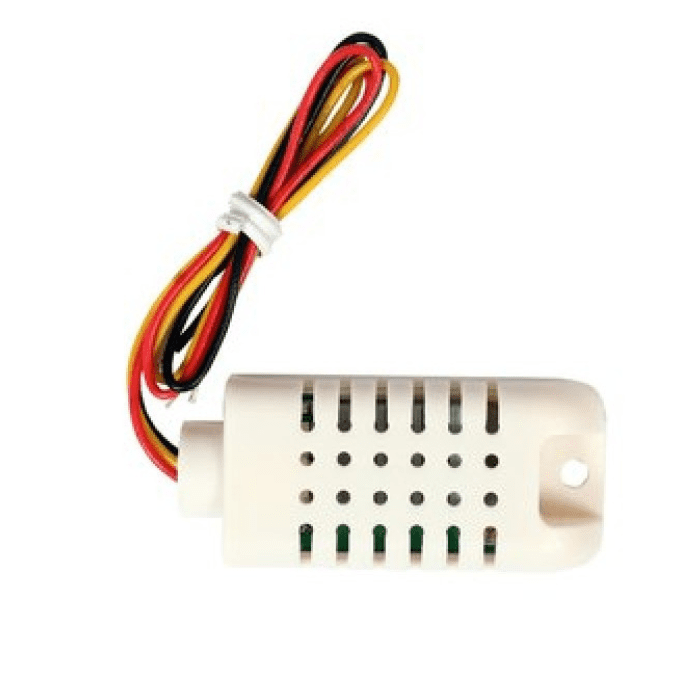
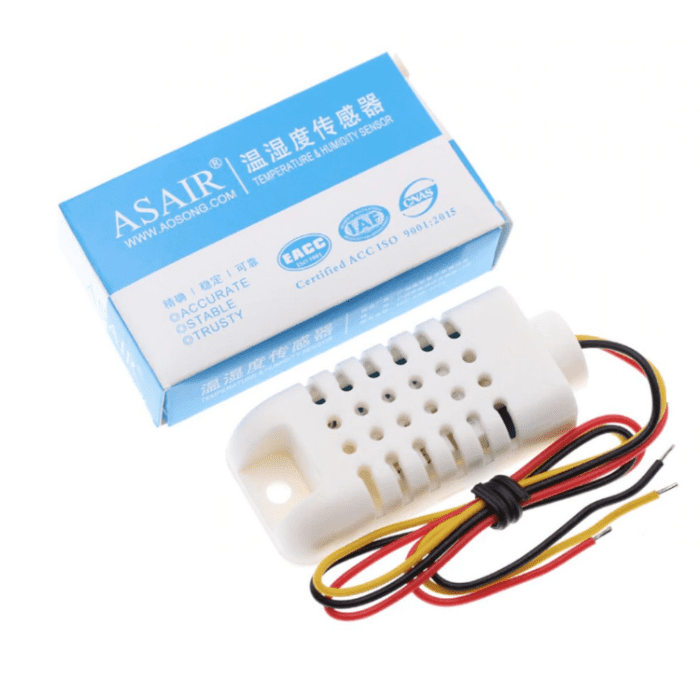
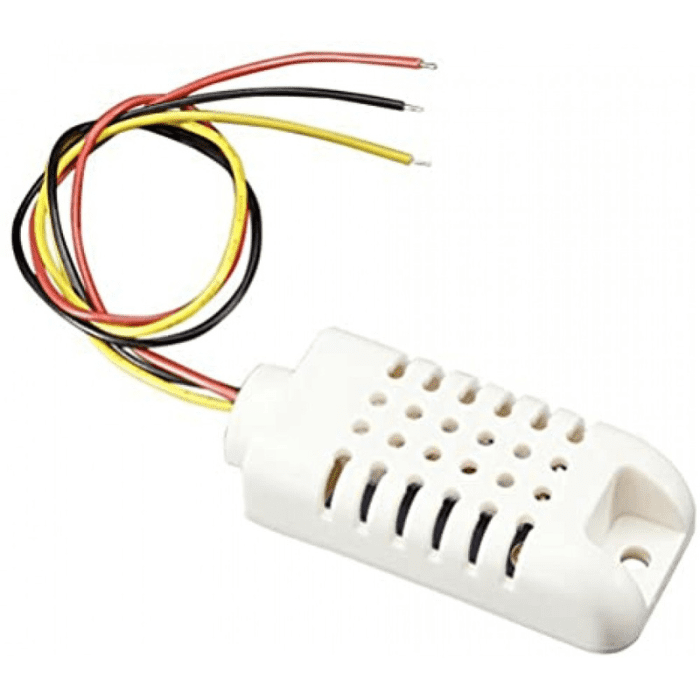
ASAIR Temperature and Humidity Sensor AM2302 (Original)
The AM2302 is a wired version of the DTH22, in a large plastic body. It is a basic, low-cost digital
temperature and humidity sensor
. It uses a capacitive humidity sensor and a thermistor to measure the surrounding air and spits out a digital signal on the data pin (no analog input pins needed). It's fairly simple to use but requires careful timing to grab data. The only real downside of this sensor is you can only get new data from it once every 2 seconds, so when using our library, sensor readings can be up to 2 seconds old.
Connect the red 3-5V power, the yellow wire to your data input pin, and the black wire to the ground. Although it uses a single wire to send data it is not Dallas One Wire compatible! If you want multiple sensors, each one must have its own data pin.
Compared to DTH11, this sensor is more precise, more accurate, and works in a bigger range of temperature/humidity, but it's larger and more expensive. There is a 5.1K resistor inside the sensor connecting Vcc and DATA so you do not need additional pullup resistors.
Also check the
AM2302 Temperature & Humidity Sensor
available on Iotcart. The sensor is suitable for 0-100 percent humidity readings with 2-5 percent accuracy and -40 to 80 degrees Celsius temperature readings with ± 0.5-degree Celsius accuracy. It has a sampling rate of no more than 0.5 Hz (once every 2 seconds) and comes in a 4-pin single-row pin package for easy connection.
₹457.33
Incl. GST (No Hidden Charges)
Out of Stock
MRP. ₹698.60
Incl. GST (No Hidden Charges)
ASAIR Temperature and Humidity Sensor AM2302 (Original)
ASAIR Temperature and Humidity Sensor AM2302 (Original) The AM2302 is a wired version of the DTH22, in a large plastic body. It is a basic, low-cost digital temperature and humidity …
As low as
₹457.33
₹457.33
MRP. ₹698.60
Incl. GST (No Hidden Charges)
Out of Stock
AT24C256 I2C EEPROM Memory Mo…
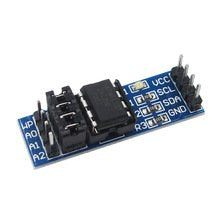
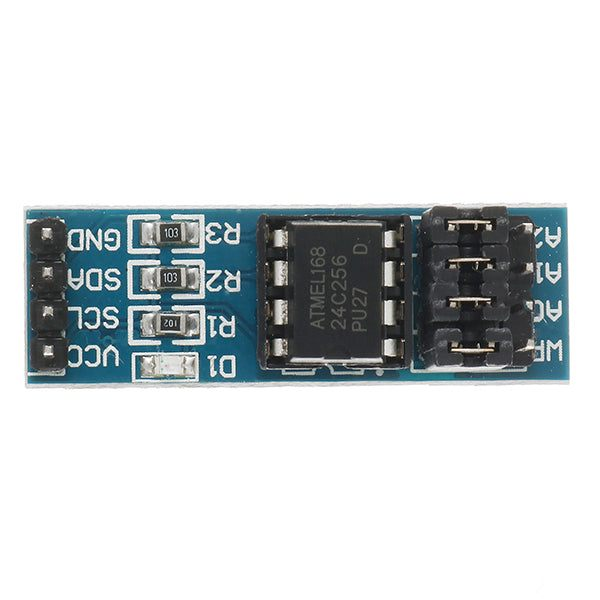
AT24C256 I2C EEPROM Memory Module
All pins leads out and be marked, the address input and the write-protect pin direct jumper settings on-board pull-up resistor for I2C communications required
Onboard 8P-chip carrier, can support AT24C256 series chips
Pin power supply, on-board power indicator
₹62.32
Incl. GST (No Hidden Charges)
Out of Stock
MRP. ₹110.60
Incl. GST (No Hidden Charges)
AT24C256 I2C EEPROM Memory Module
AT24C256 I2C EEPROM Memory Module All pins leads out and be marked, the address input and the write-protect pin direct jumper settings on-board pull-up resistor for I2C communications required Onboard …
As low as
₹62.32
₹62.32
MRP. ₹110.60
Incl. GST (No Hidden Charges)
Out of Stock

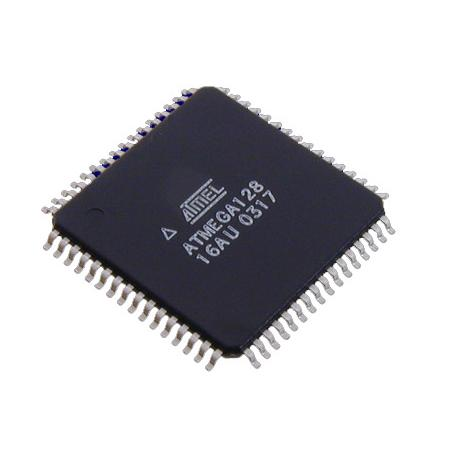
ATmega128
The Atmel® AVR® ATmega128 is a low-power CMOS 8-bit microcontroller based on the AVR enhanced RISC architecture. By executing powerful instructions in a single clock cycle, the ATmega128 achieves throughputs approaching 1MIPS per MHz allowing the system designer to optimize power consumption versus processing speed.
Peripheral Features
Programmable I/O Lines
53 Programmable I/O Lines
Timers
Two 8-bit Timer/Counters and Two Expanded 16-bit Timer/Counters with Separate Prescalers and Compare Modes
ADC
8-channel, 10-bit ADC
Serial Interface
2 Programmable Serial USARTs
Master / Slave Interface
SPI Serial Interface
PWM
Two 8-bit PWM Channels and 6 PWM Channels with Programmable Resolution from 2 to 16 Bits
Watch Dog Timer
Programmable Watch Dog Timer With on chip Oscillator
Power Supply
Type
DC
Operating Voltage
2.7V - 5.5V
Special Features
Internal Oscillator
Internal Calibrated Oscillator
External Oscillator
Up to 16 MHz
Interrupt Source
External and Internal
Clock Frequency Setting
Adjustable through Software
₹497.39
MRP. ₹904.40
Incl. GST (No Hidden Charges)
Incl. GST (No Hidden Charges)
ATmega128
The Atmel® AVR® ATmega128 is a low-power CMOS 8-bit microcontroller based on the AVR enhanced RISC architecture. By executing powerful instructions in a single clock cycle, the ATmega128 achieves throughputs …
As low as
₹497.39
₹497.39
MRP. ₹904.40
Incl. GST (No Hidden Charges)
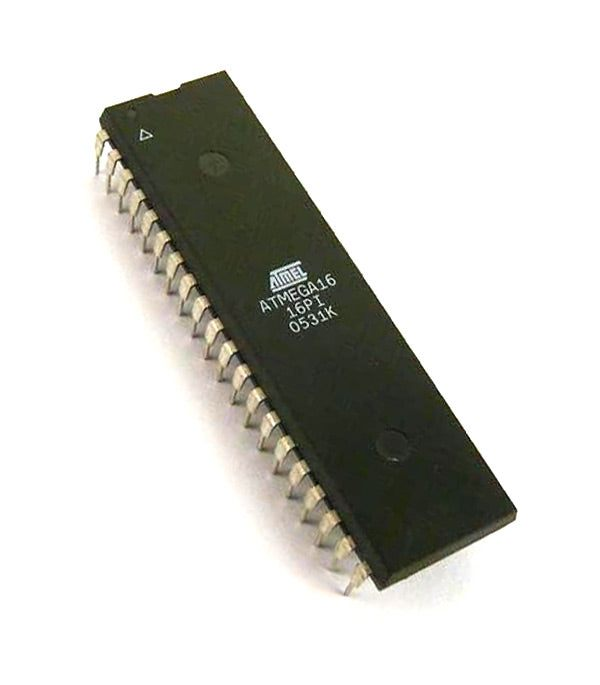
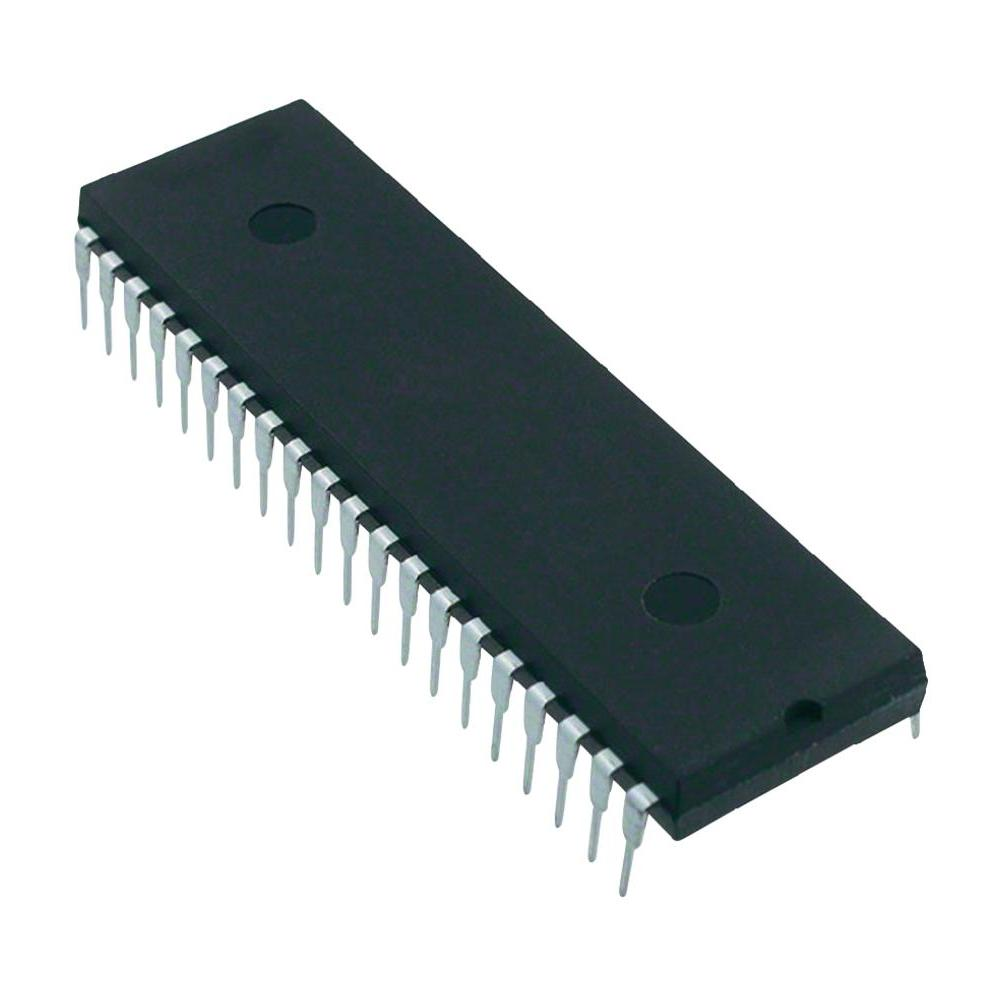
ATmega16
ATmega16
The
ATmega
ATmega16 is a low-power CMOS 8-bit microcontroller based on the AVR enhanced RISC architecture. By executing powerful instructions in a single clock cycle, the ATmega16 achieves throughputs approaching 1 MIPS per MHz allowing the system designer to optimize power consumption versus processing speed.
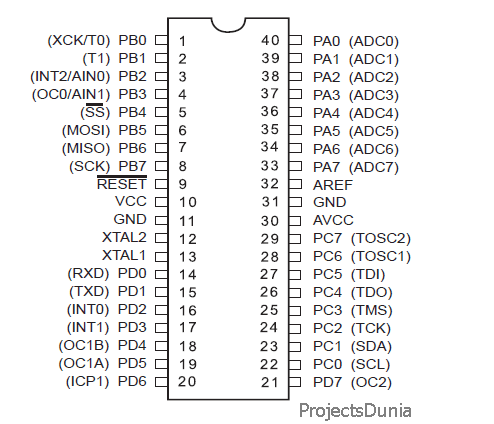
Pinout:
Pinout of ATmega16
1
PB0(XCK/T0)
Pin 0 of PORTB
T0( Timer0 External Counter Input)
XCK ( USART External Clock I/O)
2
PB1(T1)
Pin 1 of PORTB
T1(Timer1 External Counter Input)
3
PB2(INT2/AIN0)
Pin 2 of PORTB
AIN0(Internal Analog Comparator Positive Input)
INT2( External Interrupt 2 Input)
4
PB3(OC0/AIN1)
Pin 3 of PORTB
AIN1(Internal Analog Comparator Negative Input)
OC0 (Timer0 Output Compare Match Output) or PWM output
5
PB4(SS )
Pin 4 of PORTB
SS (SPI Slave Select Input). This pin is low when controller acts as slave.
[Serial Peripheral Interface (SPI) for programming]
6
PB5(MOSI)
Pin 5 of PORTB
MOSI (Master Output Slave Input). When controller acts as slave, the data is received by this pin.
[Serial Peripheral Interface (SPI) for programming]
7
PB6(MISO)
Pin 6 of PORTB
MISO (Master Input Slave Output). When controller acts as slave, the data is sent to master through this pin.
[Serial Peripheral Interface (SPI) for programming]
8
PB7(SCK)
Pin 7 of PORTB
SCK (SPI Bus Serial Clock). This is the clock shared between this controller and other system for accurate data transfer.
[Serial Peripheral Interface (SPI) for programming]
9
RESET
Reset Pin (Active Low Reset)
10
VCC
Connected to +5V
11
GND
Connected to GROUND
12
XTAL2
Connected to Crystal Oscillator
13
XTAL1
Connected to Crystal Oscillator
14
PD0(RXD)
Pin 0 of PORTD
RXD (USART Input Pin)
[USART Serial Communication Interface
can be used for programming]
15
PD1(TXD)
Pin 1 of PORTD
TXD (USART Output Pin)
[USART Serial Communication Interface
can be used for programming]
16
PD2(INT0)
Pin 2 of PORTD
External Interrupt INT0
17
PD3(INT1)
Pin 3 of PORTD
External Interrupt INT1
18
PD4(OC1B)
Pin 4 of PORTD
OC1B (Timer Output Compare Match Output) or PWM output
19
PD5(OC1A)
Pin 5 of PORTD
OC1A (Timer Output Compare Match Output) or PWM output
20
PD6(ICP)
Pin 6 of PORTD
Timer/Counter1 Input Capture Pin
21
PD7 (OC2)
Pin 7 of PORTD
Timer/Counter2 Output Compare Match Output
22
PC0 (SCL)
Pin 0 of PORTC
TWI Interface
23
PC1 (SDA)
Pin 1 of PORTC
TWI Interface
24
PC2 (TCK)
Pin 2 of PORTC
JTAG Interface
25
PC3 (TMS)
Pin 3 of PORTC
JTAG Interface
26
PC4 (TDO)
Pin 4 of PORTC
JTAG Interface
27
PC5 (TDI)
Pin 5 of PORTC
JTAG Interface
28
PC6 (TOSC1)
Pin 6 of PORTC
Timer Oscillator Pin 1
29
PC7 (TOSC2)
Pin 7 of PORTC
Timer Oscillator Pin 2
30
AVcc
Vcc for Internal ADC Converter
31
GND
GROUND
32
AREF
Analog Reference Pin for ADC
33
PA7 (ADC7)
Pin 7 of PORTA
ADC (Analog to Digital Converter) Channel 7
34
PA6 (ADC6)
Pin 6 of PORTA
ADC (Analog to Digital Converter) Channel 6
35
PA5 (ADC5)
Pin 5 of PORTA
ADC (Analog to Digital Converter) Channel 5
36
PA4 (ADC4)
Pin 4 of PORTA
ADC (Analog to Digital Converter) Channel 4
37
PA3 (ADC3)
Pin 3 of PORTA
ADC (Analog to Digital Converter) Channel 3
38
PA2 (ADC2)
Pin 2 of PORTA
ADC (Analog to Digital Converter) Channel 2
39
PA1 (ADC1)
Pin 1 of PORTA
ADC (Analog to Digital Converter) Channel 1
40
PA0 (ADC0)
Pin 0 of PORTA
ADC (Analog to Digital Converter) Channel 0
Applications:
Hobbyists applications
Engineers design
Temperature control systems
Analog signal measuring and manipulations.
Embedded systems like coffee machine, vending machine.
Motor control systems.
Digital signal processing.
Peripheral Interface system.
₹231.45
MRP. ₹490.00
Incl. GST (No Hidden Charges)
Incl. GST (No Hidden Charges)
ATmega16
ATmega16 The ATmega ATmega16 is a low-power CMOS 8-bit microcontroller based on the AVR enhanced RISC architecture. By executing powerful instructions in a single clock cycle, the ATmega16 achieves throughputs …
As low as
₹231.45
₹231.45
MRP. ₹490.00
Incl. GST (No Hidden Charges)
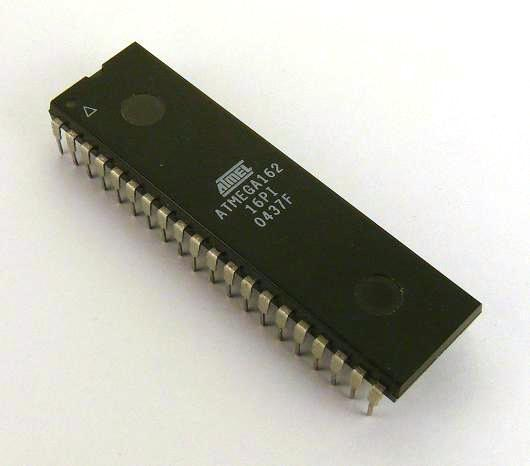
ATmega162
ATmega162
The ATmega162 is a low-power CMOS 8-bit microcontroller based on the AVR-enhanced RISC architecture. By executing powerful instructions in a single clock cycle, the
ATmega
achieves throughputs approaching 1 MIPS per MHz allowing the system designer to optimize power consumption versus processing speed.
The AVR core combines a rich instruction set with 32 general-purpose working registers. All 32 registers are directly connected to the Arithmetic Logic Unit (ALU), allowing two independent registers to be accessed in one single instruction executed in one clock cycle. The resulting architecture is more code efficient while achieving throughputs up to ten times faster than conventional CISC microcontrollers.
In order to maximize performance and parallelism, the AVR uses a Harvard architecture – with separate memories and buses for program and data. While one instruction is being executed, the next instruction is pre-fetched from the program memory. Program flow is provided by conditional and unconditional jump and call instructions, able to directly address the whole address space. Most AVR instructions have a single 16-bit word format. Every program memory address contains a 16- or 32-bit instruction.
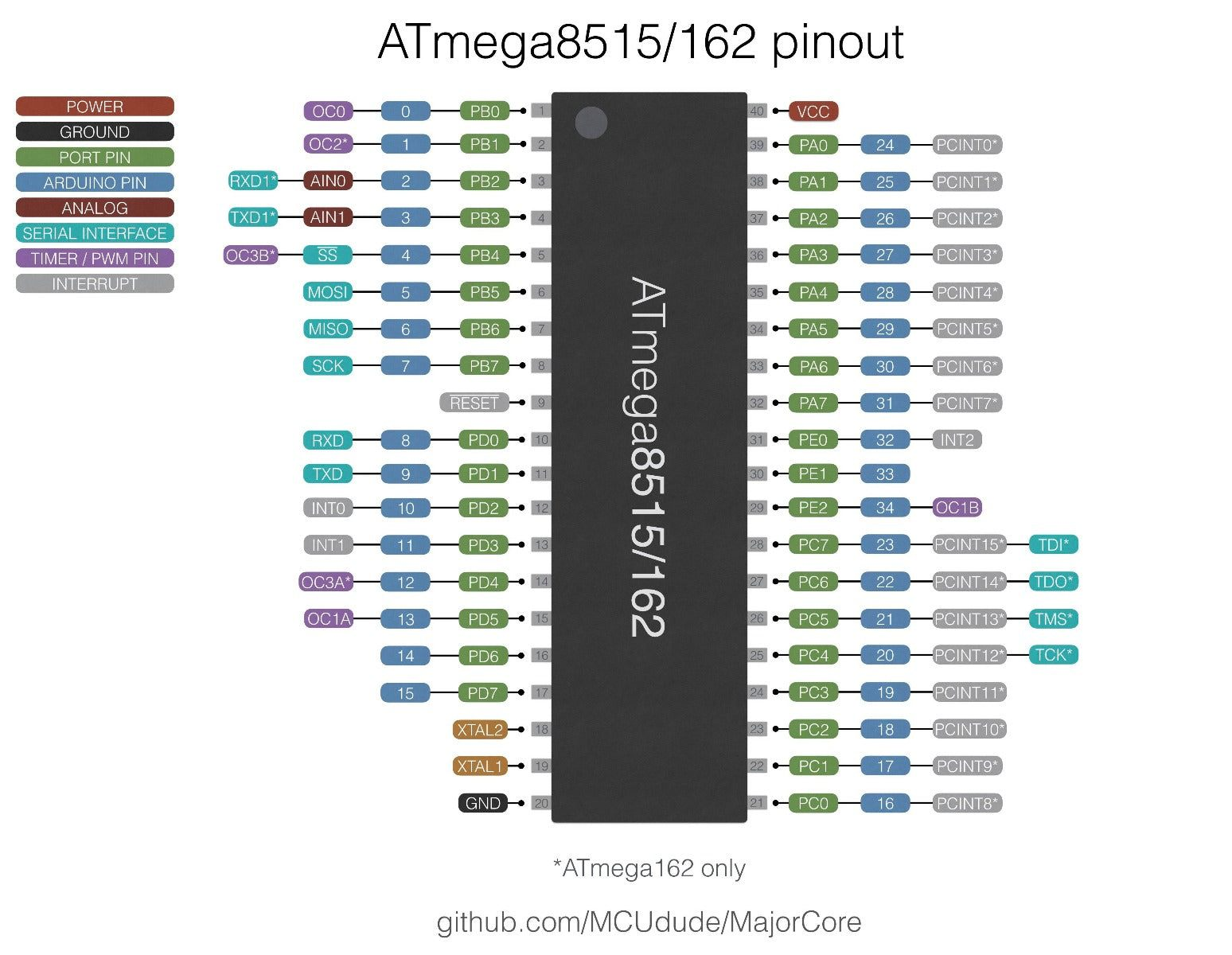
Pinout:
Pinout Of ATmega162
Applications:
Industrial Automation
Automotive Applications
Medical Devices
Consumer Electronics
Internet of Things (IoT)
₹839.00
Incl. GST (No Hidden Charges)
Out of Stock
MRP. ₹1117.20
Incl. GST (No Hidden Charges)
ATmega162
ATmega162 The ATmega162 is a low-power CMOS 8-bit microcontroller based on the AVR-enhanced RISC architecture. By executing powerful instructions in a single clock cycle, the ATmega achieves throughputs approaching 1 …
As low as
₹839.00
₹839.00
MRP. ₹1117.20
Incl. GST (No Hidden Charges)
Out of Stock
ATmega168
ATmega168
The
Atmel
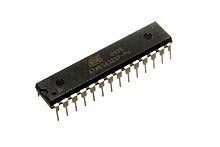
ATmega168 is a low-power CMOS 8-bit microcontroller based on the AVR-enhanced RISC architecture. By executing powerful instructions in a single clock cycle, the ATmega168 achieves throughputs approaching 1 MIPS per MHz allowing the system designer to optimize power consumption versus processing speed.
The AVR core combines a rich instruction set with 32 general-purpose working registers. All 32 registers are directly connected to the Arithmetic Logic Unit (ALU), allowing two independent registers to be accessed in one single instruction executed in one clock cycle. The resulting architecture is more code efficient while achieving throughputs up to ten times faster than conventional CISC microcontrollers.
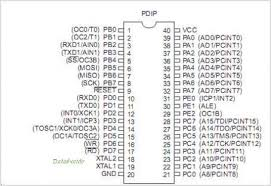
Pinout:
Pinout of ATmega168
Applications:
Multiple DIY projects.
Projects requiring more than logical control for devices.
Microcontroller applications for multiple device interface/Control.
₹338.27
Incl. GST (No Hidden Charges)
Out of Stock
MRP. ₹492.80
Incl. GST (No Hidden Charges)
ATmega168
ATmega168 The Atmel ATmega168 is a low-power CMOS 8-bit microcontroller based on the AVR-enhanced RISC architecture. By executing powerful instructions in a single clock cycle, the ATmega168 achieves throughputs approaching …
As low as
₹338.27
₹338.27
MRP. ₹492.80
Incl. GST (No Hidden Charges)
Out of Stock
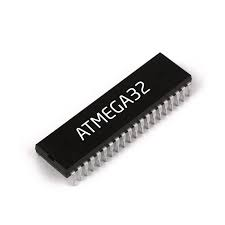
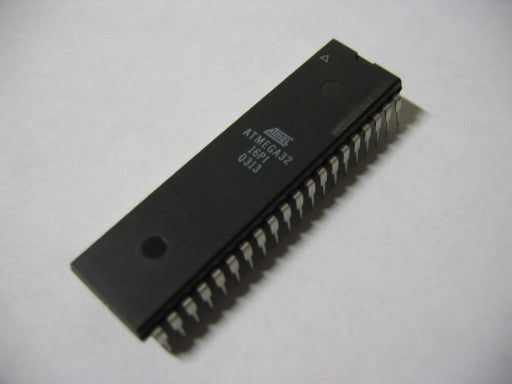
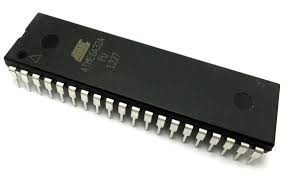
ATmega32
The high-performance, low-power Atmel 8-bit AVR RISC-based microcontroller combines 32KB of programmable flash memory, 2KB SRAM, 1KB EEPROM, an 8-channel 10-bit A/D converter, and a JTAG interface for on-chip debugging. The device supports a throughput of 16 MIPS at 16 MHz and operates between 4.5-5.5 volts.
By executing instructions in a single clock cycle, the device achieves throughputs approaching 1 MIPS per MHz, balancing power consumption and processing speed
₹349.40
MRP. ₹651.00
Incl. GST (No Hidden Charges)
Incl. GST (No Hidden Charges)
ATmega32
The high-performance, low-power Atmel 8-bit AVR RISC-based microcontroller combines 32KB of programmable flash memory, 2KB SRAM, 1KB EEPROM, an 8-channel 10-bit A/D converter, and a JTAG interface for on-chip debugging. …
As low as
₹349.40
₹349.40
MRP. ₹651.00
Incl. GST (No Hidden Charges)
ATMEGA328P SMD IC for Arduino…
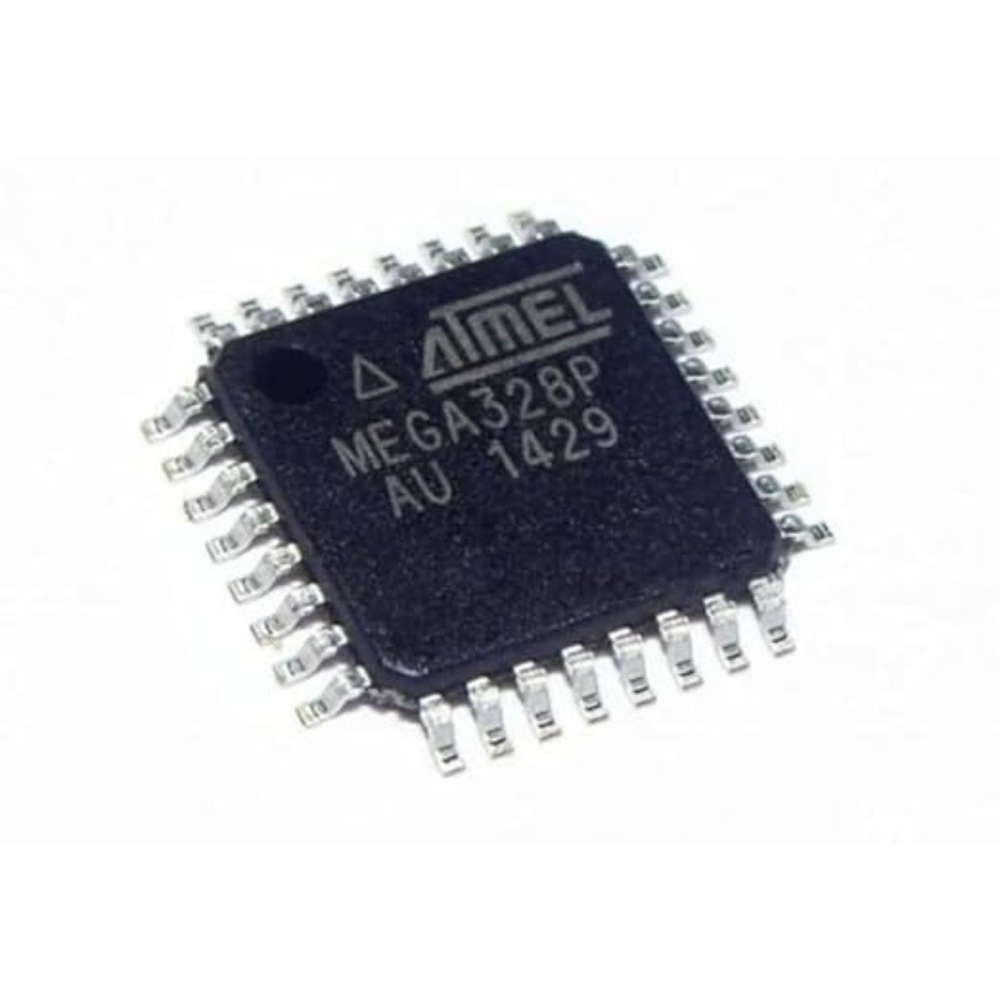
ATMEGA328P SMD IC for Arduino Nano/UNO – AVR Microcontroller
The ATMEGA328P SMD IC (ATMEGA328P-AU) is a high-performance 8-bit AVR microcontroller widely used in Arduino Nano and Arduino Uno boards.
Designed with picoPower technology, this SMD version includes 32KB ISP Flash, 2KB SRAM, 1KB EEPROM, multiple timers, USART, SPI, and I2C support.
Making it ideal for embedded electronics, DIY projects, automation systems, and IoT applications. Its compact SMD package makes it suitable for custom PCB designs and small-form-factor projects.
This microcontroller is fully compatible with Arduino IDE, making programming easy using an AVR programmer or bootloader.
With features like 23 GPIO pins, 6-channel 10-bit ADC, watchdog timer, and flexible power-saving modes, the ATMEGA328P SMD IC delivers powerful performance while maintaining low power consumption.
Whether you're building a new Arduino-compatible board or repairing an existing one, this IC provides reliability, stability, and seamless integration.
Features:
ATMEGA328P-AU SMD AVR microcontroller used in Arduino Nano/UNO boards.
Supports 32KB Flash memory with read-while-write capability, 1KB EEPROM, and 2KB SRAM.
Fully compatible with Arduino IDE; can be programmed using an AVR programmer.
Offers 23 GPIO pins, 3 timers/counters, watchdog timer, and hardware serial communication.
Integrated SPI, I2C (TWI), and USART interfaces for seamless connectivity.
Operates on 1.8V to 5.5V, suitable for low-power and battery-based projects.
6-channel 10-bit ADC (8-channel in TQFP package) for accurate analog sensing.
SMD design ideal for custom PCBs, compact electronics, and embedded projects.
₹3471.75
Incl. GST (No Hidden Charges)
In Store
Same Day Shipping
MRP. ₹7990.00
Incl. GST (No Hidden Charges)
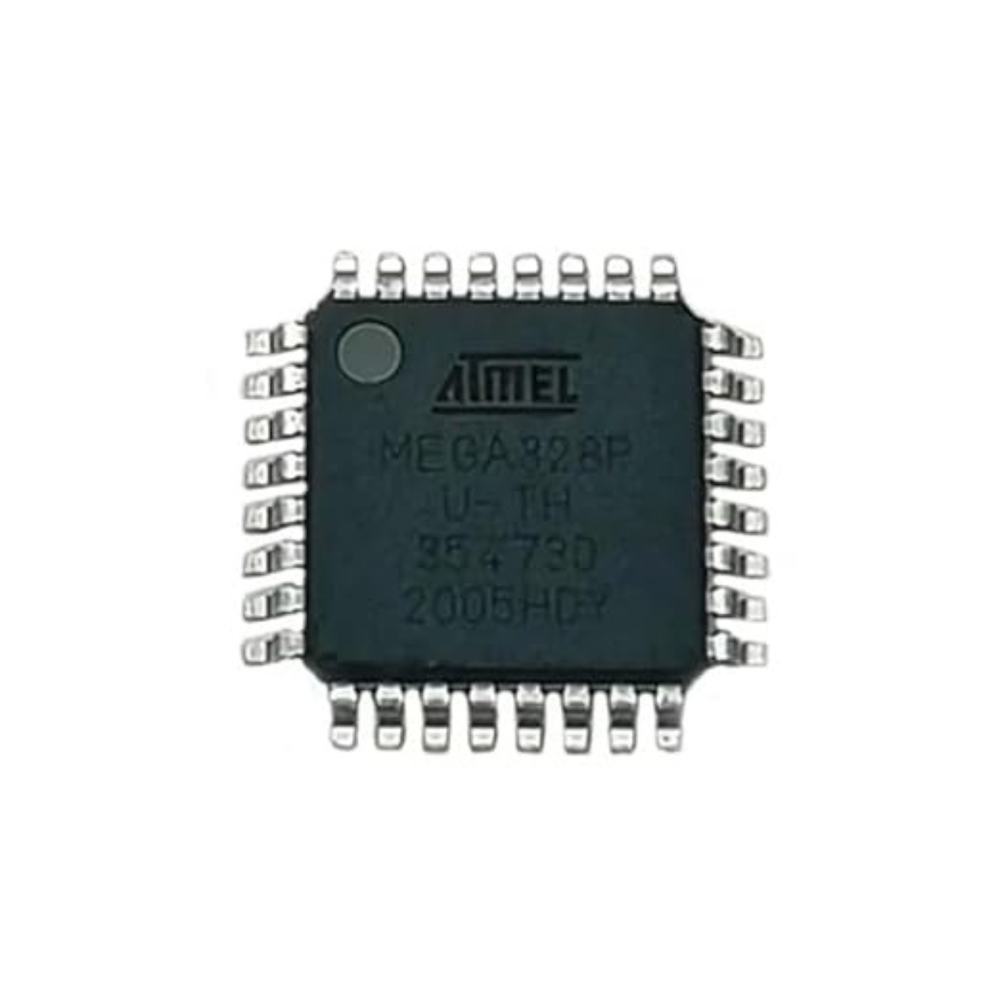

ATMEGA328P SMD IC for Arduino Nano/UNO – AVR Microcontroller
ATMEGA328P SMD IC for Arduino Nano/UNO – AVR Microcontroller The ATMEGA328P SMD IC (ATMEGA328P-AU) is a high-performance 8-bit AVR microcontroller widely used in Arduino Nano and Arduino Uno boards. Designed …
As low as
₹3471.75
₹3471.75
MRP. ₹7990.00
Incl. GST (No Hidden Charges)
In Store
Same Day Shipping
